Teaching a Machine to See Symmetry Where We Can’t
May 28, 2024
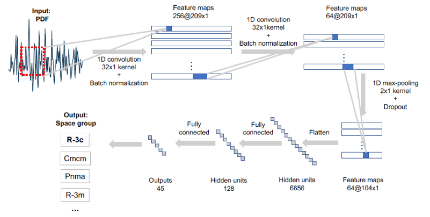
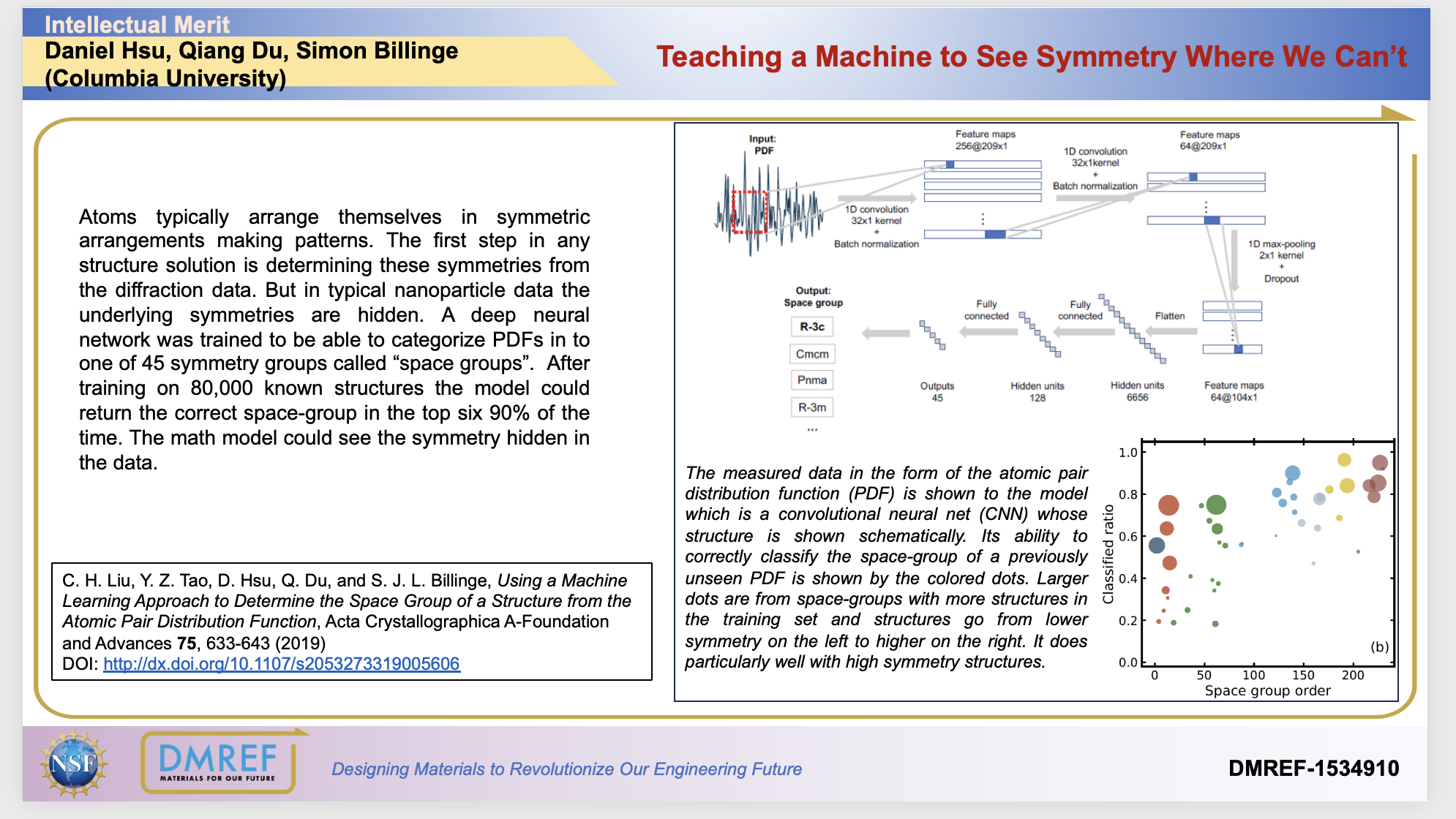
Atoms typically arrange themselves in symmetric arrangements making patterns. The first step in any structure solution is determining these symmetries from the diffraction data. But in typical nanoparticle data the underlying symmetries are hidden. A deep neural network was trained to be able to categorize PDFs in to one of 45 symmetry groups called “space groups”. After training on 80,000 known structures the model could return the correct space-group in the top six 90% of the time. The math model could see the symmetry hidden in the data.