Predicting Surface Reactivity for Biomass Upgrading
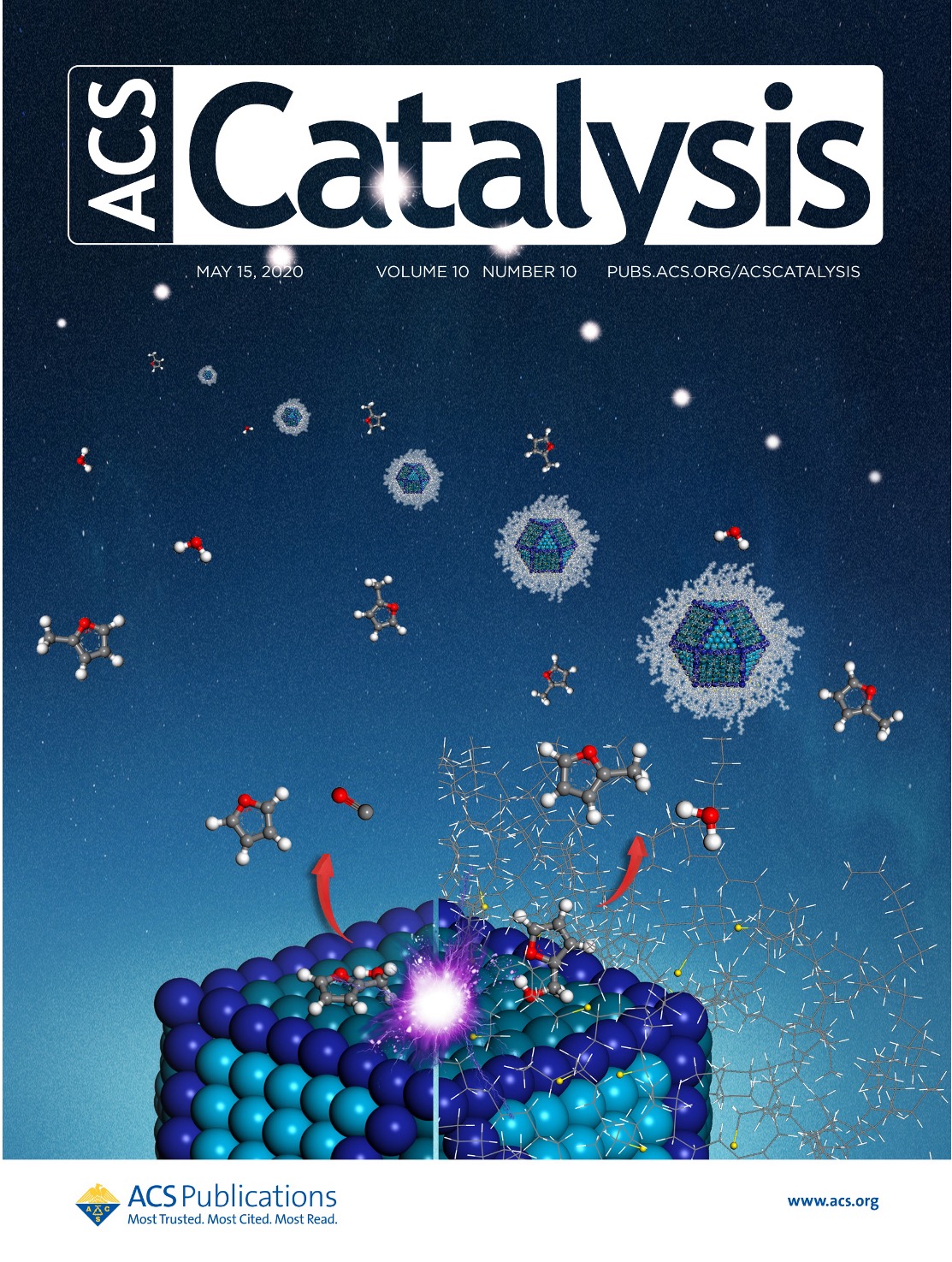
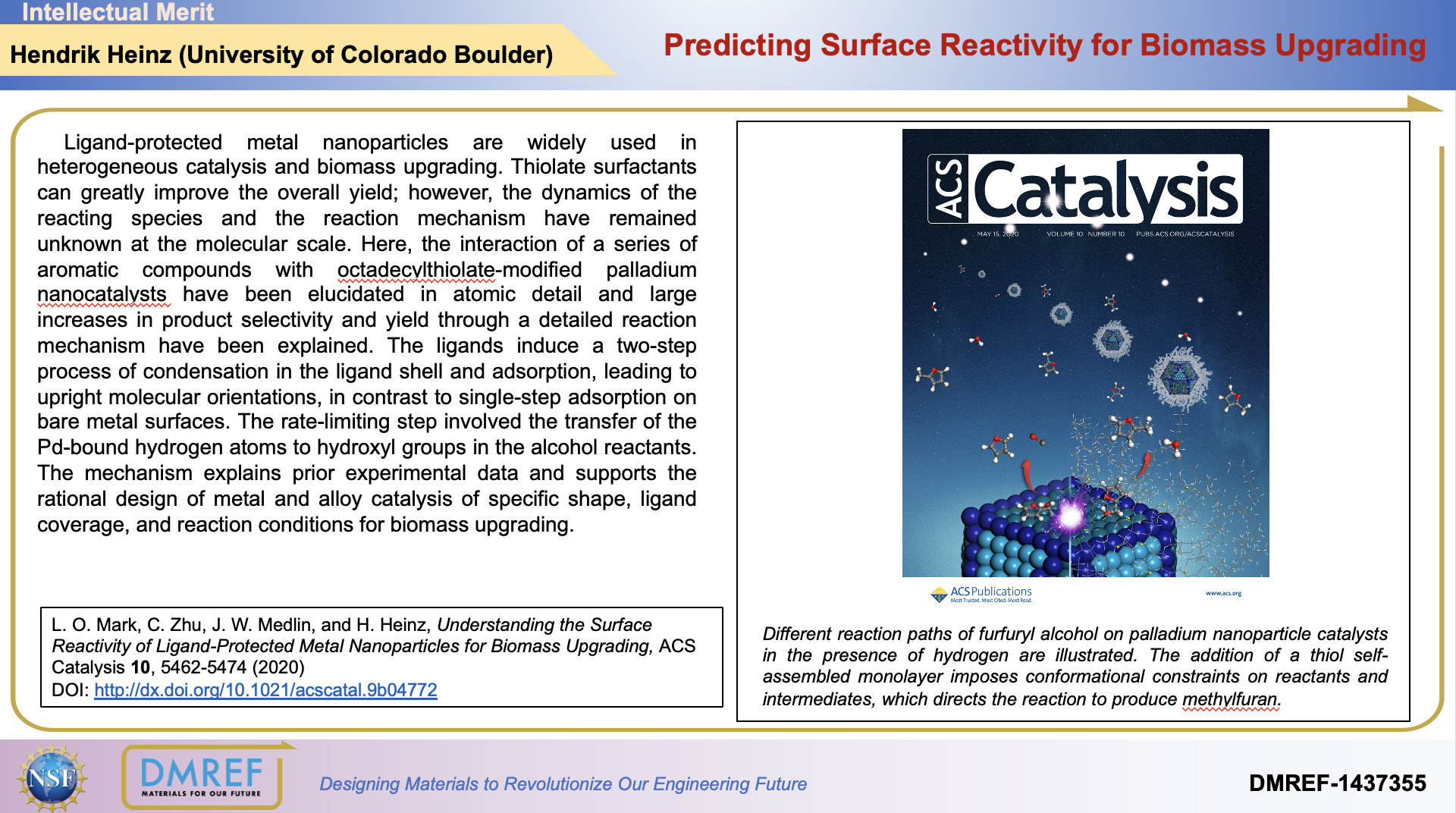
Ligand-protected metal nanoparticles are widely used in heterogeneous catalysis and biomass upgrading. Thiolate surfactants can greatly improve the overall yield; however, the dynamics of the reacting species and the reaction mechanism have remained unknown at the molecular scale. Here, the interaction of a series of aromatic compounds with octadecylthiolate-modified palladium nanocatalystshave been elucidated in atomic detail and large increases in product selectivity and yield through a detailed reaction mechanism have been explained. The ligands induce a two-step process of condensation in the ligand shell and adsorption, leading to upright molecular orientations, in contrast to single-step adsorption on bare metal surfaces. The rate-limiting step involved the transfer of the Pd-bound hydrogen atoms to hydroxyl groups in the alcohol reactants. The mechanism explains prior experimental data and supports the rational design of metal and alloy catalysis of specific shape, ligand coverage, and reaction conditions for biomass upgrading.