Molecular Assembly in K-12 and Innovation
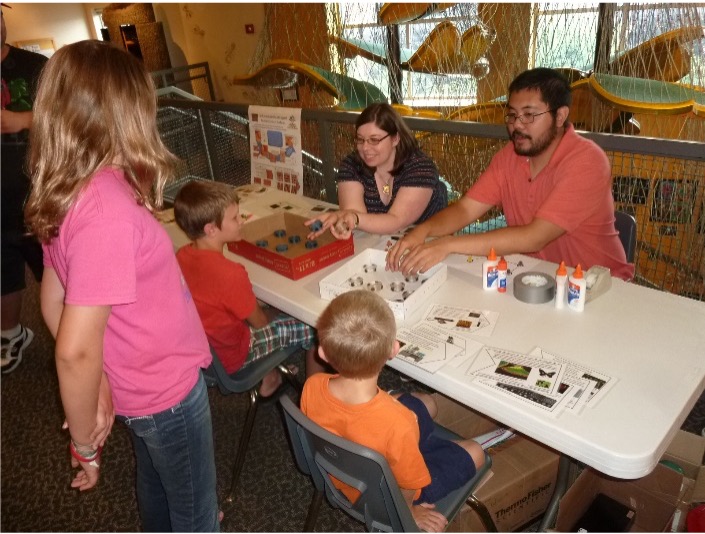
Benefits to K-12 and public education by outreach activities that highlight the way materials are made in our project by self-assembly. CoPI Tait and graduate student coworkers illustrated molecular self-assembly in a hands-on activity (photo) at a local children’s science center, WonderLab.
Undergraduate Rose Taylor participated in a NanoScience outreach event called “Building with Chemistry” in Bloomington, Indiana July,22, 2017. Undergraduate Fadler participated in a Wonderlab-led activity to teach ~40 children about self-assembly using magnetic discs. 200 Members of the public were impacted at these events.
PI Flood formed an I-Corps team from new discoveries made during the NSF DMREF project. The future anticipated impact will be in technology transfer through the process of commercialization. Benefits to the economy are expected.
New I-Corps team formed on: Fluorescent Micro- and Nanocrystalline Materials for Dyes and Pigments