Predicting Anisotropic Performance in Thermoelectrics
Feb 15, 2019
Background: In the first three years of this grant, we developed and validated experimentally a computational prediction engine for thermoelectric performance. Several new material classes emerged from this search with excellent performance.
Opportunity: This prediction engine focused on isotropic properties, but some materials exhibit anisotropic transport that yields preferential directions for optimal performance.
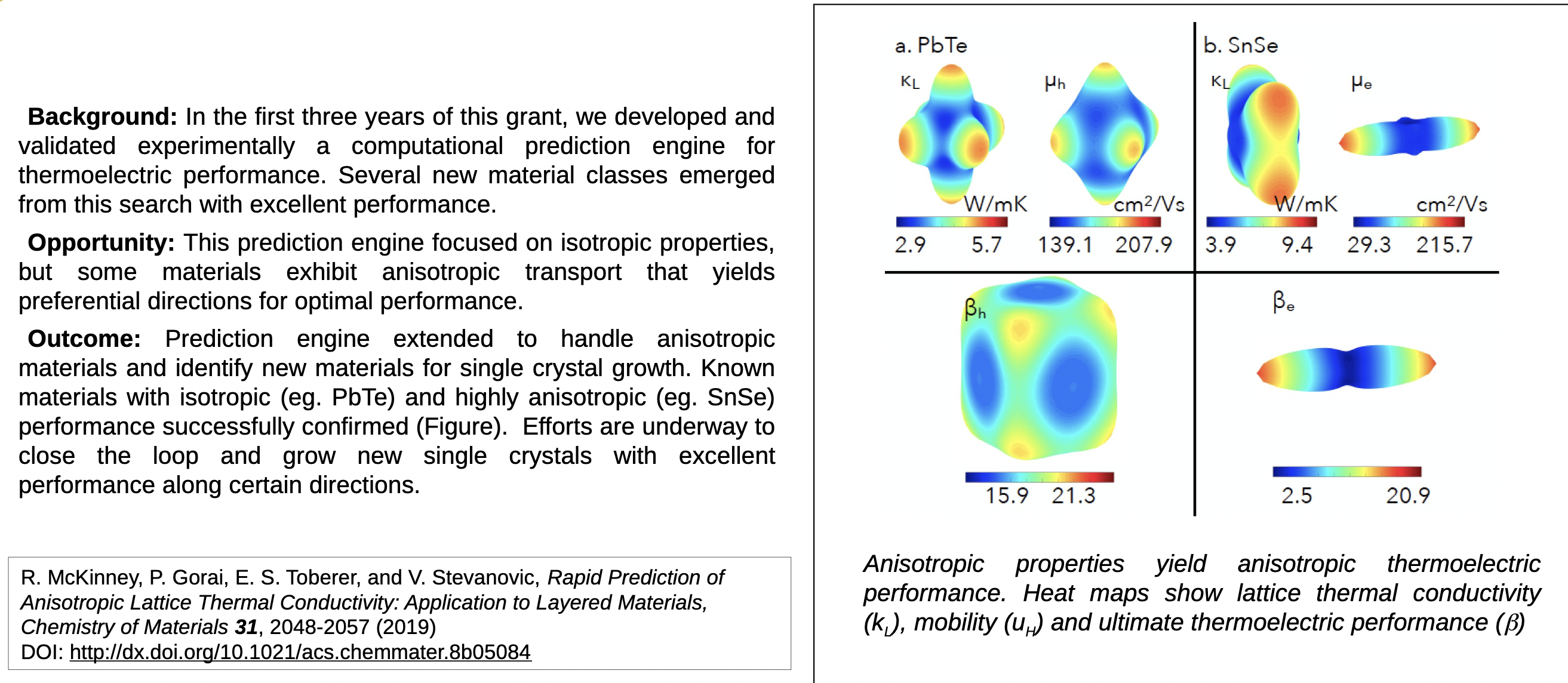
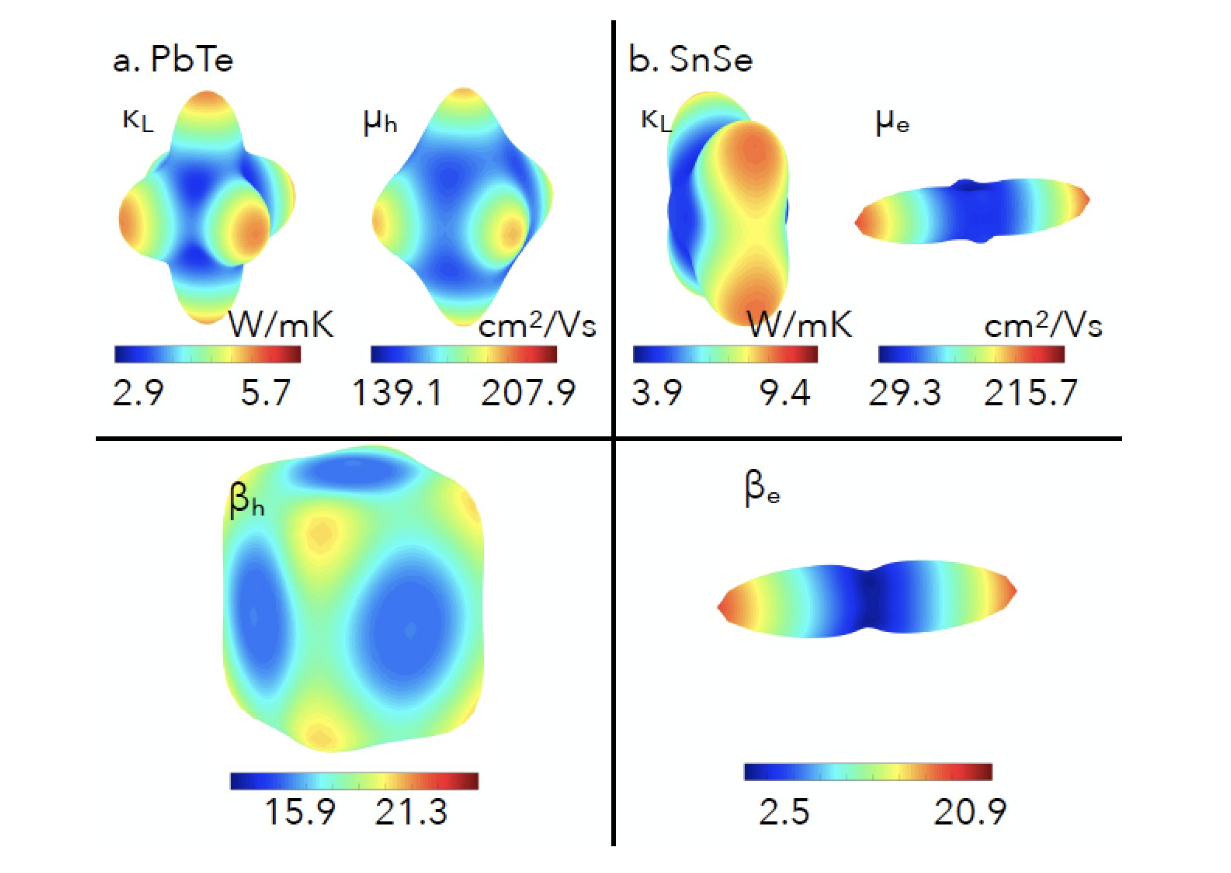
Outcome: Prediction engine extended to handle anisotropic materials and identify new materials for single crystal growth. Known materials with isotropic (eg. PbTe) and highly anisotropic (eg. SnSe) performance successfully confirmed (Figure). Efforts are underway to close the loop and grow new single crystals with excellent performance along certain directions.