Halide Heterogeneous Structure Boosting Ionic Diffusion and High-voltage Stability of Sodium Superionic Conductors
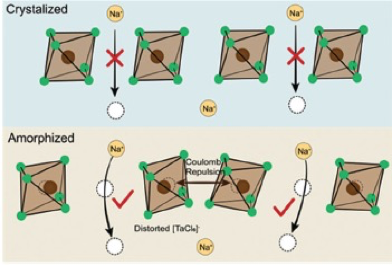
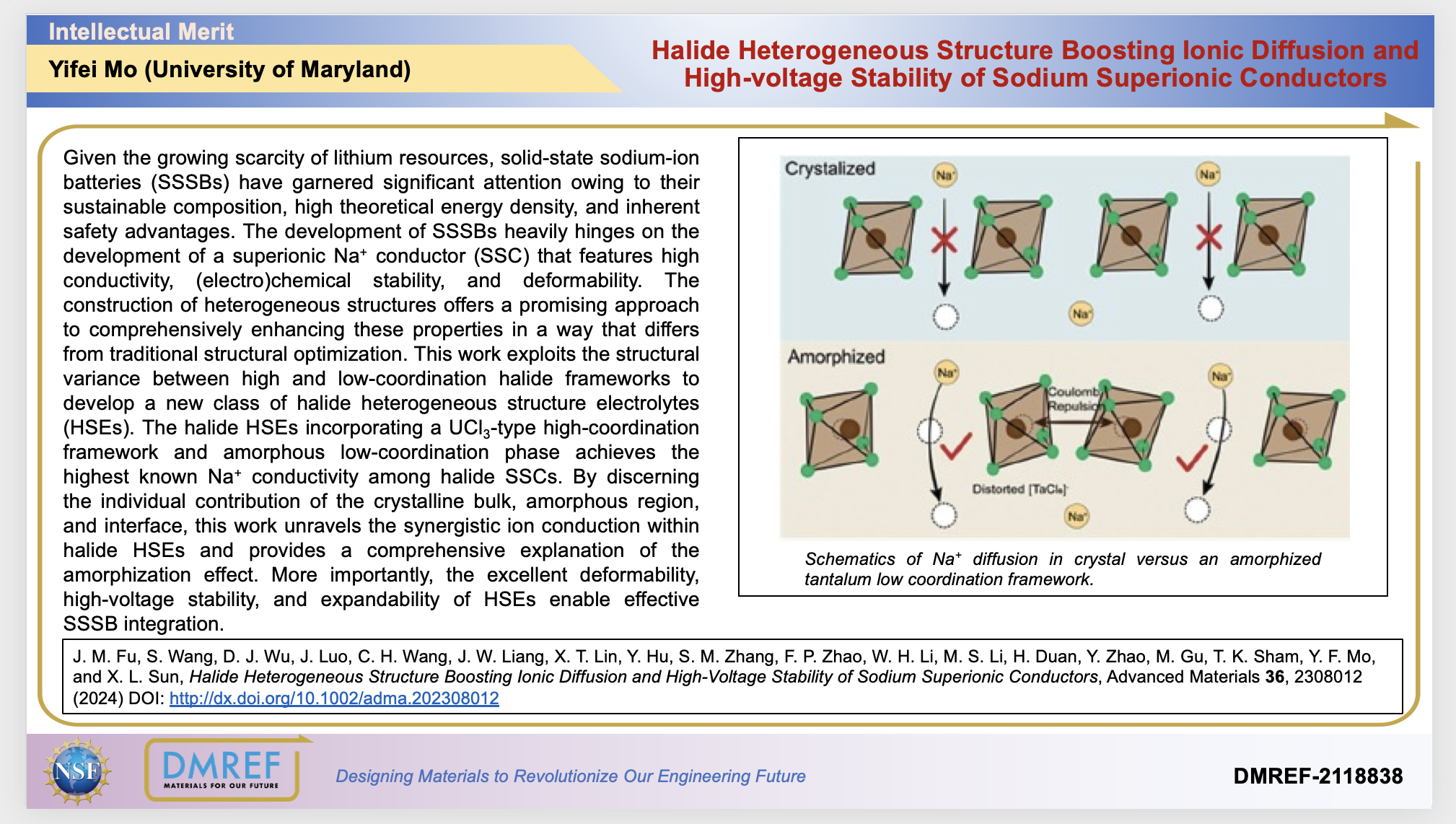
Given the growing scarcity of lithium resources, solid-state sodium-ion batteries (SSSBs) have garnered significant attention owing to their sustainable composition, high theoretical energy density, and inherent safety advantages. The development of SSSBs heavily hinges on the development of a superionic Na+ conductor (SSC) that features high conductivity, (electro)chemical stability, and deformability. The construction of heterogeneous structures offers a promising approach to comprehensively enhancing these properties in a way that differs from traditional structural optimization. This work exploits the structural variance between high and low-coordination halide frameworks to develop a new class of halide heterogeneous structure electrolytes (HSEs). The halide HSEs incorporating a UCl3-type high-coordination framework and amorphous low-coordination phase achieves the highest known Na+ conductivity among halide SSCs. By discerning the individual contribution of the crystalline bulk, amorphous region, and interface, this work unravels the synergistic ion conduction within halide HSEs and provides a comprehensive explanation of the amorphization effect. More importantly, the excellent deformability, high-voltage stability, and expandability of HSEs enable effective SSSB integration.