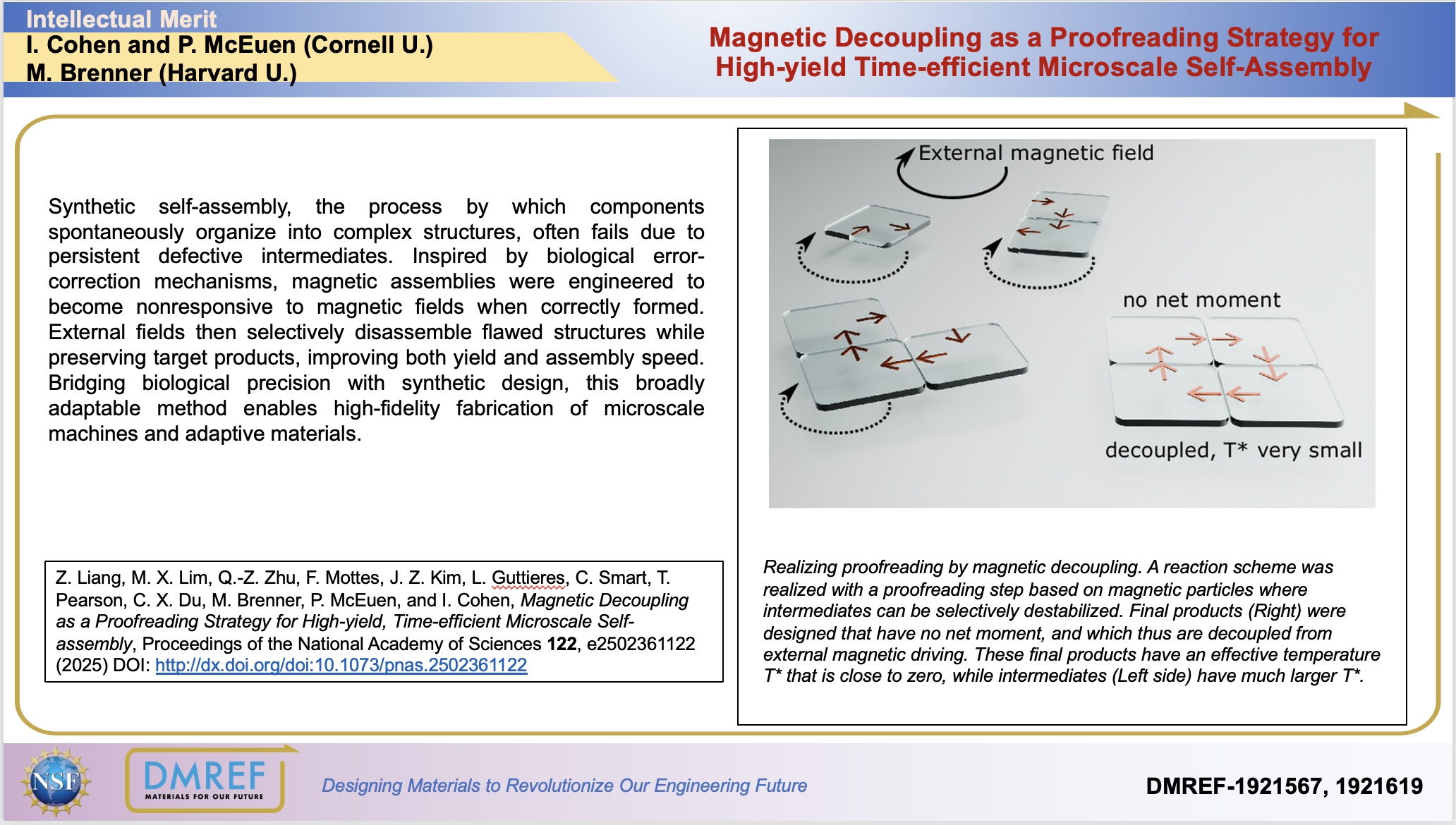
Magnetic Decoupling as a Proofreading Strategy for High-yield Time-efficient Microscale Self-Assembly
Jan 27, 2026
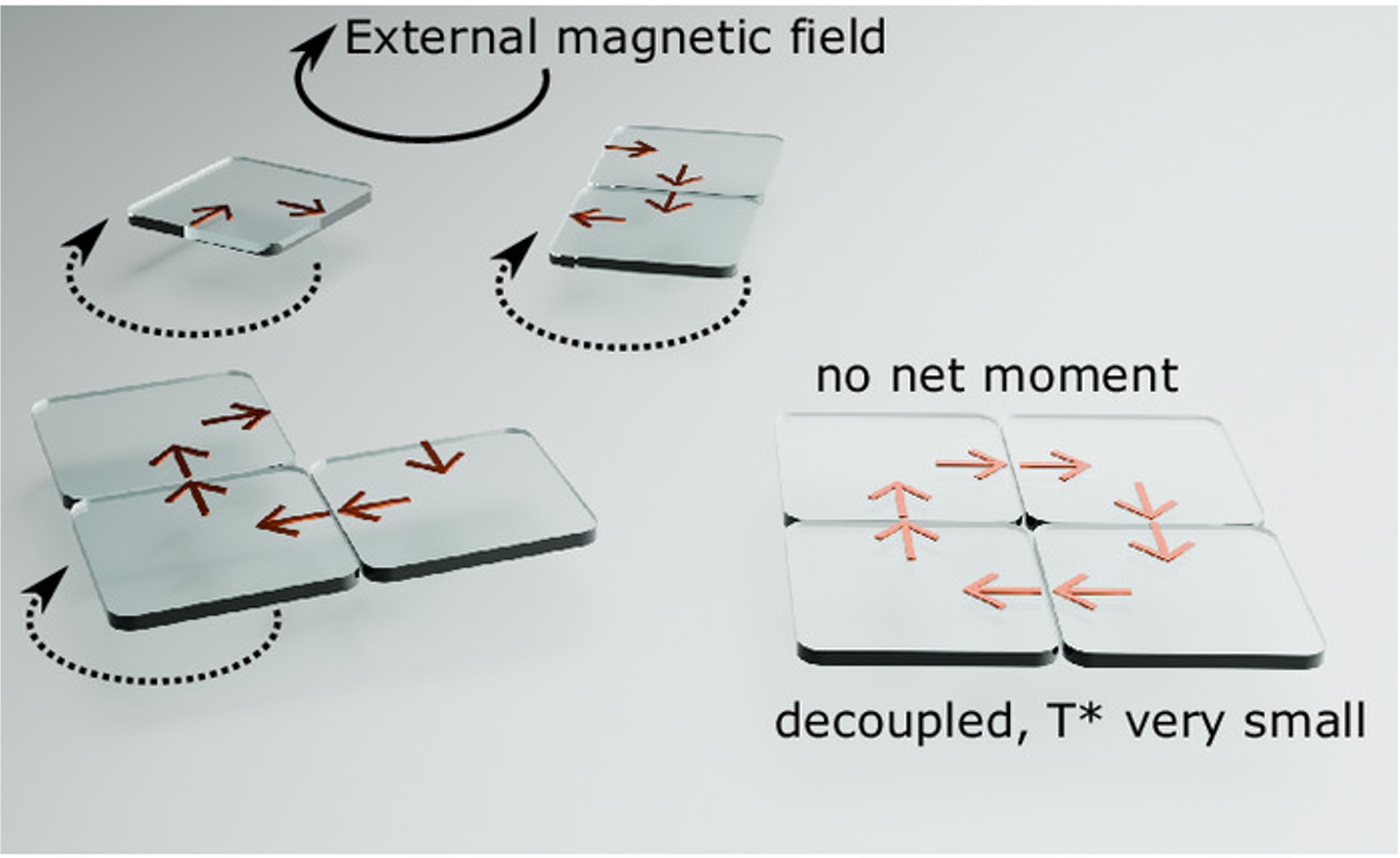
Synthetic self-assembly, the process by which components spontaneously organize into complex structures, often fails due to persistent defective intermediates. Inspired by biological error-correction mechanisms, magnetic assemblies were engineered to become nonresponsive to magnetic fields when correctly formed. External fields then selectively disassemble flawed structures while preserving target products, improving both yield and assembly speed. Bridging biological precision with synthetic design, this broadly adaptable method enables high-fidelity fabrication of microscale machines and adaptive materials.