Emerging Microelectronic Materials by Design
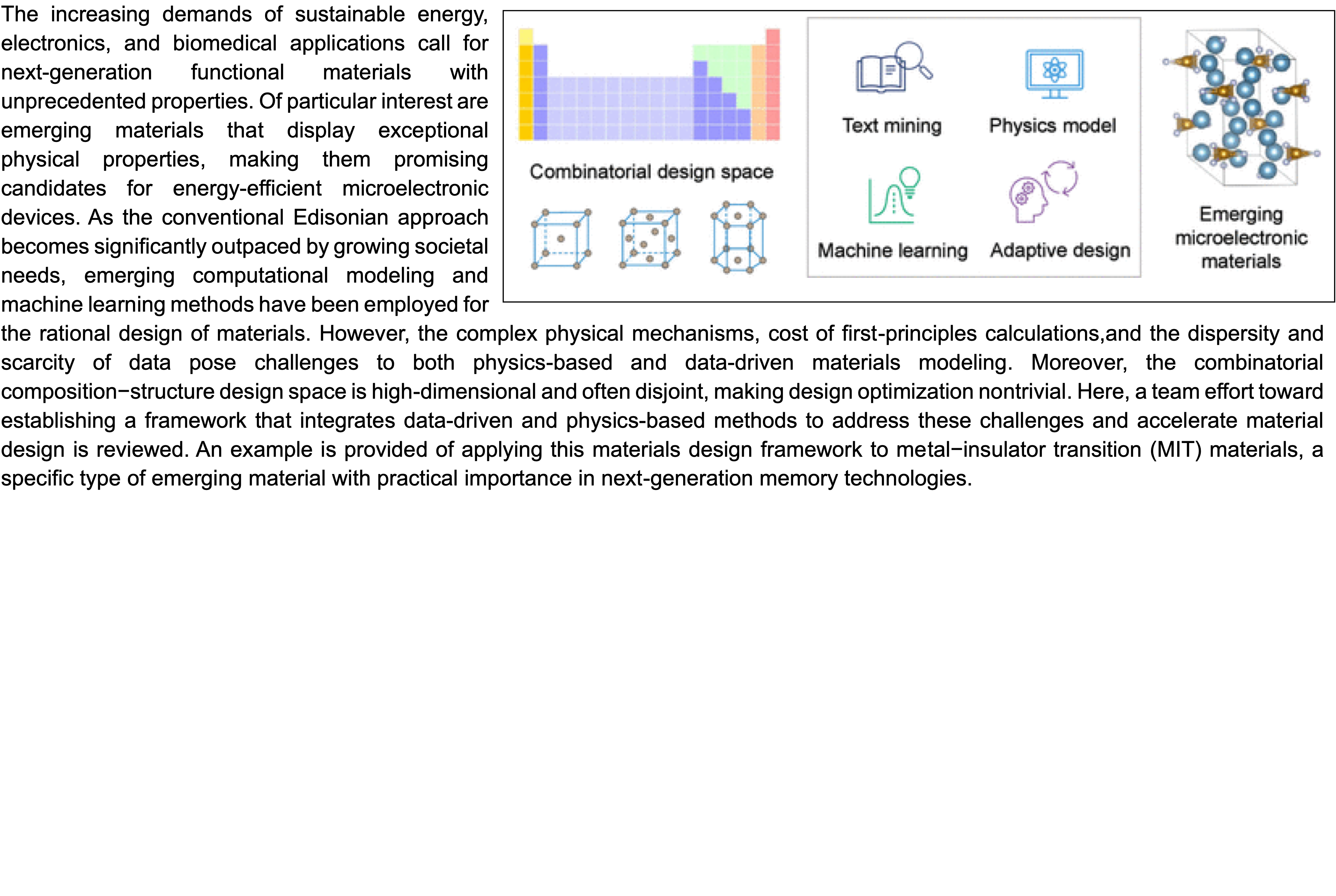
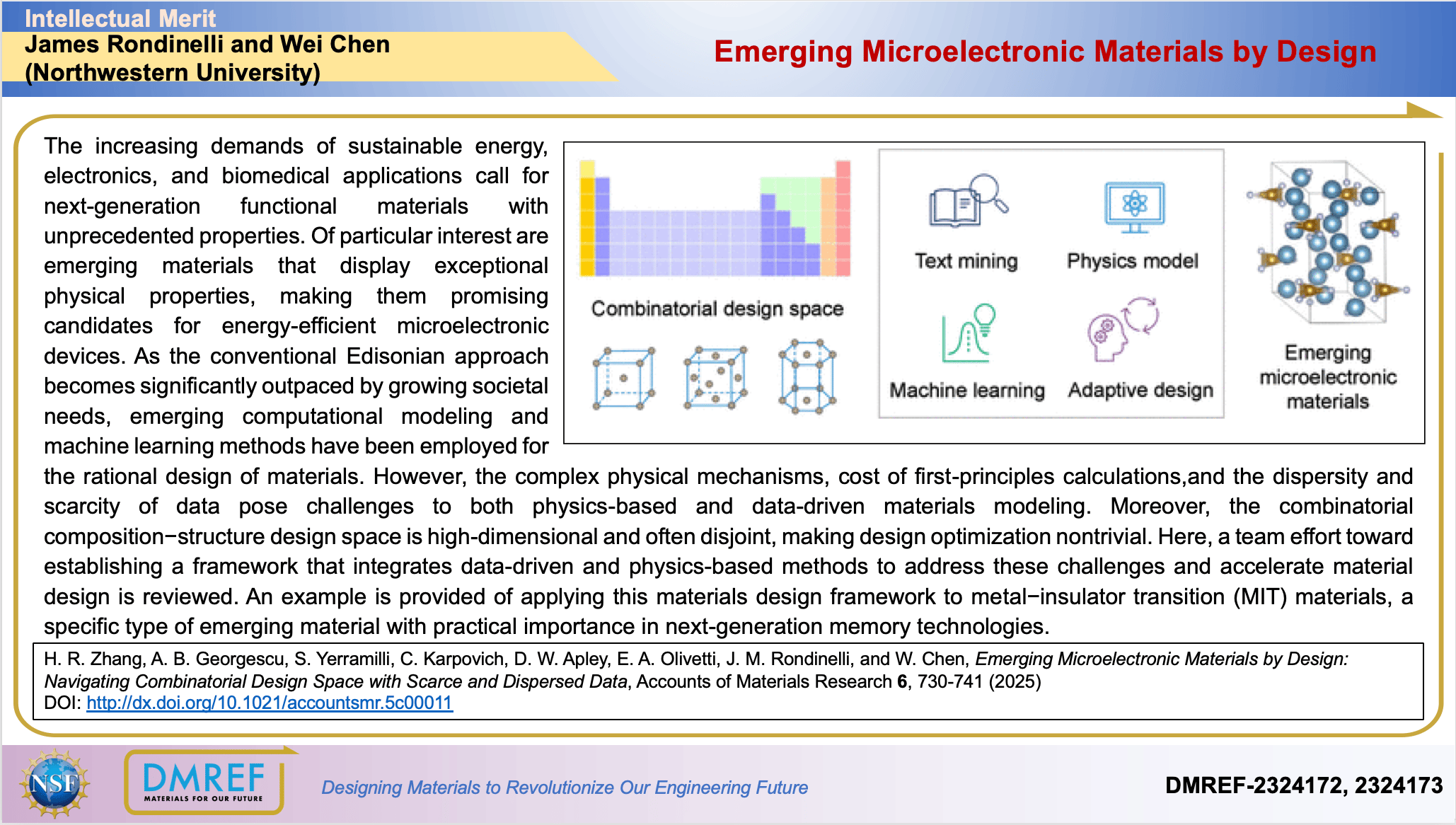
The increasing demands of sustainable energy, electronics, and biomedical applications call for next-generation functional materials with unprecedented properties. Of particular interest are emerging materials that display exceptional physical properties, making them promising candidates for energy-efficient microelectronic devices. As the conventional Edisonian approach becomes significantly outpaced by growing societal needs, emerging computational modeling and machine learning methods have been employed for the rational design of materials. However, the complex physical mechanisms, cost of first-principles calculations,and the dispersity and scarcity of data pose challenges to both physics-based and data-driven materials modeling. Moreover, the combinatorial composition−structure design space is high-dimensional and often disjoint, making design optimization nontrivial. Here, a team effort toward establishing a framework that integrates data-driven and physics-based methods to address these challenges and accelerate material design is reviewed. An example is provided of applying this materials design framework to metal−insulator transition (MIT) materials, a specific type of emerging material with practical importance in next-generation memory technologies.