Accelerating Multicomponent Phase-coexistence Calculations with Physics-informed Neural Networks
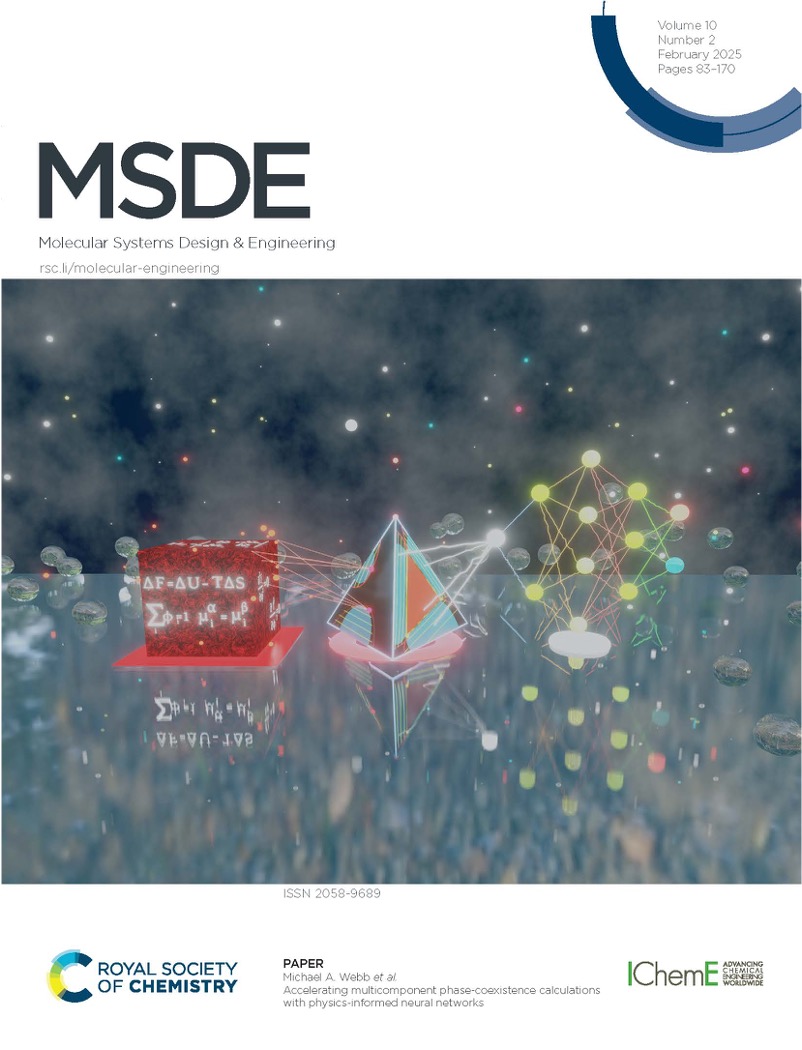
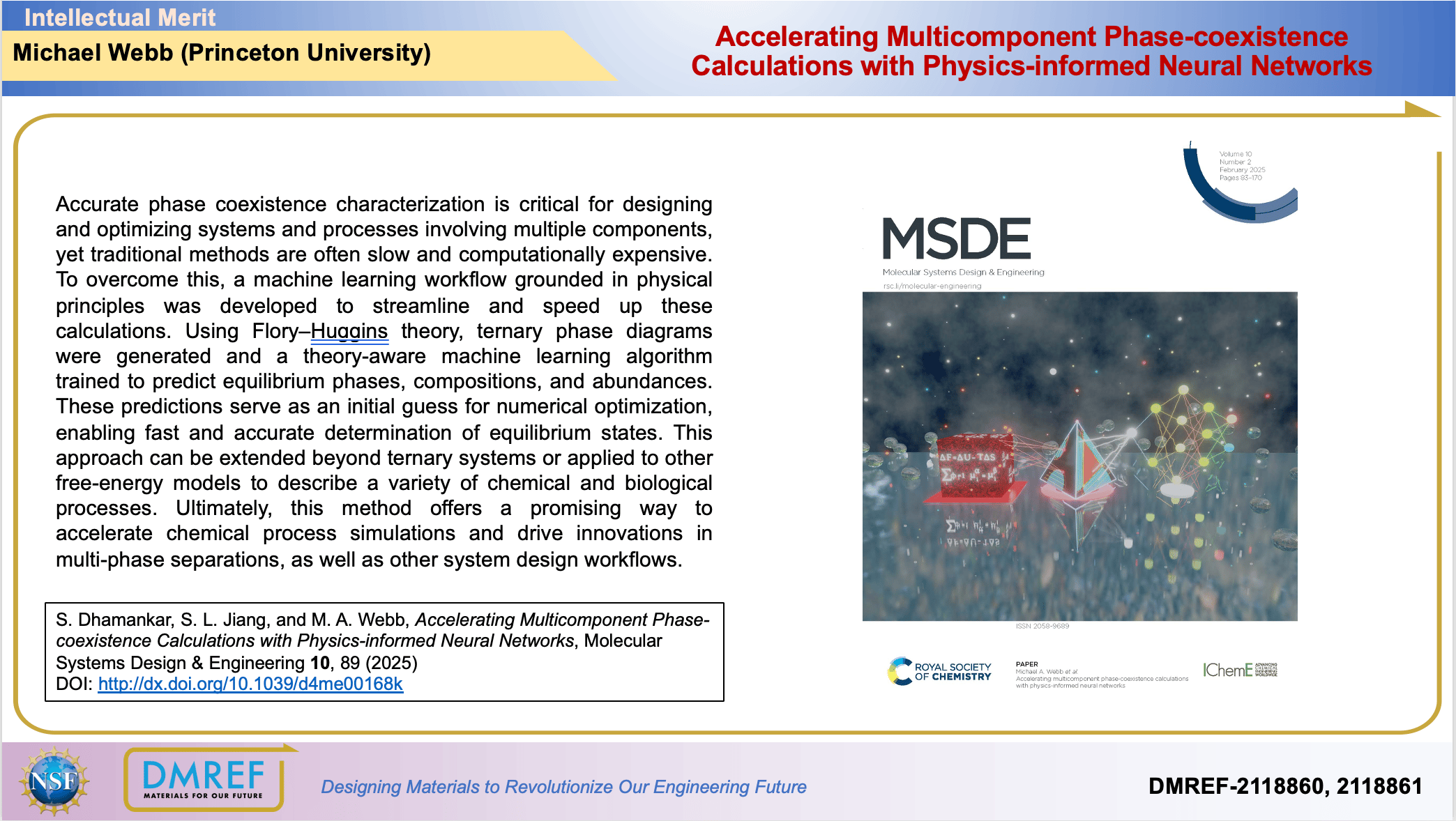
Accurate phase coexistence characterization is critical for designing and optimizing systems and processes involving multiple components, yet traditional methods are often slow and computationally expensive. To overcome this, a machine learning workflow grounded in physical principles was developed to streamline and speed up these calculations. Using Flory–Huggins theory, ternary phase diagrams were generated and a theory-aware machine learning algorithm trained to predict equilibrium phases, compositions, and abundances. These predictions serve as an initial guess for numerical optimization, enabling fast and accurate determination of equilibrium states. This approach can be extended beyond ternary systems or applied to other free-energy models to describe a variety of chemical and biological processes. Ultimately, this method offers a promising way to accelerate chemical process simulations and drive innovations in multi-phase separations, as well as other system design workflows.