Electrochemical Separation and Clean Energy Applications of Rare Earth Elements
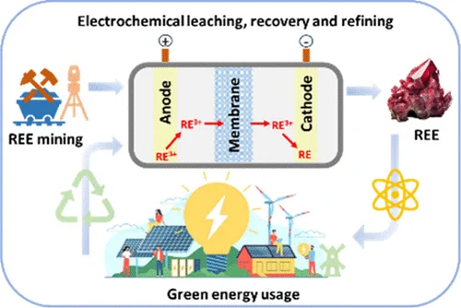
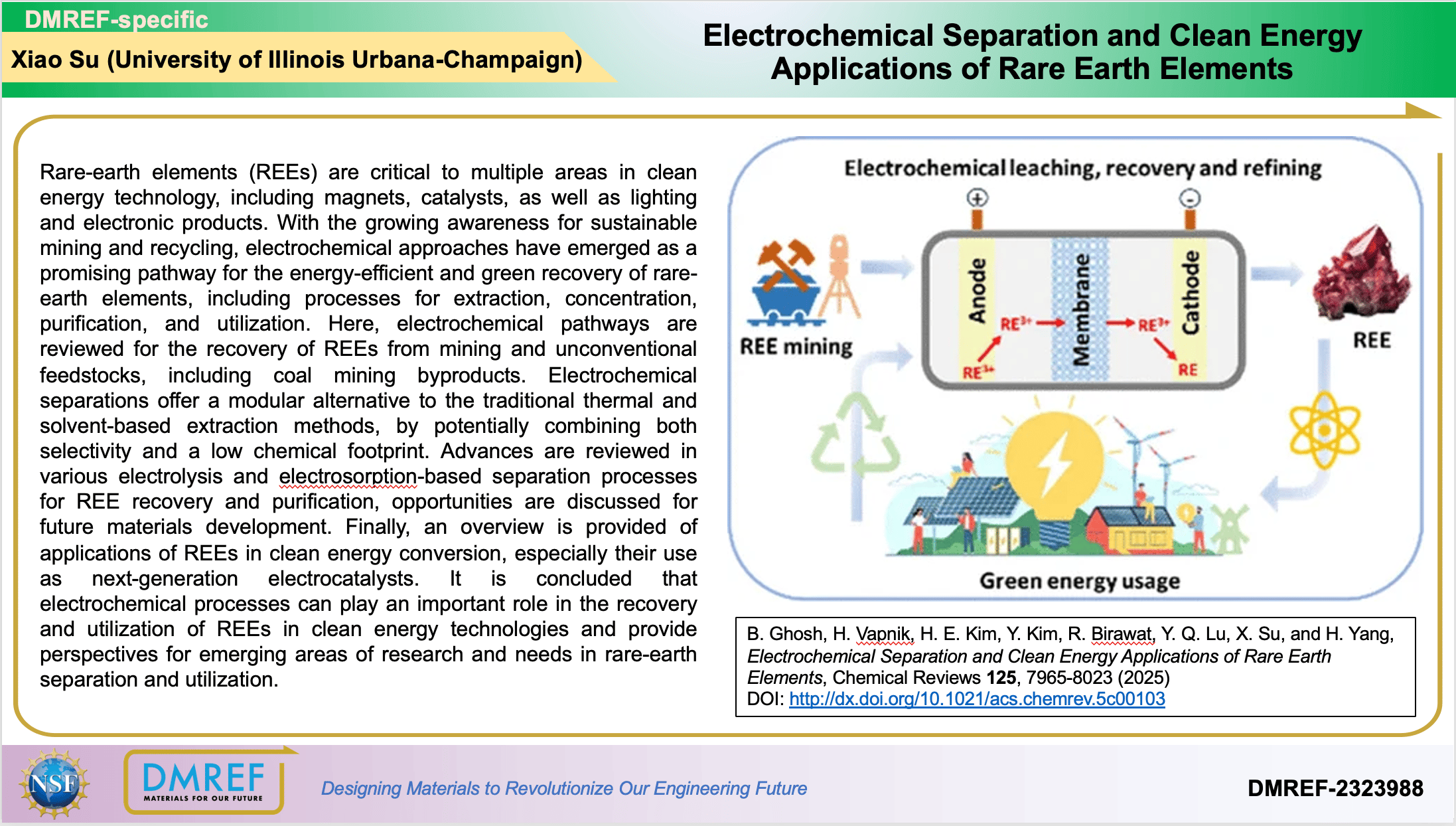
Rare-earth elements (REEs) are critical to multiple areas in clean energy technology, including magnets, catalysts, as well as lighting and electronic products. With the growing awareness for sustainable mining and recycling, electrochemical approaches have emerged as a promising pathway for the energy-efficient and green recovery of rare-earth elements, including processes for extraction, concentration, purification, and utilization. Here, electrochemical pathways are reviewed for the recovery of REEs from mining and unconventional feedstocks, including coal mining byproducts. Electrochemical separations offer a modular alternative to the traditional thermal and solvent-based extraction methods, by potentially combining both selectivity and a low chemical footprint. Advances are reviewed in various electrolysis and electrosorption-based separation processes for REE recovery and purification, opportunities are discussed for future materials development. Finally, an overview is provided of applications of REEs in clean energy conversion, especially their use as next-generation electrocatalysts. It is concluded that electrochemical processes can play an important role in the recovery and utilization of REEs in clean energy technologies and provide perspectives for emerging areas of research and needs in rare-earth separation and utilization.