Conductivity Determines Efficacy of 1D and 2D p-Conjugated Materials
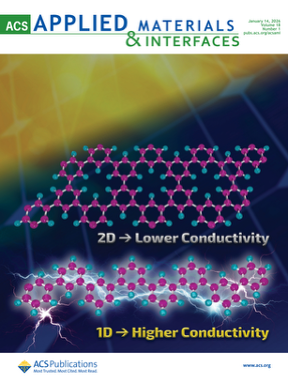
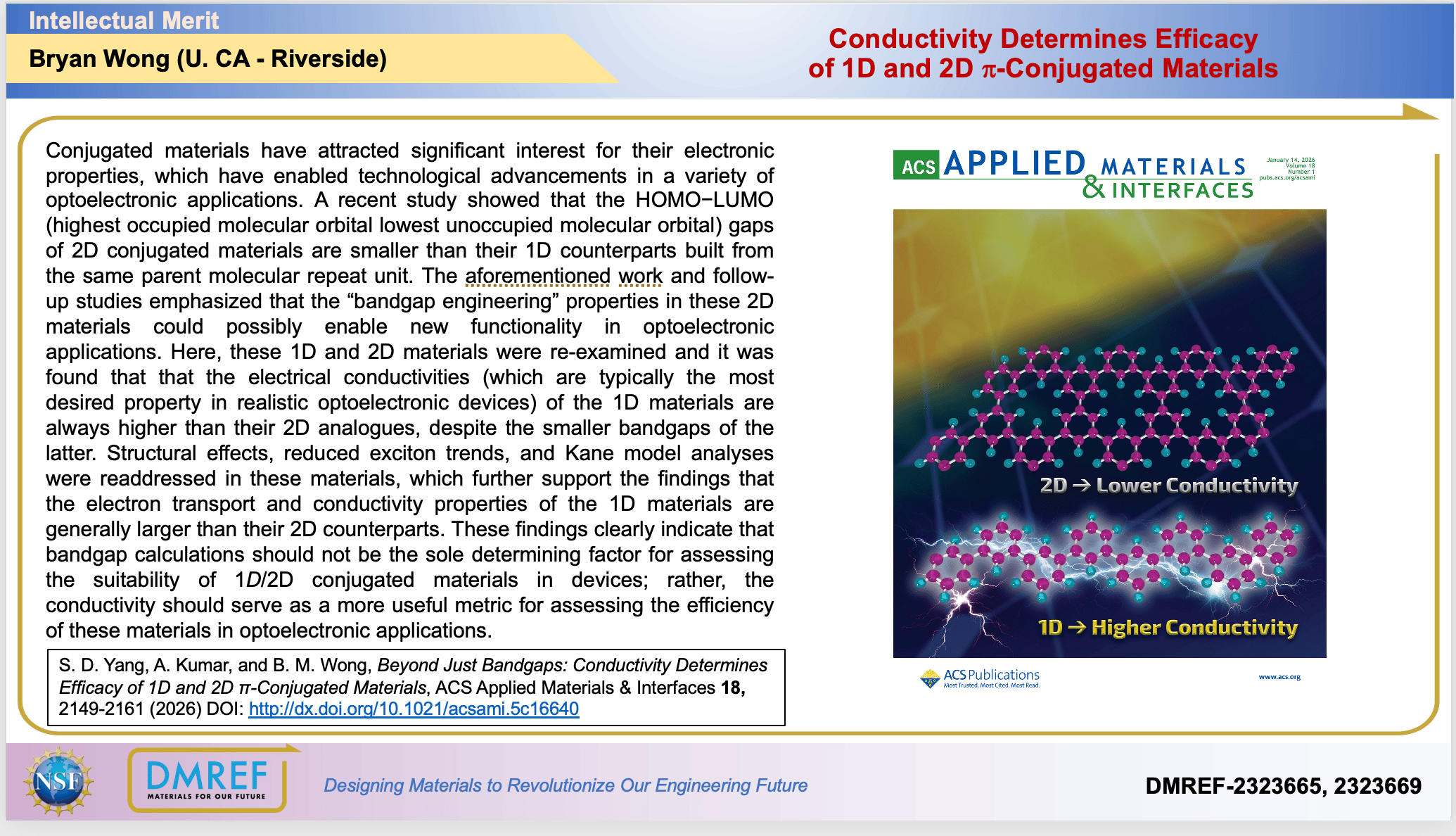
Conjugated materials have attracted significant interest for their electronic properties, which have enabled technological advancements in a variety of optoelectronic applications. A recent study showed that the HOMO−LUMO (highest occupied molecular orbital lowest unoccupied molecular orbital) gaps of 2D conjugated materials are smaller than their 1D counterparts built from the same parent molecular repeat unit. The aforementioned work and follow-up studies emphasized that the “bandgap engineering” properties in these 2D materials could possibly enable new functionality in optoelectronic applications. Here, these 1D and 2D materials were re-examined and it was found that that the electrical conductivities (which are typically the most desired property in realistic optoelectronic devices) of the 1D materials are always higher than their 2D analogues, despite the smaller bandgaps of the latter. Structural effects, reduced exciton trends, and Kane model analyses were readdressed in these materials, which further support the findings that the electron transport and conductivity properties of the 1D materials are generally larger than their 2D counterparts. These findings clearly indicate that bandgap calculations should not be the sole determining factor for assessing the suitability of 1D/2D conjugated materials in devices; rather, the conductivity should serve as a more useful metric for assessing the efficiency of these materials in optoelectronic applications.