Electrically Tunable Picosecond-scale Octupole Fluctuations in Chiral Antiferromagnets
Probabilistic computing is an emerging approach that leverages controlled randomness to solve complex problems—such as optimization, machine learning, and AI—more efficiently than traditional computers. To make probabilistic computing practical at scale, compact, fast, and tunable elements are needed that can generate randomness reliably on a chip. Low barrier ferromagnets are considered promising for this purpose, however, they face major challenges: their bits switch slowly and produce strong stray fields, which interfere with neighboring bits and limit the speed, reliability, and tunability of randomness.
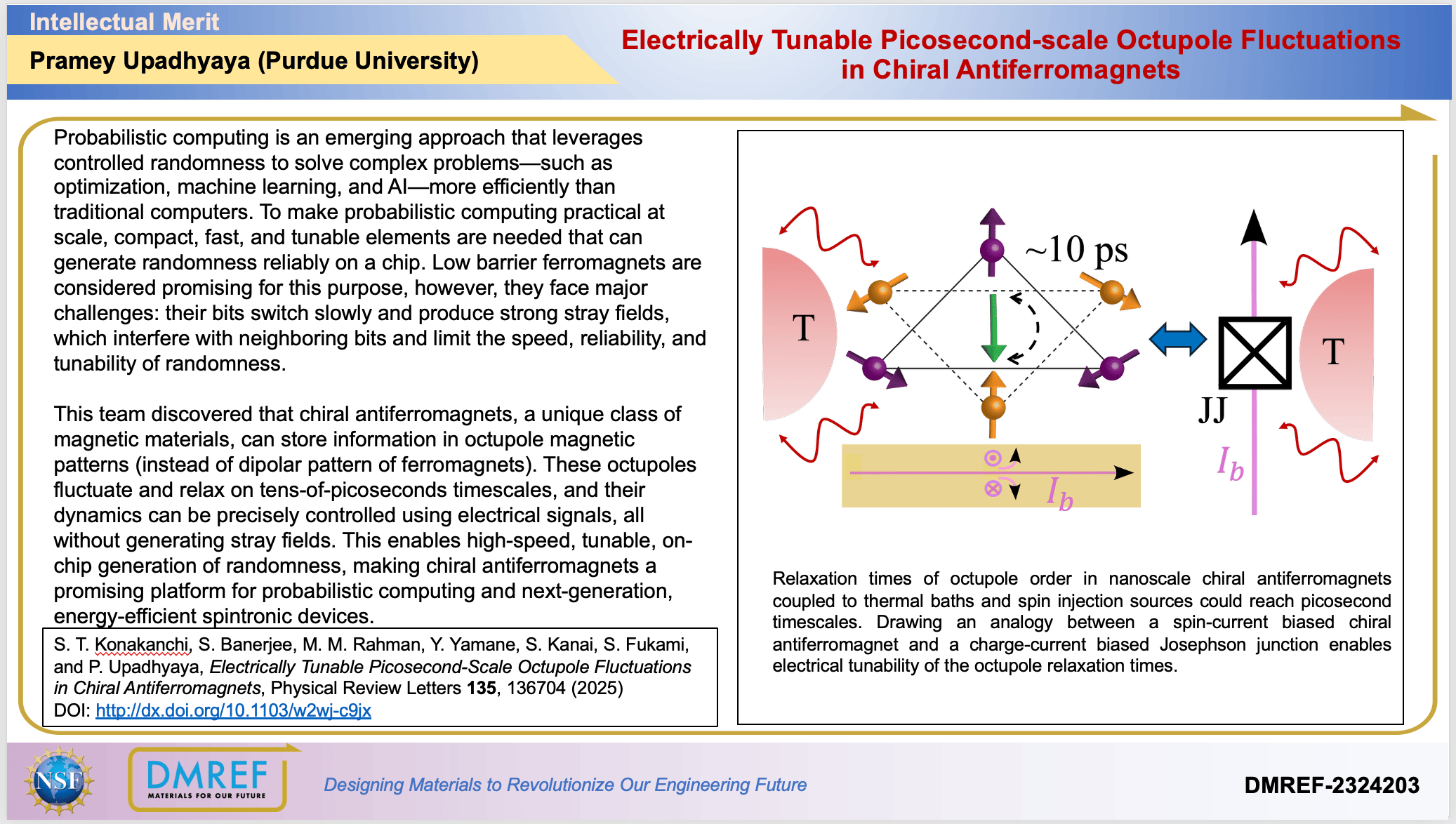
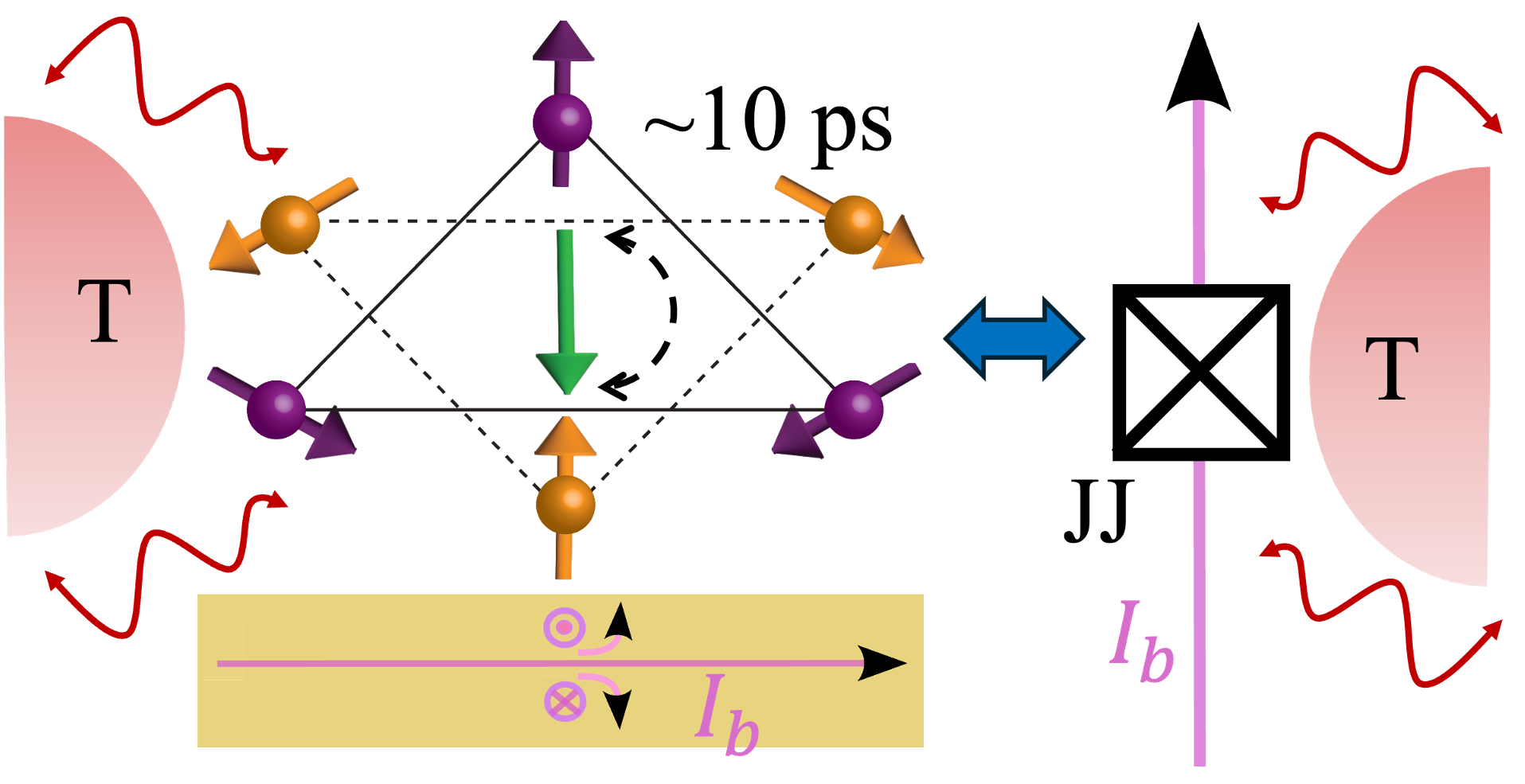
This team discovered that chiral antiferromagnets, a unique class of magnetic materials, can store information in octupole magnetic patterns (instead of dipolar pattern of ferromagnets). These octupoles fluctuate and relax on tens-of-picoseconds timescales, and their dynamics can be precisely controlled using electrical signals, all without generating stray fields. This enables high-speed, tunable, on-chip generation of randomness, making chiral antiferromagnets a promising platform for probabilistic computing and next-generation, energy-efficient spintronic devices.