Vertically Integrated Project Courses
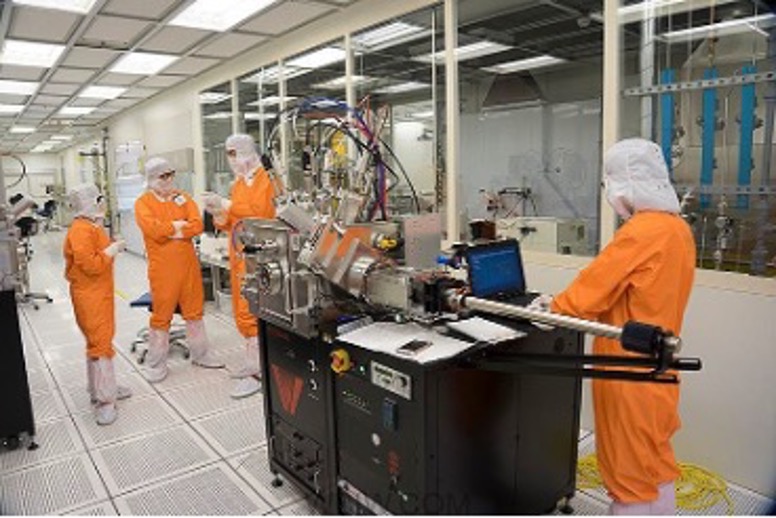
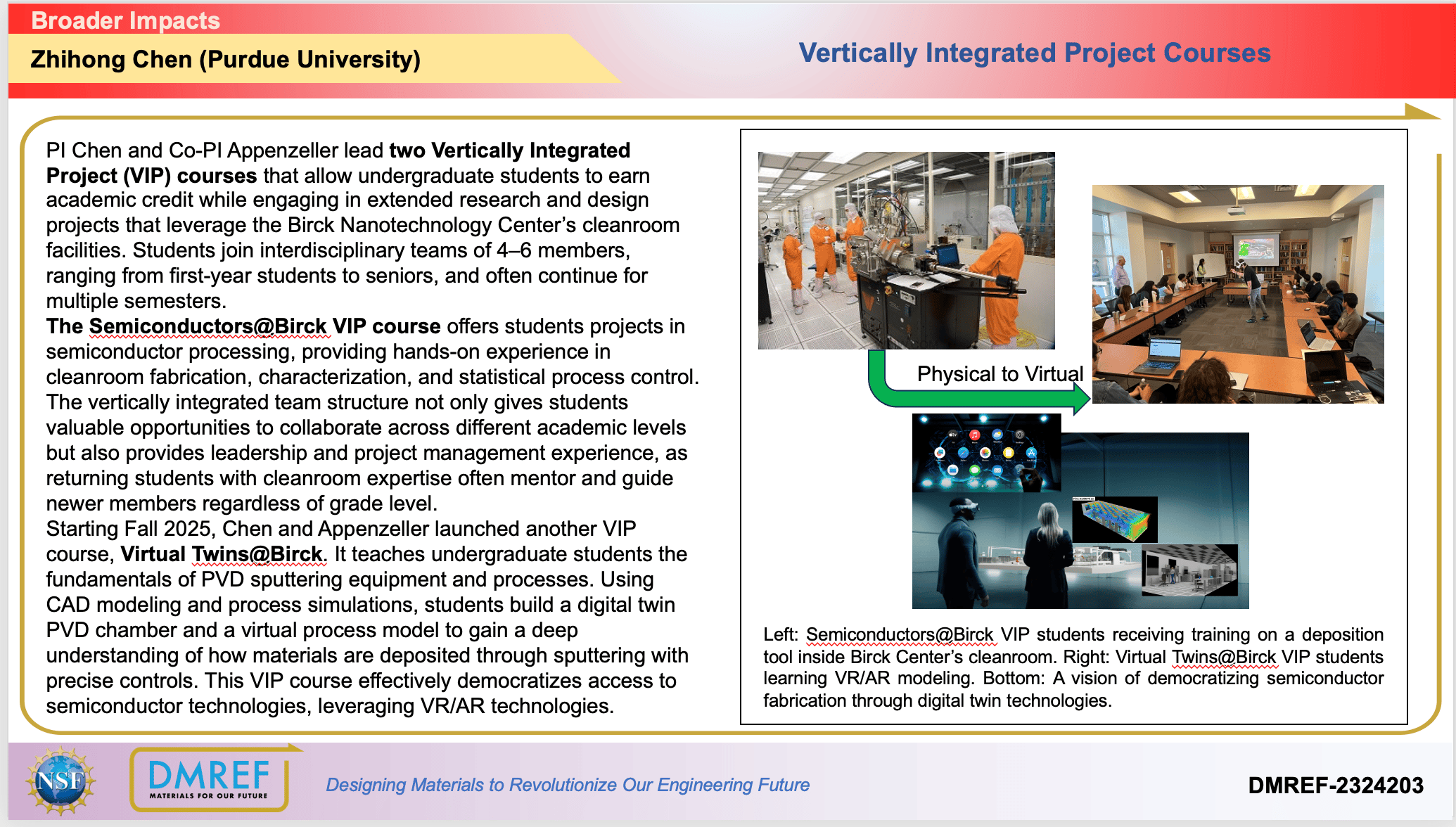
PI Chen and Co-PI Appenzeller lead two Vertically Integrated Project (VIP) courses that allow undergraduate students to earn academic credit while engaging in extended research and design projects that leverage the Birck Nanotechnology Center’s cleanroom facilities. Students join interdisciplinary teams of 4–6 members, ranging from first-year students to seniors, and often continue for multiple semesters.
The Semiconductors@Birck VIP course offers students projects in semiconductor processing, providing hands-on experience in cleanroom fabrication, characterization, and statistical process control. The vertically integrated team structure not only gives students valuable opportunities to collaborate across different academic levels but also provides leadership and project management experience, as returning students with cleanroom expertise often mentor and guide newer members regardless of grade level.
Starting Fall 2025, Chen and Appenzeller launched another VIP course, Virtual Twins@Birck. It teaches undergraduate students the fundamentals of PVD sputtering equipment and processes. Using CAD modeling and process simulations, students build a digital twin PVD chamber and a virtual process model to gain a deep understanding of how materials are deposited through sputtering with precise controls. This VIP course effectively democratizes access to semiconductor technologies, leveraging VR/AR technologies.