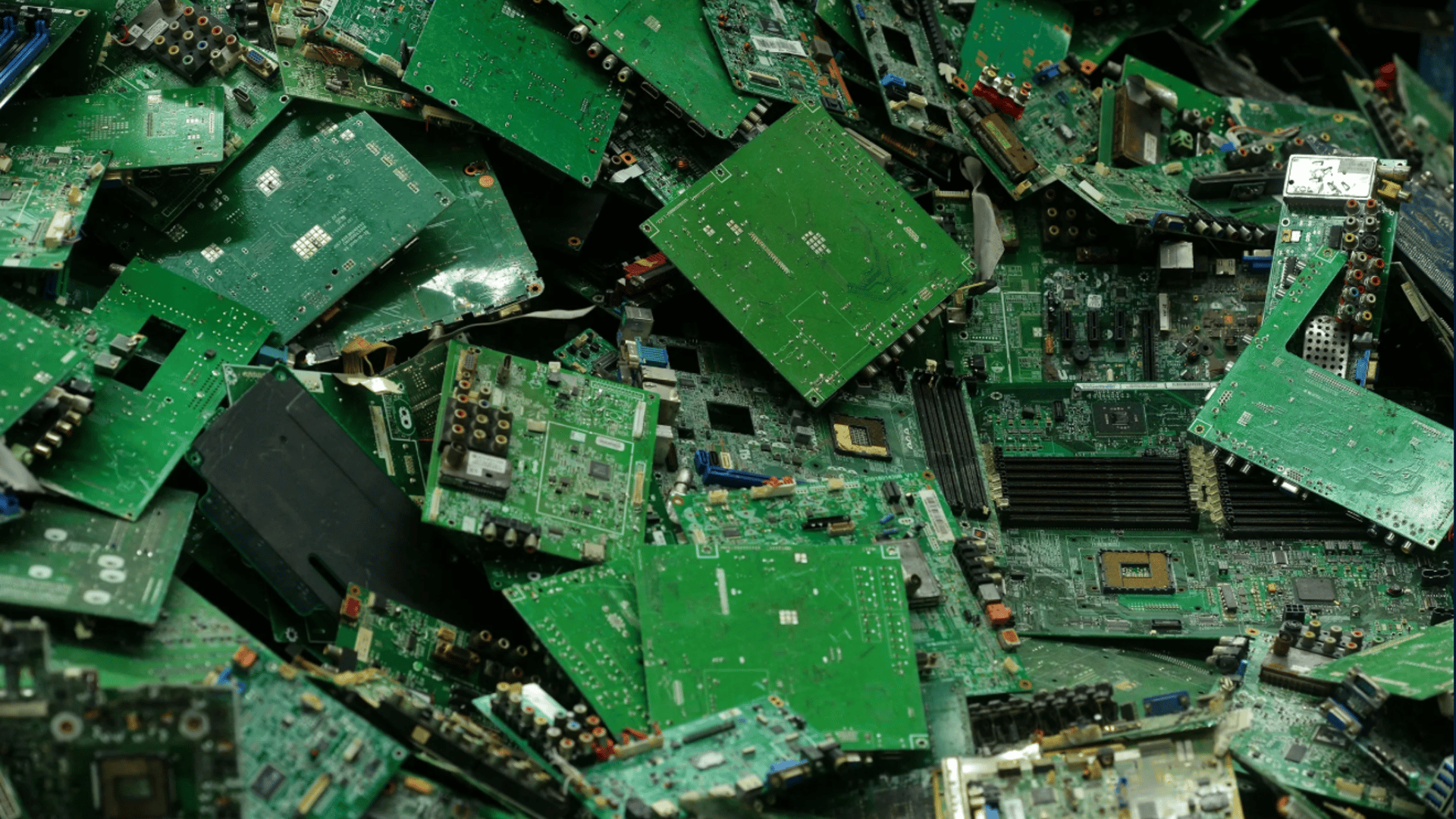
Rare-earth elements and platinum group metals may not be household names, but they show up in many of the technologies we use every day. They are essential to products such as smartphones, LED lights, clean energy systems and advanced electronics. They are also difficult to separate and recover, especially when they are found in low concentrations or mixed with many other elements in waste streams.
A NSF DMREF team led by Xiao Su, professor of chemical and biomolecular engineering at the University of Illinois Urbana-Champaign, is working to address that challenge. The project, “Rational Design of Redox-responsive Materials for Critical Element Separations,” focuses on developing more sustainable ways to recover rare-earth elements and platinum group metals from waste streams.
The team is using electrically driven separations — an approach that could reduce the need for added chemicals and be powered by renewable energy. At the center of the work are redox-responsive electrode materials made from conductive polymers and carbon nanotubes. These materials are designed to selectively bind valuable ions when an electric potential is applied, allowing researchers to separate and recover targeted elements more efficiently.
The work matters because demand for critical elements is growing, while recovering them remains a major technical and environmental challenge. More efficient recycling and recovery could help reduce waste, strengthen supply chains and make better use of materials that might otherwise be discarded.
The research is also moving toward practical applications. Su and his group have helped launch Valor Metals, Inc., a startup focused on recovering valuable metals from waste streams, including electronic waste and ore, using an electrochemical process.
“We are grateful for the NSF DMREF program and NSF for this opportunity to develop advanced separation materials,” says Su. “We envision these new redox-materials to be incorporated into low waste, plug-and-play electrochemical systems for recovering valuable elements from complex feedstocks, and to have a transformative impact towards cleaner, efficient and more scalable metal refinement.”