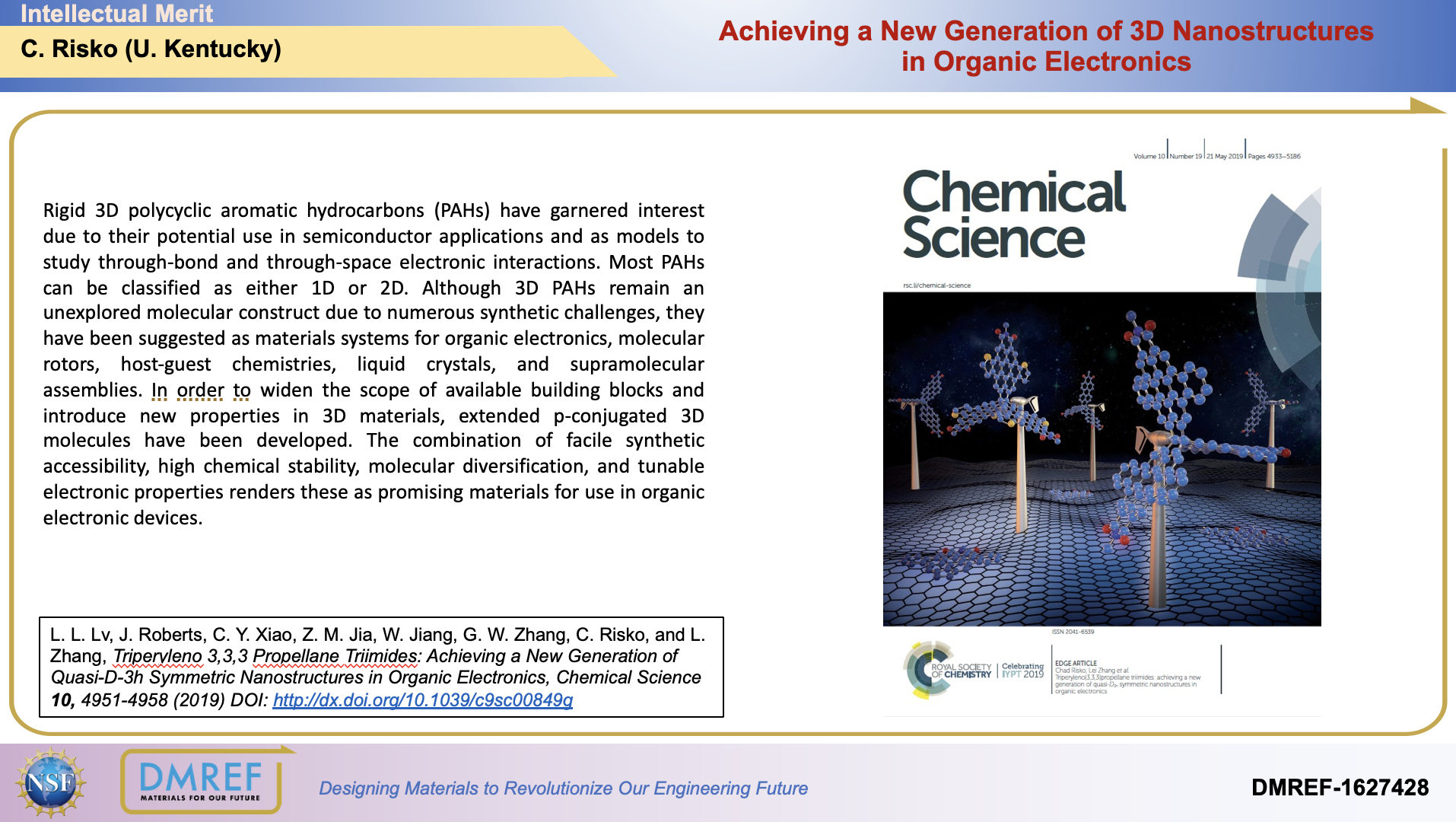
Achieving a New Generation of 3D Nanostructures in Organic Electronics
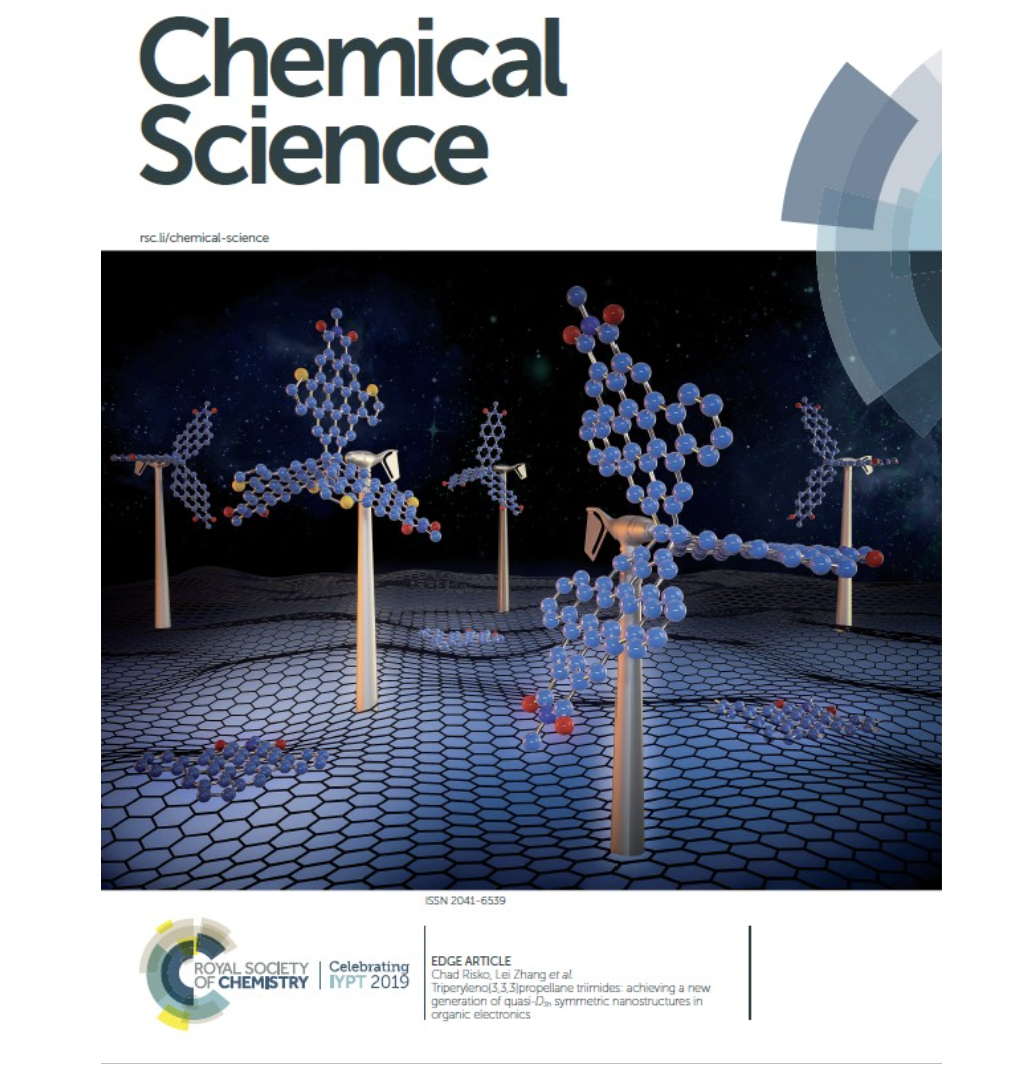
Rigid 3D polycyclic aromatic hydrocarbons (PAHs) have garnered interest due to their potential use in semiconductor applications and as models to study through-bond and through-space electronic interactions. Most PAHs can be classified as either 1D or 2D.
Although 3D PAHs remain an unexplored molecular construct due to numerous synthetic challenges, they have been suggested as materials systems for organic electronics, molecular rotors, host-guest chemistries, liquid crystals, and supramolecular assemblies.
In order to widen the scope of available building blocks and introduce new properties in 3D materials, extended p-conjugated 3D molecules have been developed. The combination of facile synthetic accessibility, high chemical stability, molecular diversification, and tunable electronic properties renders these as promising materials for use in organic electronic devices.