Reverse Engineering of Materials Properties
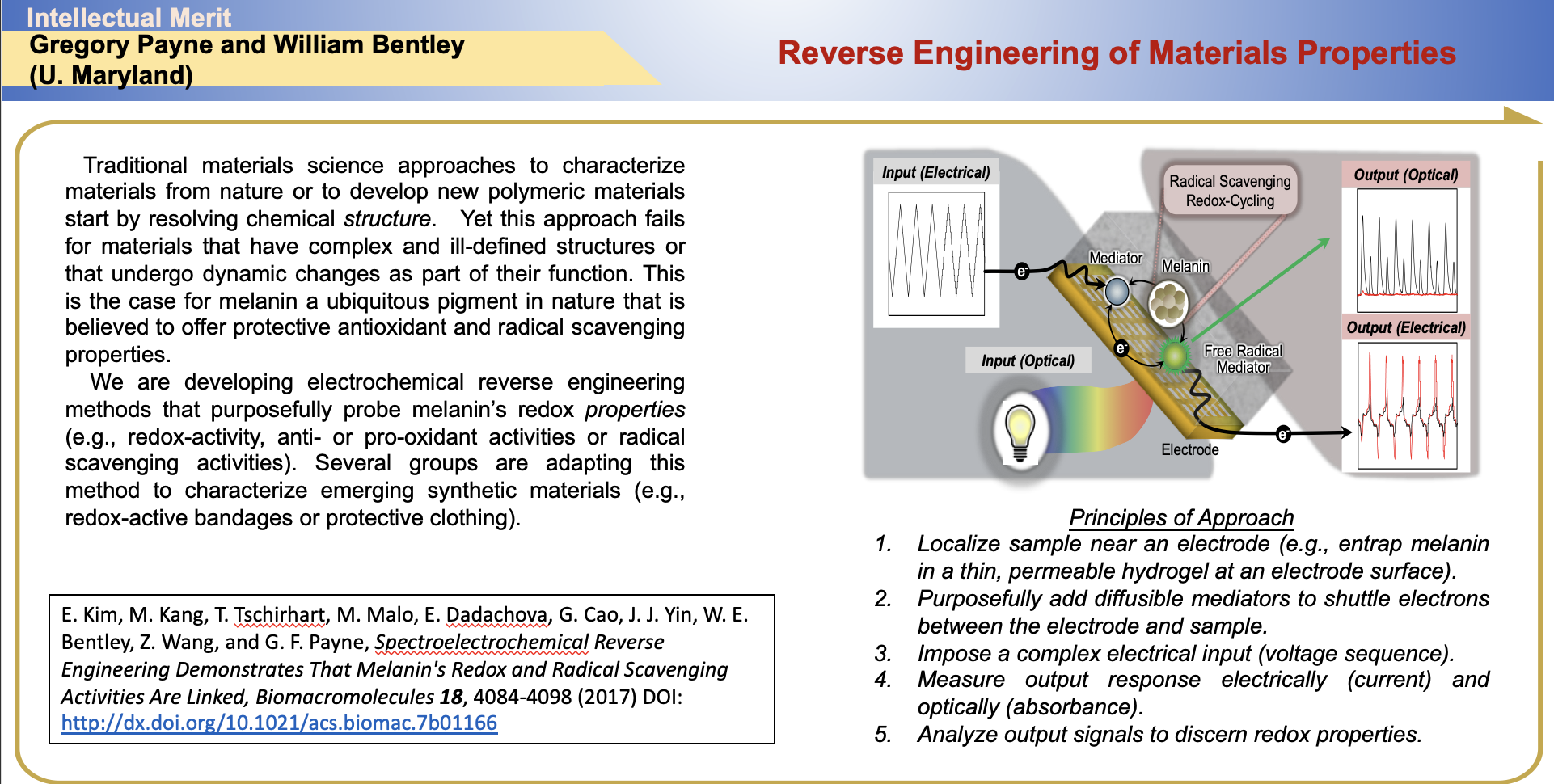
Traditional materials science approaches to characterize materials from nature or to develop new polymeric materials start by resolving chemical structure. Yet this approach fails for materials that have complex and ill-defined structures or that undergo dynamic changes as part of their function. This is the case for melanin a ubiquitous pigment in nature that is believed to offer protective antioxidant and radical scavenging properties.
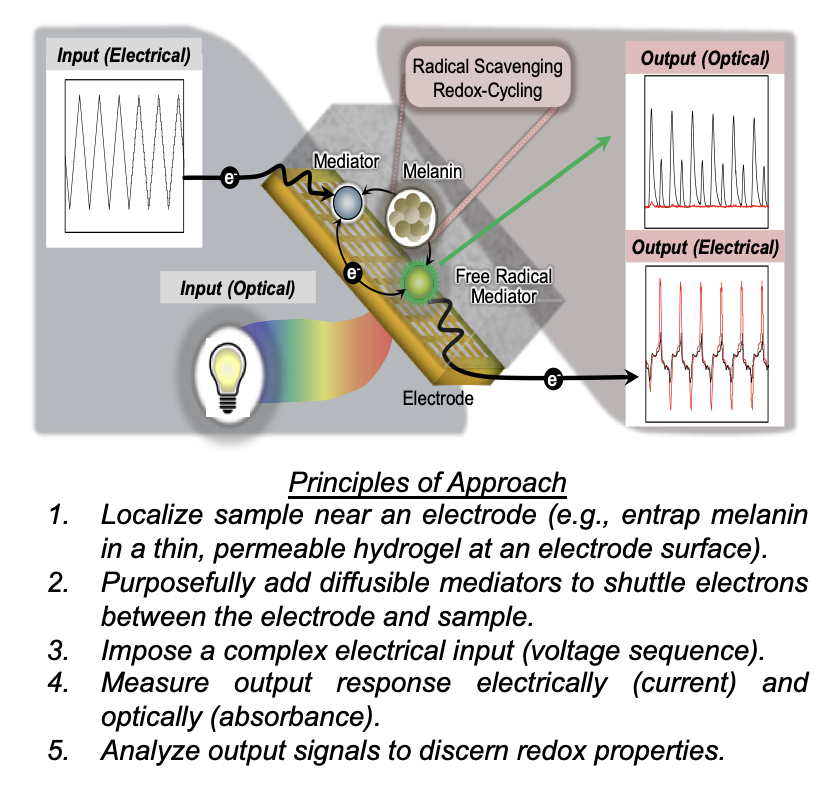
We are developing electrochemical reverse engineering methods that purposefully probe melanin’s redox properties (e.g., redox-activity, anti- or pro-oxidant activities or radical scavenging activities). Several groups are adapting this method to characterize emerging synthetic materials (e.g., redox-active bandages or protective clothing).