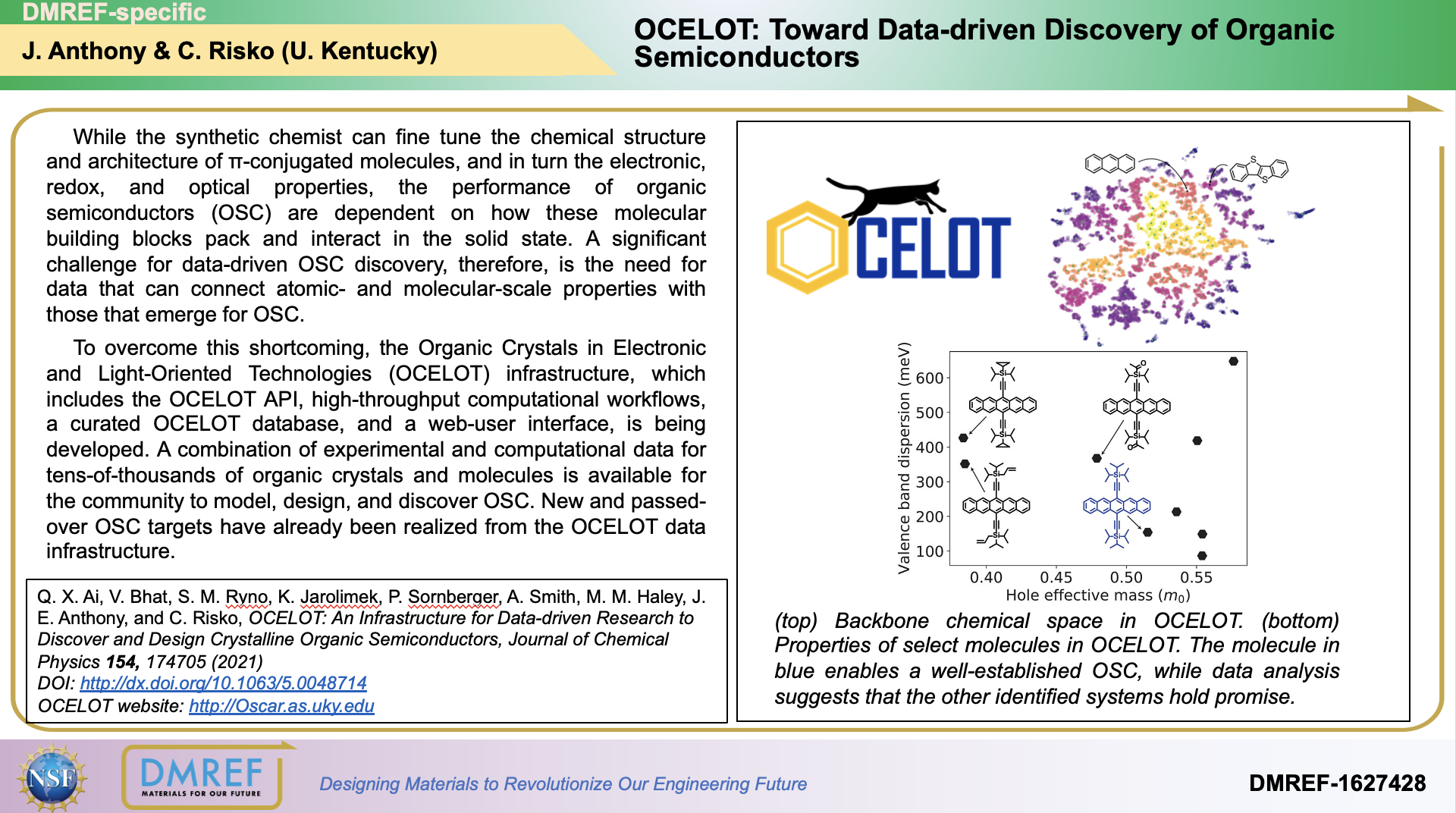
OCELOT: Toward Data-driven Discovery of Organic Semiconductors
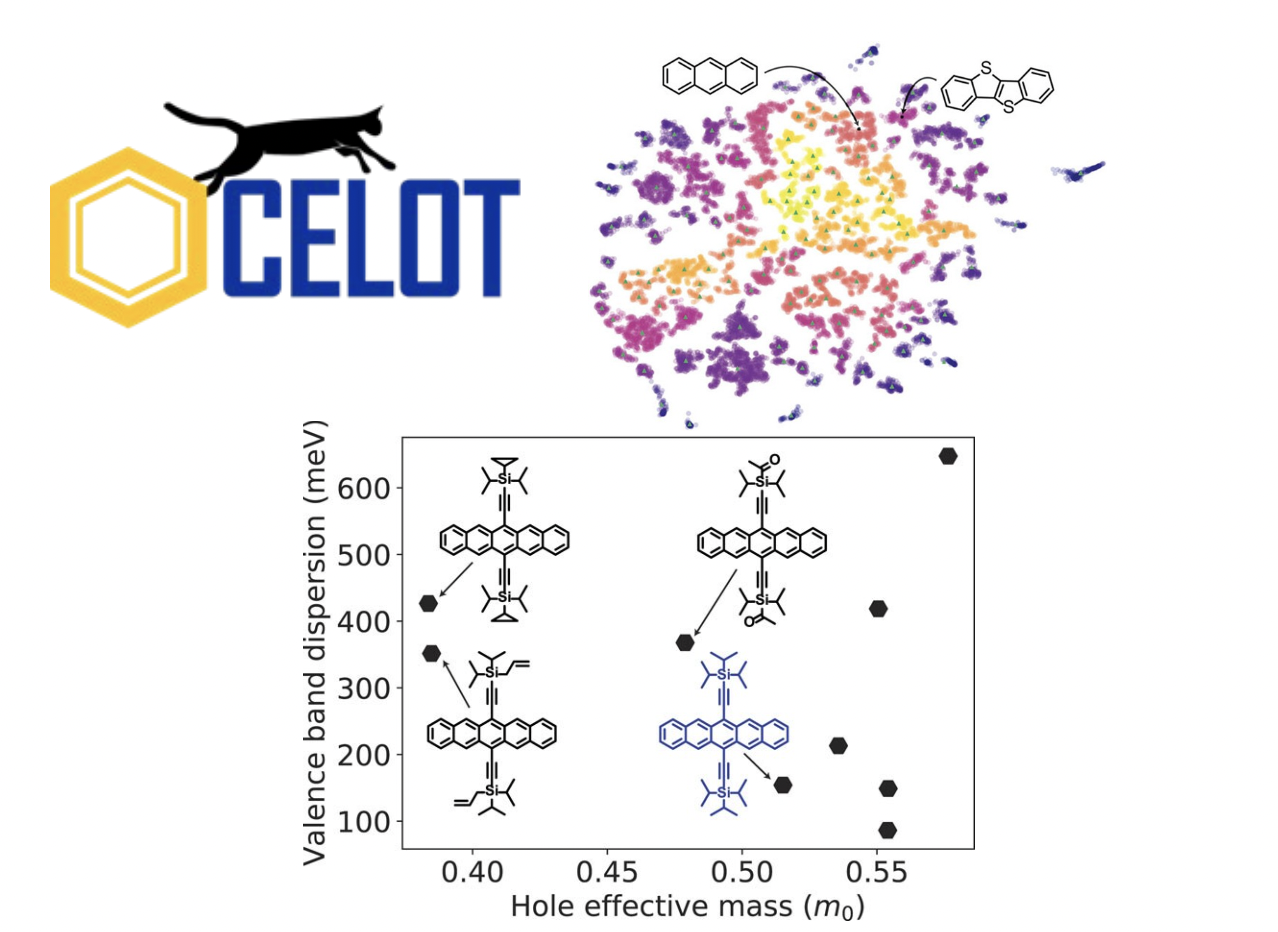
While the synthetic chemist can fine tune the chemical structure and architecture of π-conjugated molecules, and in turn the electronic, redox, and optical properties, the performance of organic semiconductors (OSC) are dependent on how these molecular building blocks pack and interact in the solid state. A significant challenge for data-driven OSC discovery, therefore, is the need for data that can connect atomic- and molecular-scale properties with those that emerge for OSC.
To overcome this shortcoming, the Organic Crystals in Electronic and Light-Oriented Technologies (OCELOT) infrastructure, which includes the OCELOT API, high-throughput computational workflows, a curated OCELOT database, and a web-user interface, is being developed. A combination of experimental and computational data for tens-of-thousands of organic crystals and molecules is available for the community to model, design, and discover OSC. New and passed-over OSC targets have already been realized from the OCELOT data infrastructure.