Reconfiguring Hydrogels by Switching Crosslinks
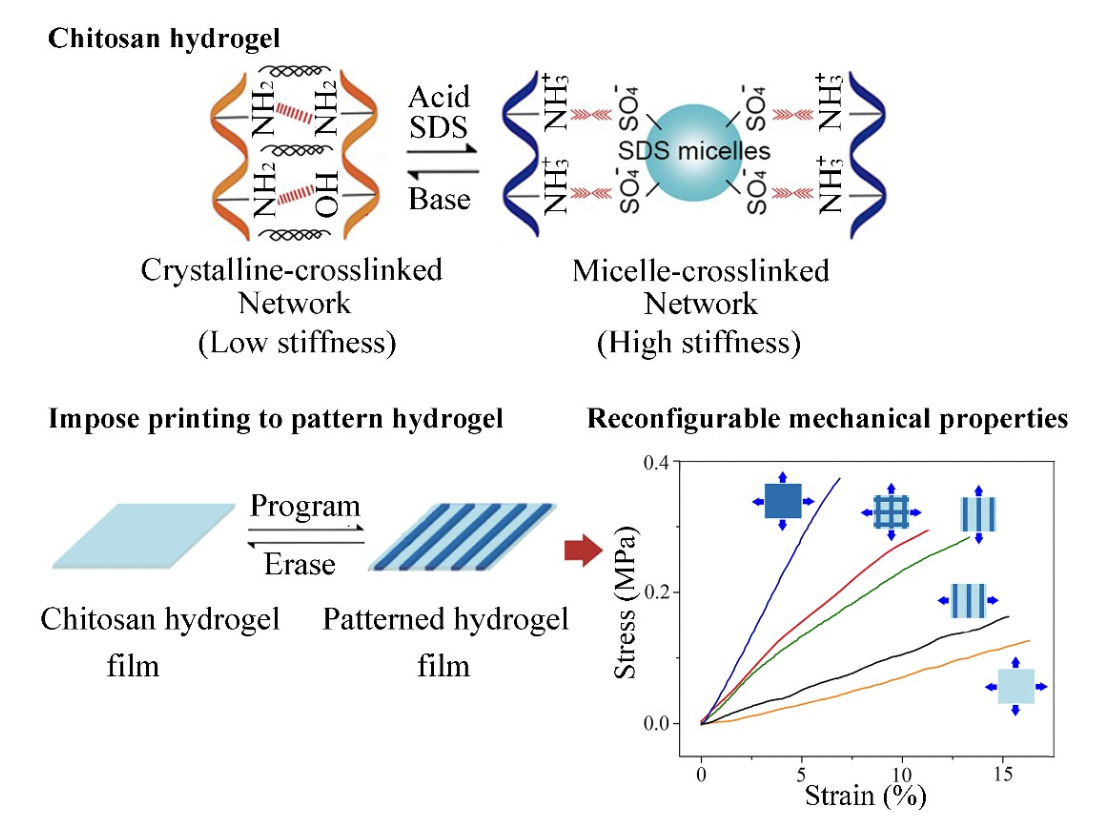
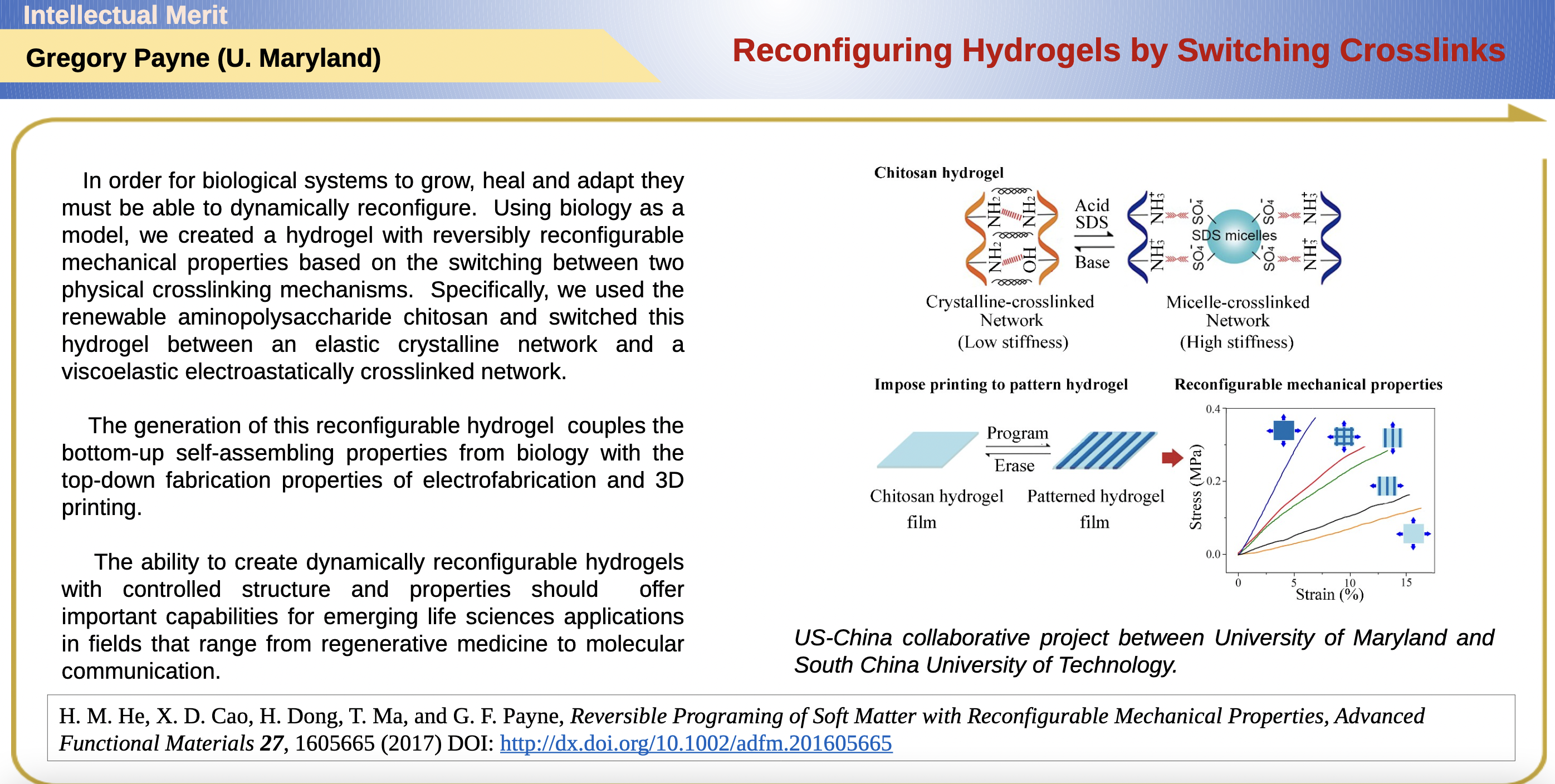
In order for biological systems to grow, heal and adapt they must be able to dynamically reconfigure. Using biology as a model, we created a hydrogel with reversibly reconfigurable mechanical properties based on the switching between two physical crosslinking mechanisms. Specifically, we used the renewable aminopolysaccharide chitosan and switched this hydrogel between an elastic crystalline network and a viscoelastic electroastatically crosslinked network.
The generation of this reconfigurable hydrogel couples the bottom-up self-assembling properties from biology with the top-down fabrication properties of electrofabrication and 3D printing.
The ability to create dynamically reconfigurable hydrogels with controlled structure and properties should offer important capabilities for emerging life sciences applications in fields that range from regenerative medicine to molecular communication.