Engineering Infrared Transparency via Deuteration
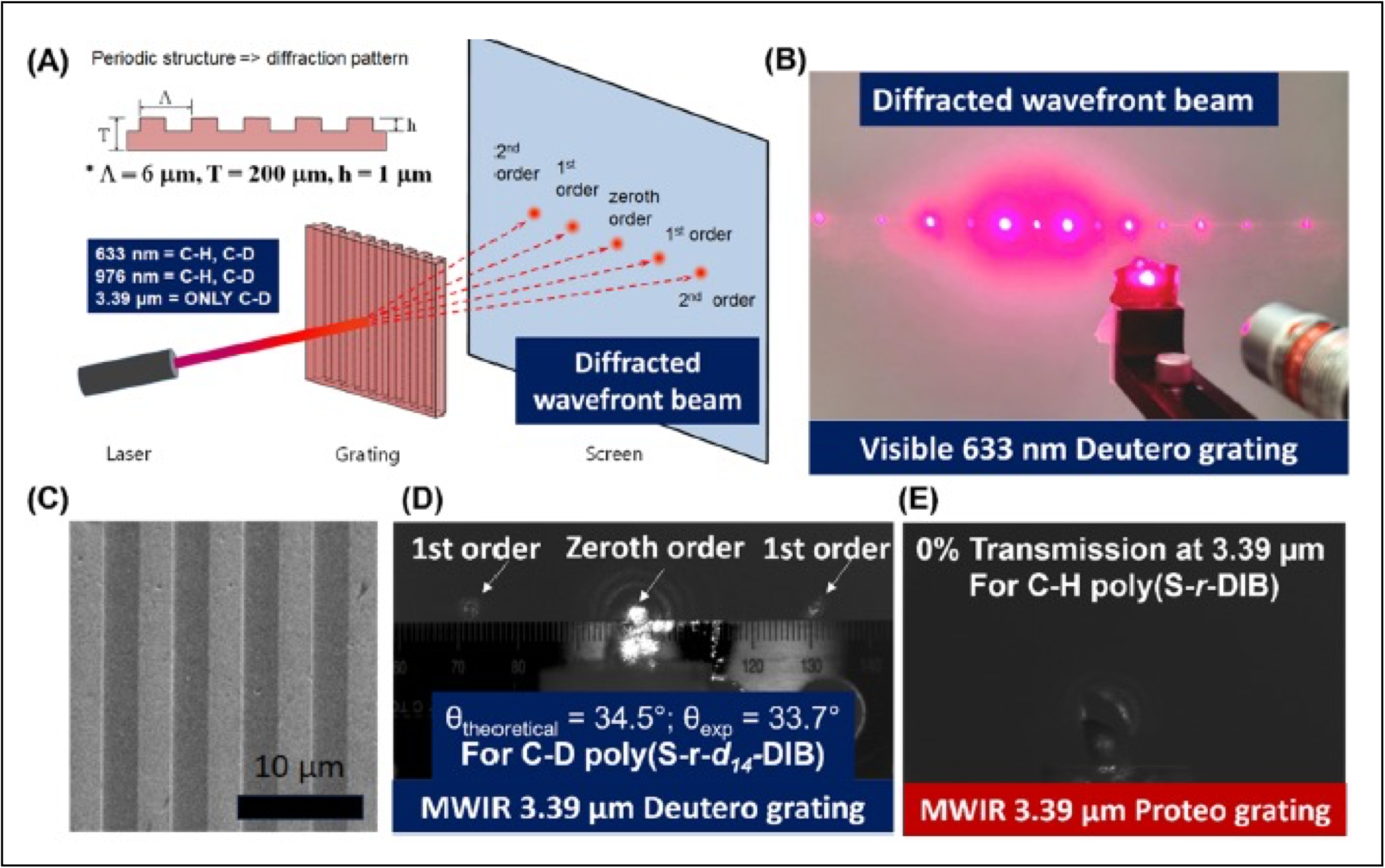
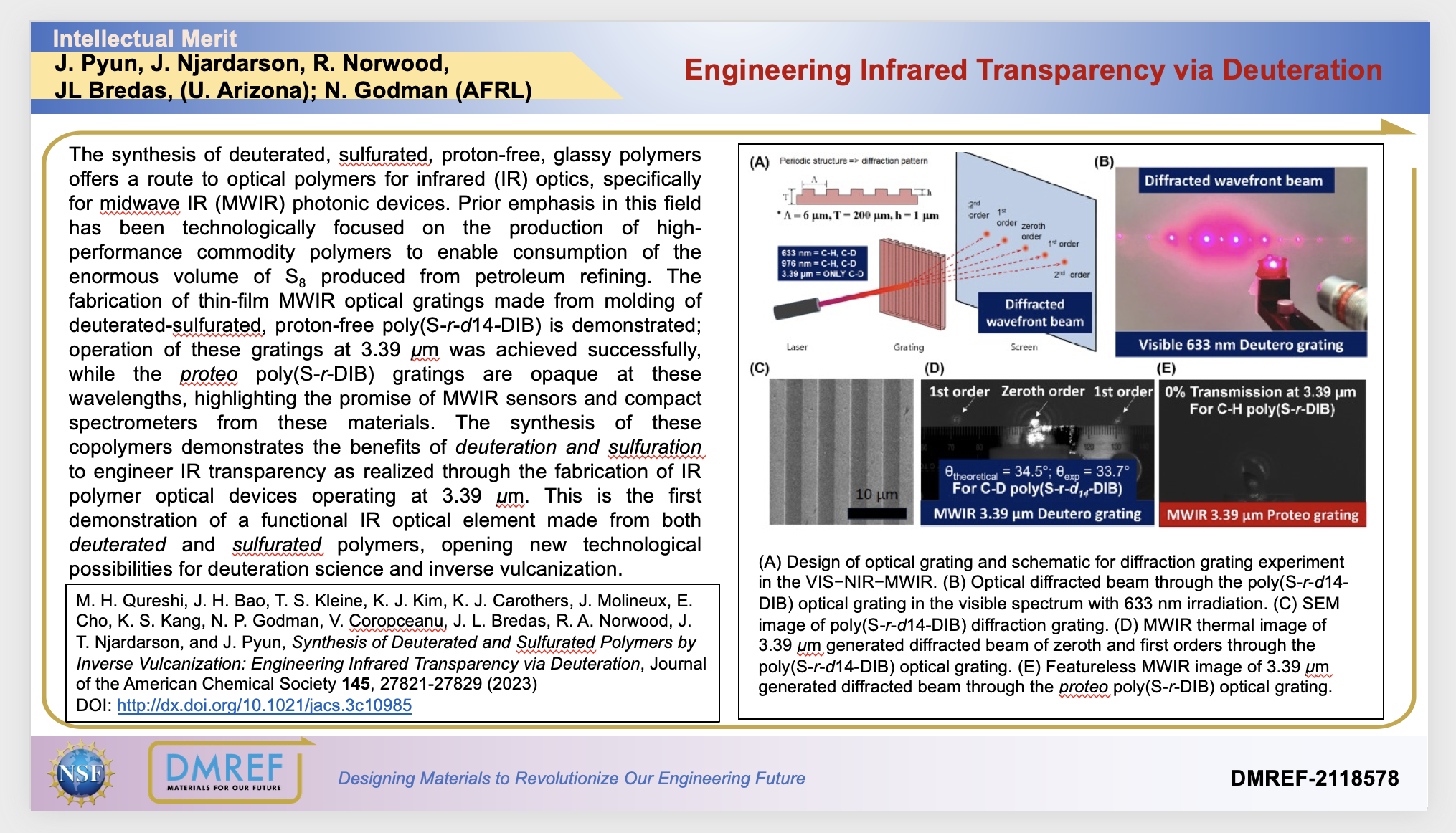
The synthesis of deuterated, sulfurated, proton-free, glassy polymers offers a route to optical polymers for infrared (IR) optics, specifically for midwave IR (MWIR) photonic devices. Prior emphasis in this field has been technologically focused on the production of high-performance commodity polymers to enable consumption of the enormous volume of S8 produced from petroleum refining. The fabrication of thin-film MWIR optical gratings made from molding of deuterated-sulfurated, proton-free poly(S-r-d14-DIB) is demonstrated; operation of these gratings at 3.39 μm was achieved successfully, while the proteo poly(S-r-DIB) gratings are opaque at these wavelengths, highlighting the promise of MWIR sensors and compact spectrometers from these materials. The synthesis of these copolymers demonstrates the benefits of deuteration and sulfuration to engineer IR transparency as realized through the fabrication of IR polymer optical devices operating at 3.39 μm. This is the first demonstration of a functional IR optical element made from both deuterated and sulfurated polymers, opening new technological possibilities for deuteration science and inverse vulcanization.