Degradable Block Copolymers
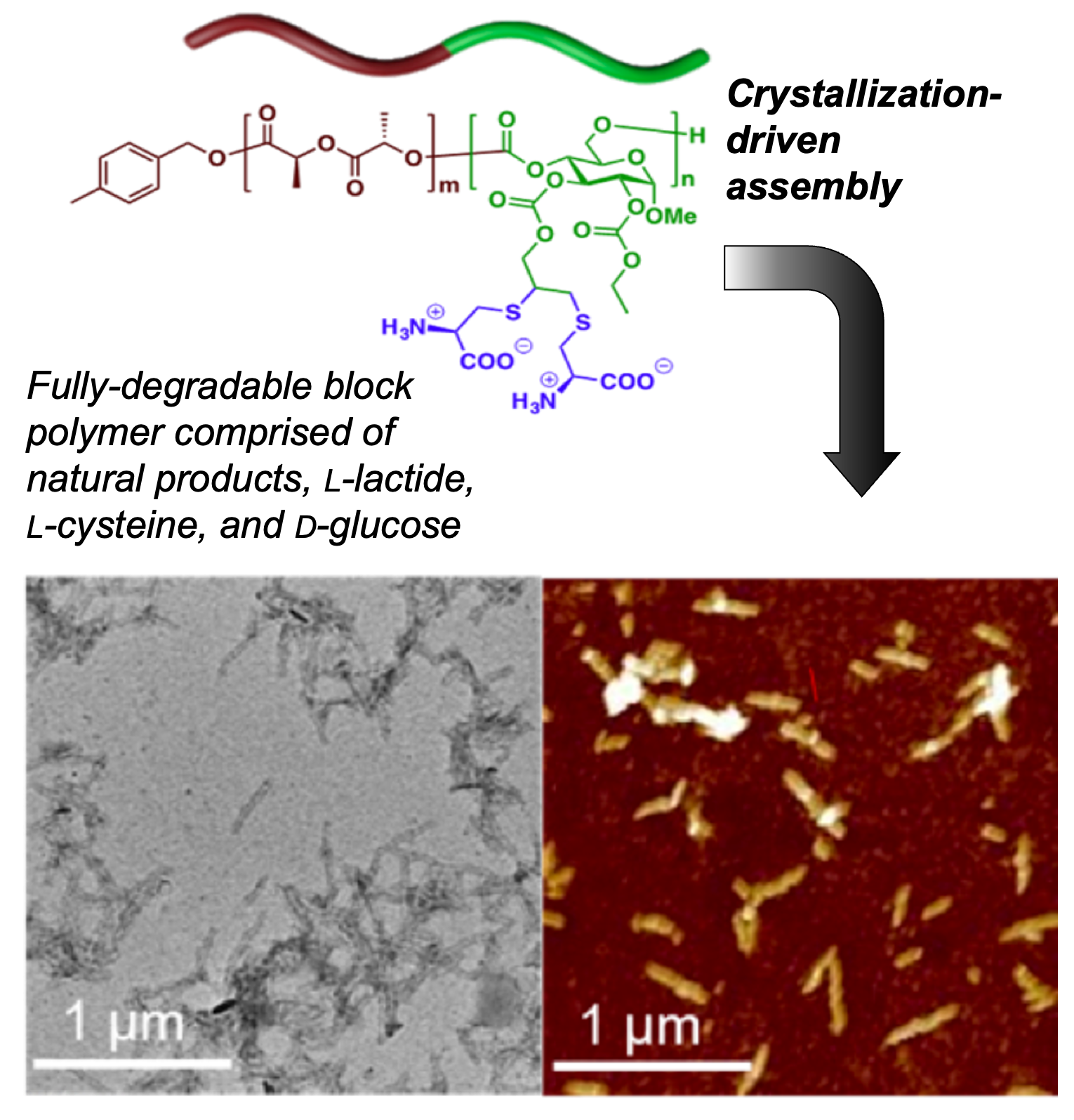
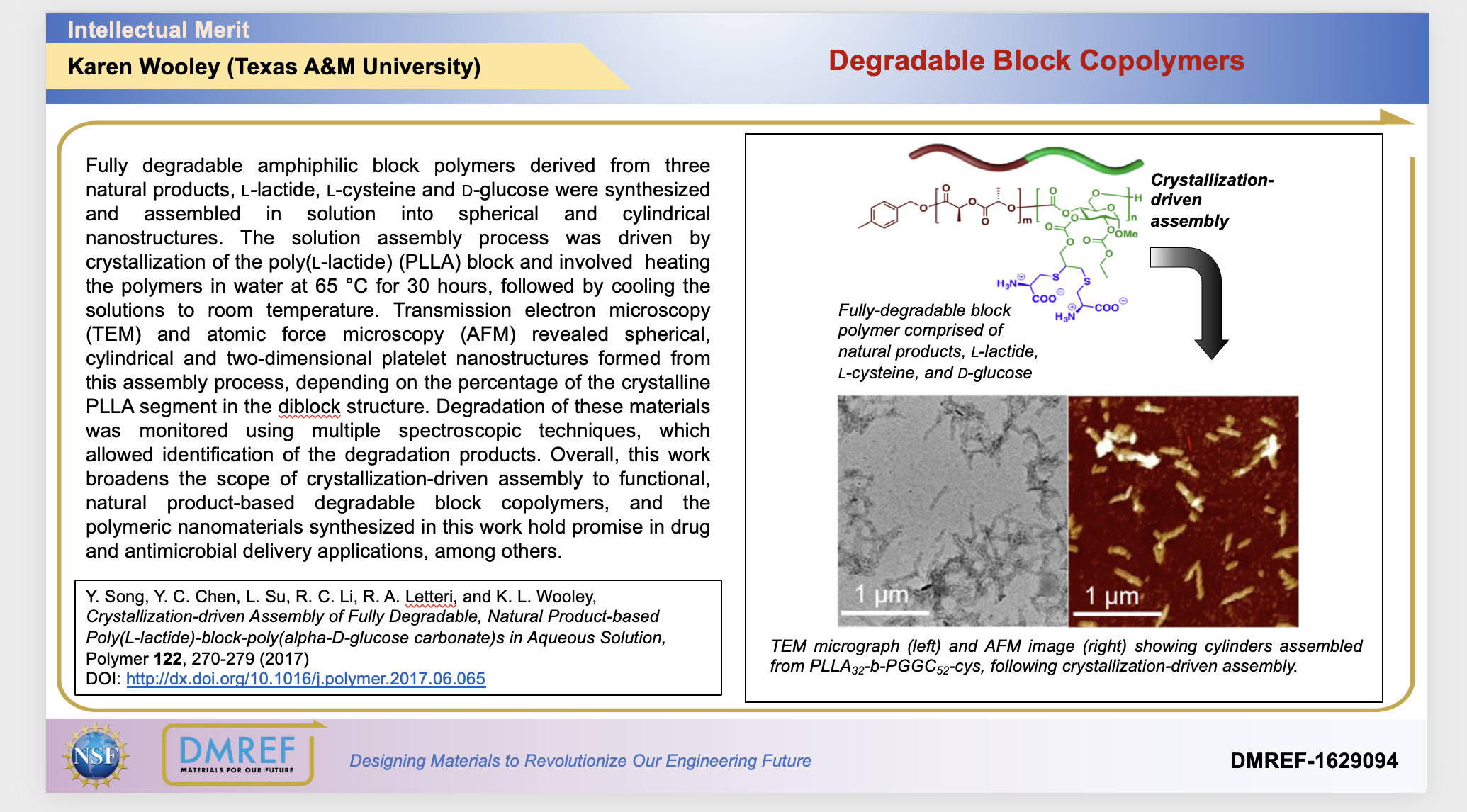
Fully degradable amphiphilic block polymers derived from three natural products, l-lactide, l-cysteine and d-glucose were synthesized and assembled in solution into spherical and cylindrical nanostructures. The solution assembly process was driven by crystallization of the poly(l-lactide) (PLLA) block and involved heating the polymers in water at 65 °C for 30 hours, followed by cooling the solutions to room temperature. Transmission electron microscopy (TEM) and atomic force microscopy (AFM) revealed spherical, cylindrical and two-dimensional platelet nanostructures formed from this assembly process, depending on the percentage of the crystalline PLLA segment in the diblock structure. Degradation of these materials was monitored using multiple spectroscopic techniques, which allowed identification of the degradation products. Overall, this work broadens the scope of crystallization-driven assembly to functional, natural product-based degradable block copolymers, and the polymeric nanomaterials synthesized in this work hold promise in drug and antimicrobial delivery applications, among others.