Active and Passive Crosslinking of Cytoskeleton Scaffolds Tune the Effects of Cell Inclusions on Composite Structures
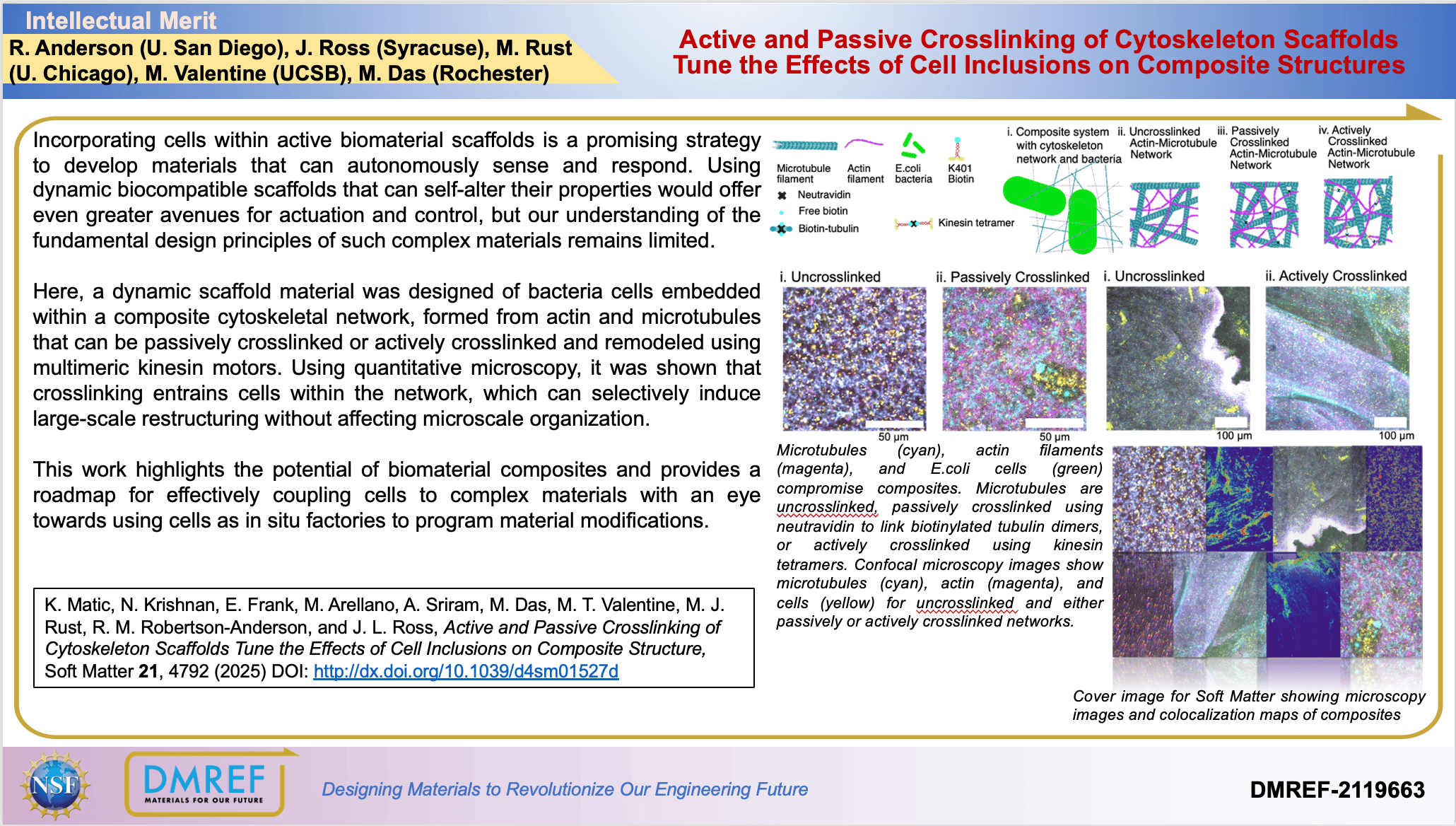
Incorporating cells within active biomaterial scaffolds is a promising strategy to develop materials that can autonomously sense and respond. Using dynamic biocompatible scaffolds that can self-alter their properties would offer even greater avenues for actuation and control, but our understanding of the fundamental design principles of such complex materials remains limited.
Here, a dynamic scaffold material was designed of bacteria cells embedded within a composite cytoskeletal network, formed from actin and microtubules that can be passively crosslinked or actively crosslinked and remodeled using multimeric kinesin motors. Using quantitative microscopy, it was shown that crosslinking entrains cells within the network, which can selectively induce large-scale restructuring without affecting microscale organization.
This work highlights the potential of biomaterial composites and provides a roadmap for effectively coupling cells to complex materials with an eye towards using cells as in situ factories to program material modifications.