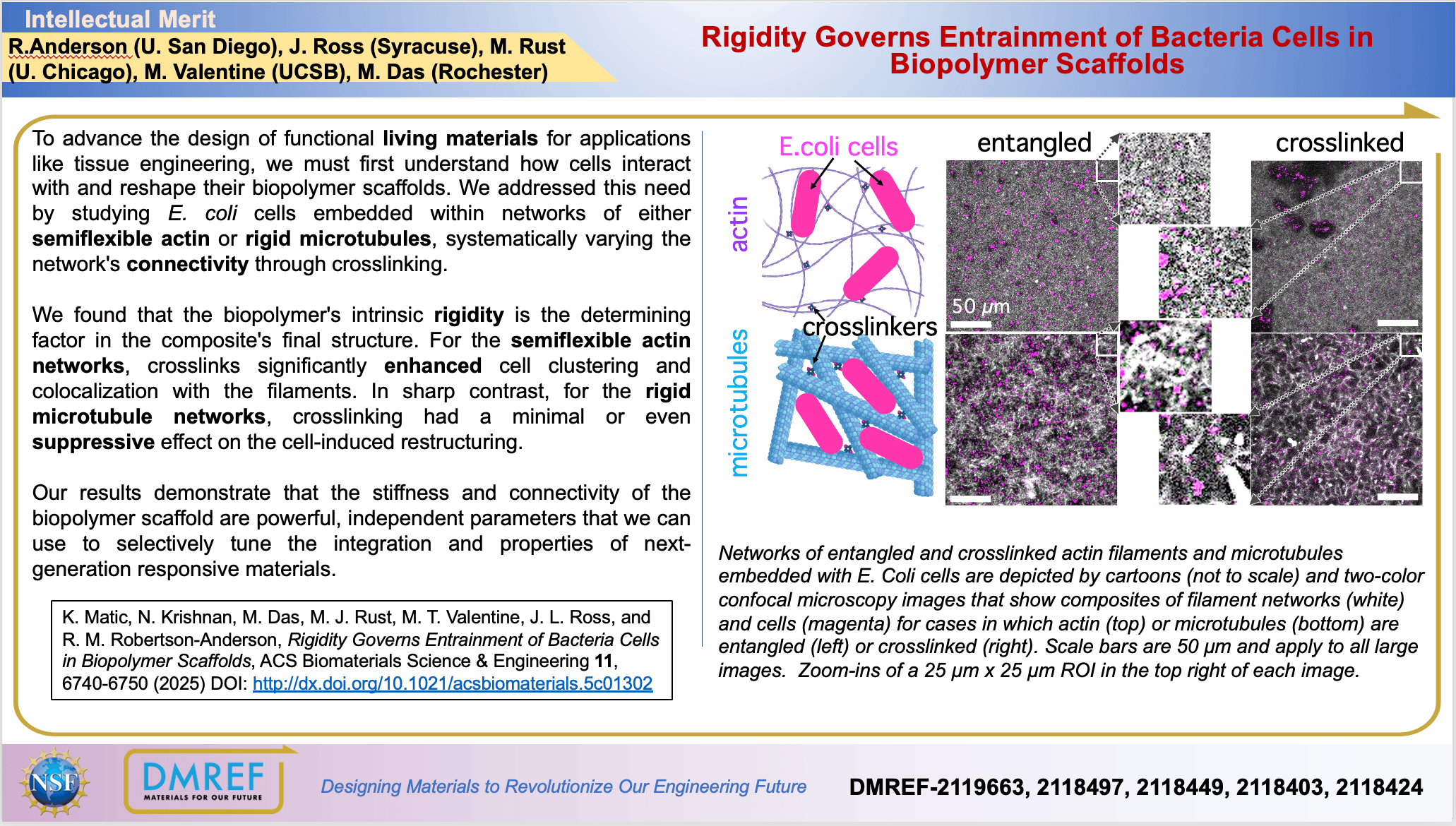
Rigidity Governs Entrainment of Bacteria Cells in Biopolymer Scaffolds
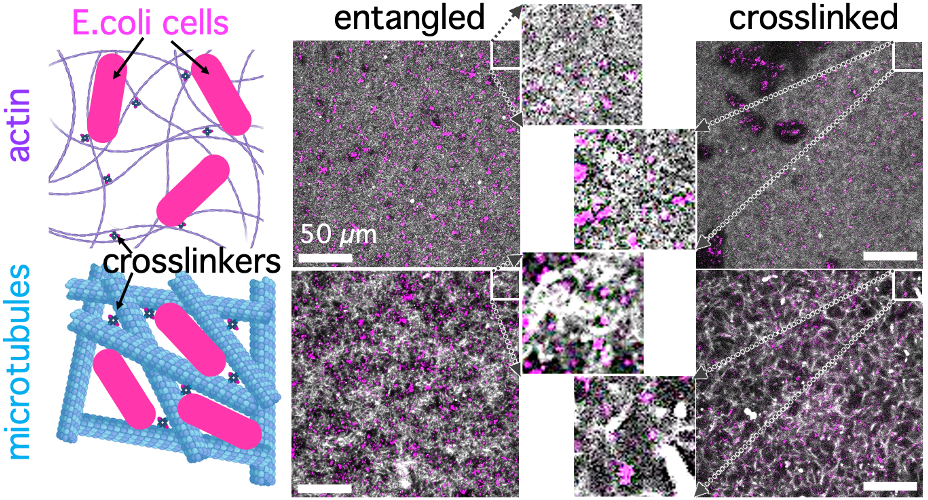
To advance the design of functional living materials for applications like tissue engineering, we must first understand how cells interact with and reshape their biopolymer scaffolds. We addressed this need by studying E. coli cells embedded within networks of either semiflexible actin or rigid microtubules, systematically varying the network's connectivity through crosslinking.
We found that the biopolymer's intrinsic rigidity is the determining factor in the composite's final structure. For the semiflexible actin networks, crosslinks significantly enhanced cell clustering and colocalization with the filaments. In sharp contrast, for the rigid microtubule networks, crosslinking had a minimal or even suppressive effect on the cell-induced restructuring.
Our results demonstrate that the stiffness and connectivity of the biopolymer scaffold are powerful, independent parameters that we can use to selectively tune the integration and properties of next-generation responsive materials.