Data-driven Framework for the Prediction of PEGDA Hydrogel Mechanics
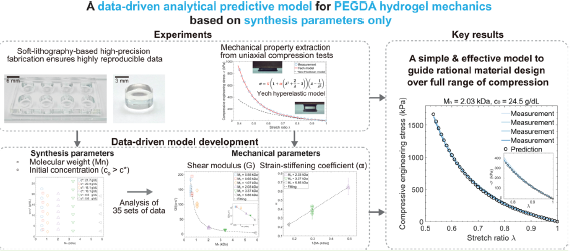
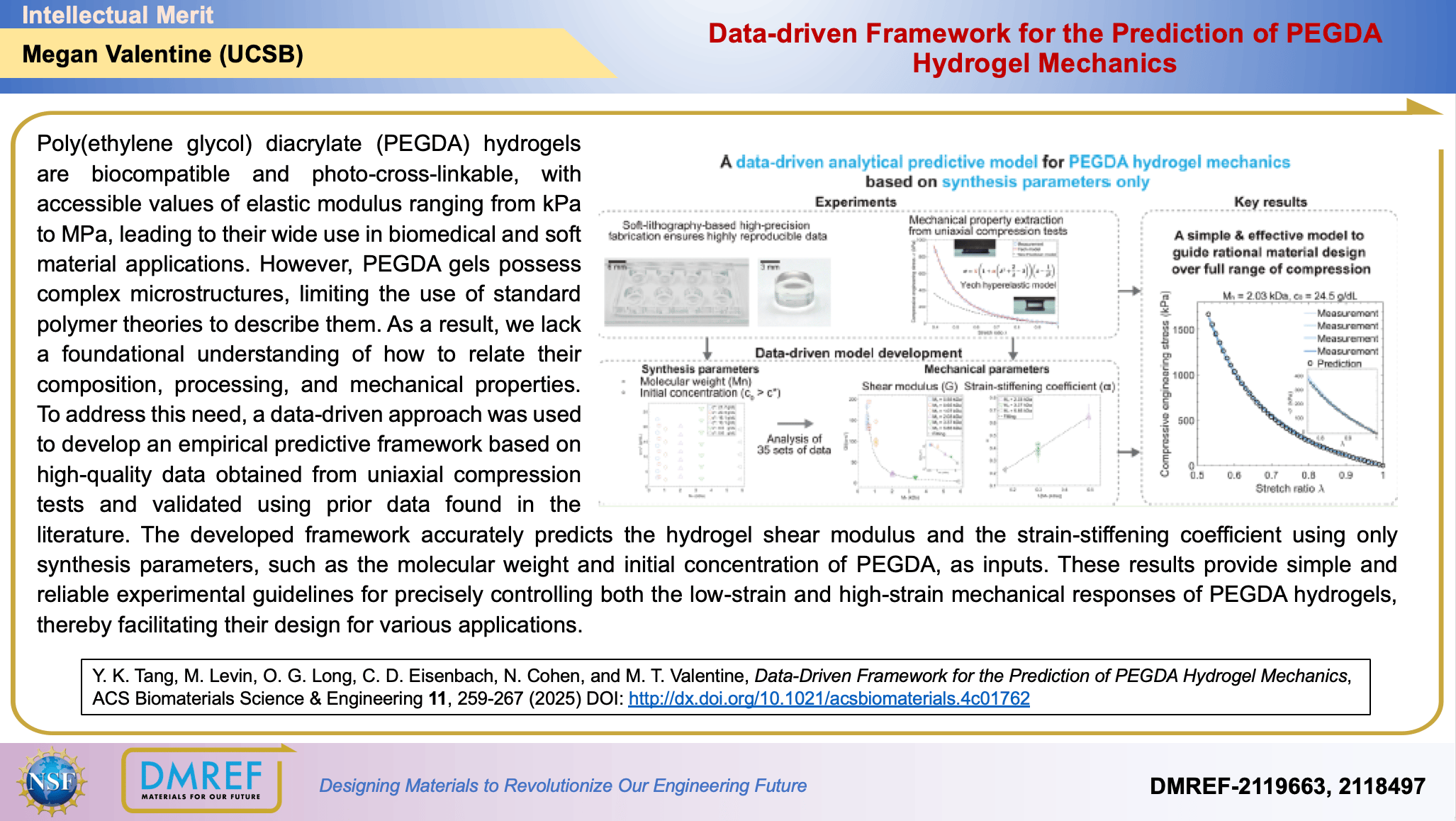
Poly(ethylene glycol) diacrylate (PEGDA) hydrogels are biocompatible and photo-cross-linkable, with accessible values of elastic modulus ranging from kPa to MPa, leading to their wide use in biomedical and soft material applications. However, PEGDA gels possess complex microstructures, limiting the use of standard polymer theories to describe them. As a result, we lack a foundational understanding of how to relate their composition, processing, and mechanical properties. To address this need, a data-driven approach was used to develop an empirical predictive framework based on high-quality data obtained from uniaxial compression tests and validated using prior data found in the literature. The developed framework accurately predicts the hydrogel shear modulus and the strain-stiffening coefficient using only synthesis parameters, such as the molecular weight and initial concentration of PEGDA, as inputs. These results provide simple and reliable experimental guidelines for precisely controlling both the low-strain and high-strain mechanical responses of PEGDA hydrogels, thereby facilitating their design for various applications.