Broader Impact Highlights

Special Achievements of PI Zhang’s Students
2/16/2023 | Fan Zhang, the University of Texas at Dallas
Qiyue Wang was awarded the first (2021) Steven Weinberg Research Award by the Texas Section of American Physical Society (APS).
Self-assembled Peptide-p-electron Supramolular Polymers:Code Sharing and Undergraduate Research
2/8/2023 | J. Tovar, H. Katz (Johns Hopkins U.) A. Ferguson (U. Chicago)
A primary goal of this work is to make the computational tools broadly available to the community. To achieve this, we have hosted both our inexpensive peptide model and machine learning protocol for peptide design on the code sharing site GitHub for free, open-source, public download.

Self-assembled Peptide-p-electron Supramolular Polymers: FAIR Data and Student Training
2/8/2023 | J. Tovar, H. Katz (Johns Hopkins U.) A. Ferguson (U. Chicago)
Broad dissemination. All computational codes have been hosted on GitHub (https://github.com/), simulation trajectories on the Materials Data Facility (https://materialsdatafacility.org/) and Zenodo (http://zenodo.org), and a project webpage provides information about the team and research outcomes (https://sites.krieger.jhu.edu/dmref/).

Self-assembled Peptide-p-electron Supramolular Polymers:Workforce Training, Outreach, and Data Sharing
2/8/2023 | J. Tovar, H. Katz (Johns Hopkins U.) A. Ferguson (U. Chicago)
Workforce training. PhD graduates Dr. Rachael Mansbach and Dr. Bryce Thurston, trained under this award, secured postdoctoral positions at Los Alamos and Sandia National Labs.
Self-assembled Peptide-p-electron Supramolular Polymers: Student Training and Dissemination
2/8/2023 | J. Tovar, H. Katz (Johns Hopkins U.) A. Ferguson (U. Chicago)
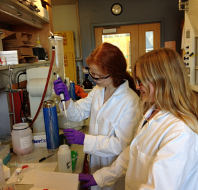
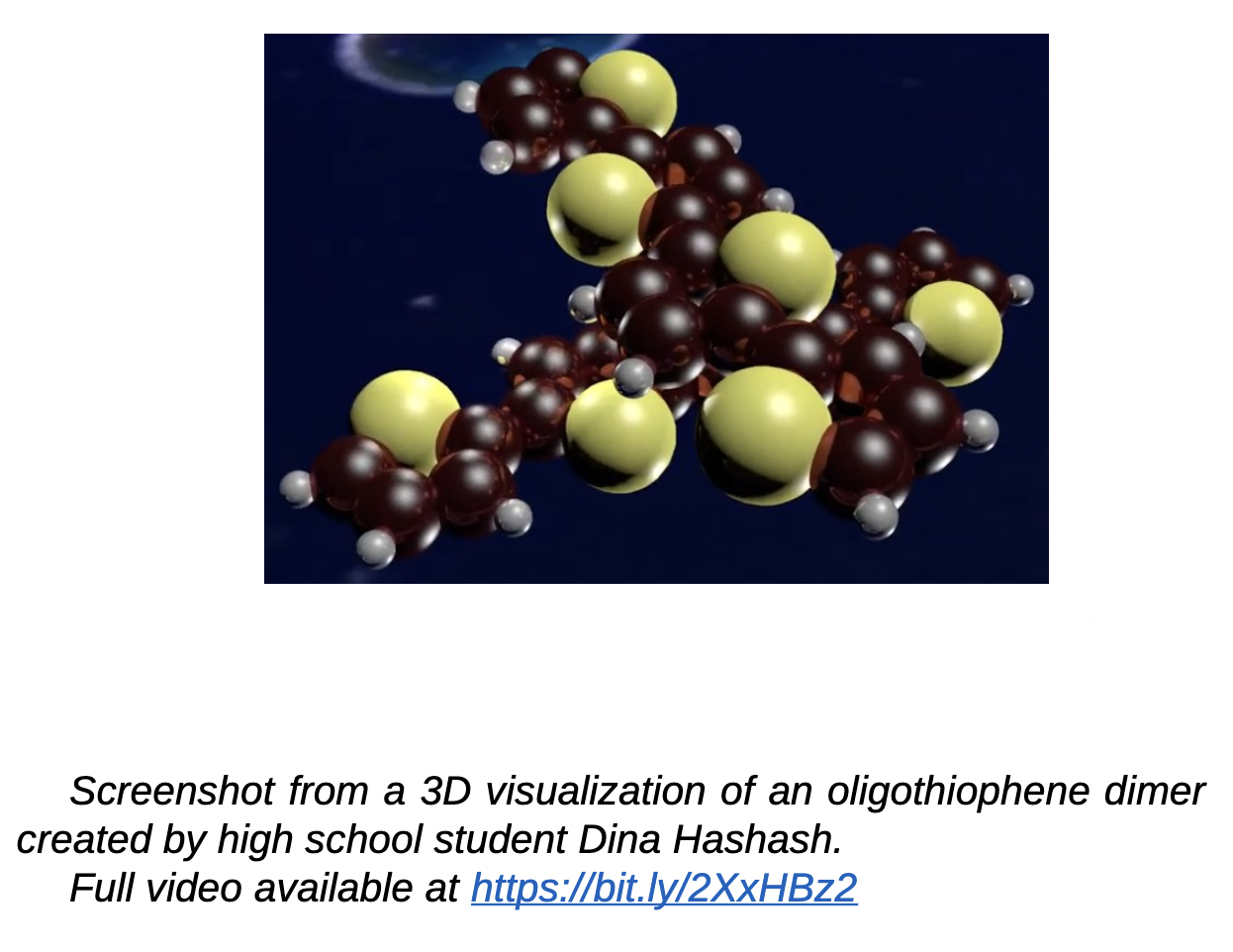
Undergraduate and High School Research. At JHU, undergraduates Rachel Barrows and Celina Nichols worked on biosensitive electronic devices, and Clara Troyano-Valls on heterostructure self-sorting. Clara will enter MIT for graduate work in Chemical Engineering. At Chicago, undergraduate Olivia Dunne and high school senior Isabella Moughal worked on molecular simulations of peptides. Isabella will attend UIUC for an undergraduate degree in engineering. At UIUC, high school student Dina Hashash developed 3D visualizations of assembled oligopeptides.Broad Dissemination. All computational codes have been hosted on GitHub (https://github.com/), simulation trajectories on the Materials Data Facility (https://materialsdatafacility.org/), and a project webpage provides information about the team and research outcomes (https://sites.krieger.jhu.edu/dmref/).
Data Driven Discovery of Conjugated Polyelectrolytes for Neuromorphic Computing
2/6/2023 | Gang Lu & Xu Zhang (California State University Northridge) and Thuc-Quyen Nguyen & Guillermo Bazan (UCSB)
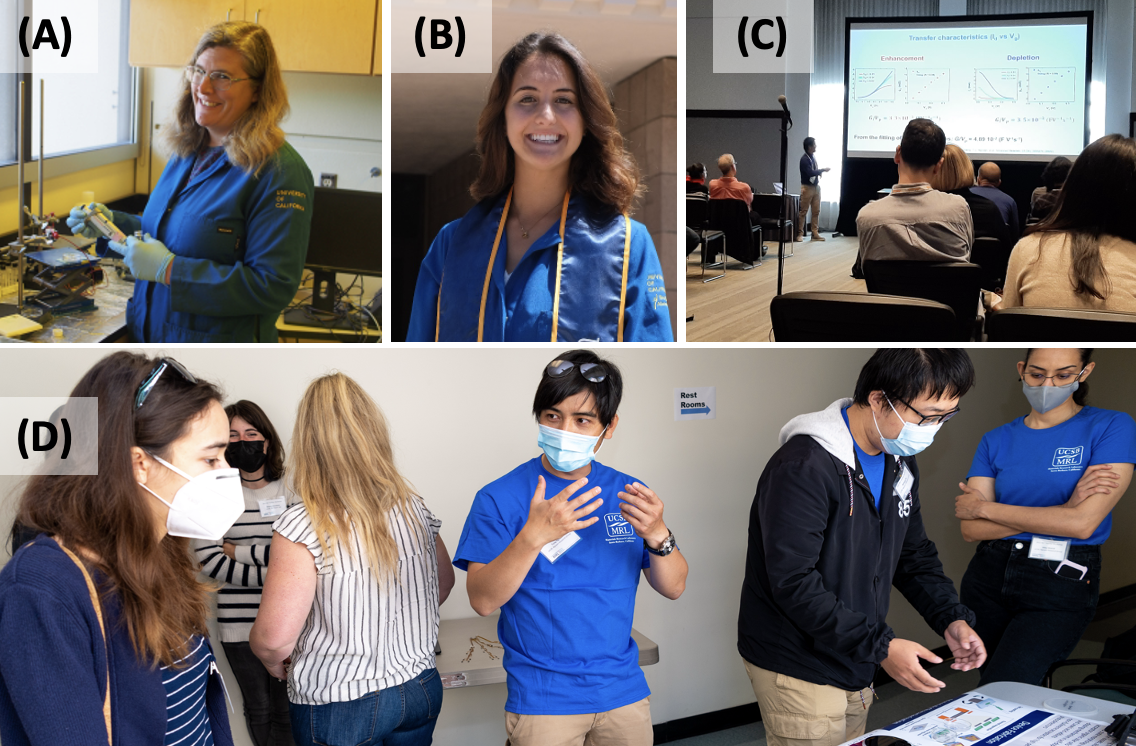
The project provides an excellent opportunity to train high school, undergraduate and graduate students, postdoctoral scholars, and a high school teacher.
Translating Bioelectrochemical Engineering
2/3/2023 | Gregory Payne and William Bentley
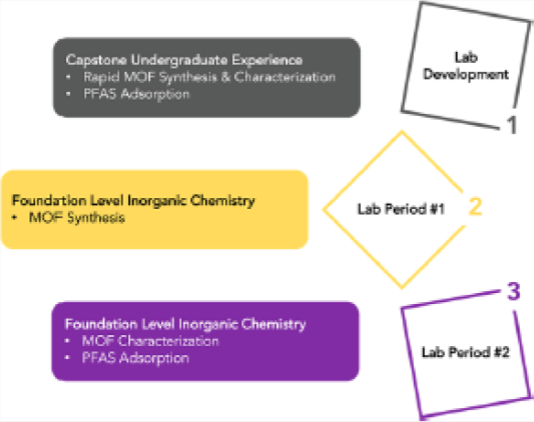
Undergraduate Laboratory Experiment: Adsorption of Perfluoroalkyls in Metal Organic Frameworks
2/3/2023 | Omar Farha (Northwestern University)
A two-component undergraduate laboratory experience has been developed by students in a senior level capstone course.

Graduate Certificate in Data Science for the Chemical Industry and Data Science Internships
11/23/2022
Meredith and Grover helped develop a new graduate certificate program consisting of four courses at Georgia Tech in Data Science for the Chemical Industry (DSCI).
Graduate Training in Machine Learning for Materials Design
10/1/2022 | Mingda Li, Massachusetts Institute of Technology
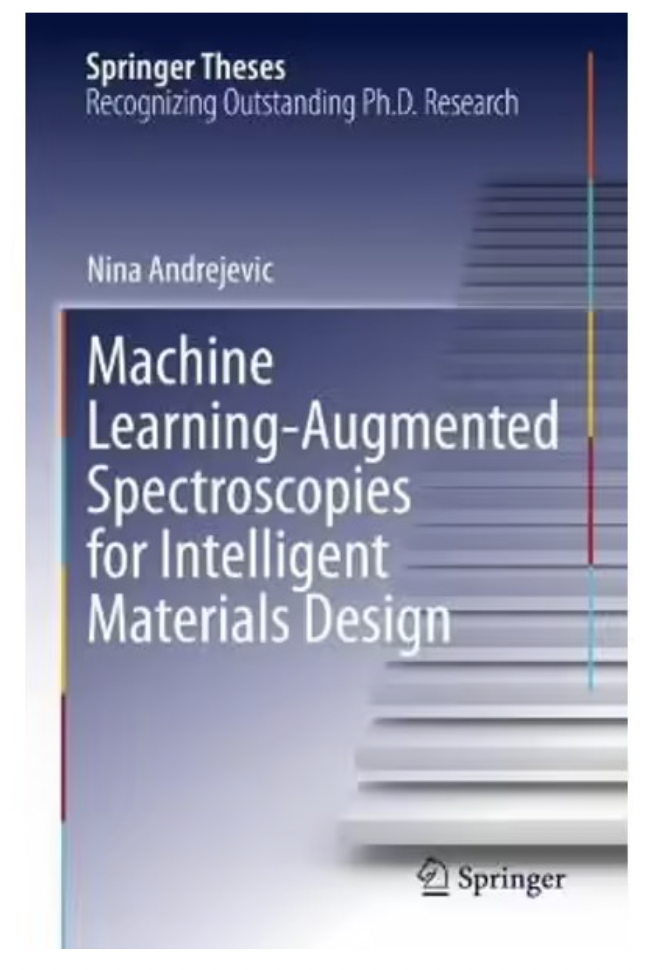
The NSF DMREF research work, led by Dr. Nina Andrejevic, a female material scientist in Mingda Li’s group, was a critical component in Nina’s Doctoral Thesis, titled “Machine Learning-Augmented Spectroscopies for Intelligent Materials Design”.
Showing 31 to 40 of 74