Broader Impact Highlights
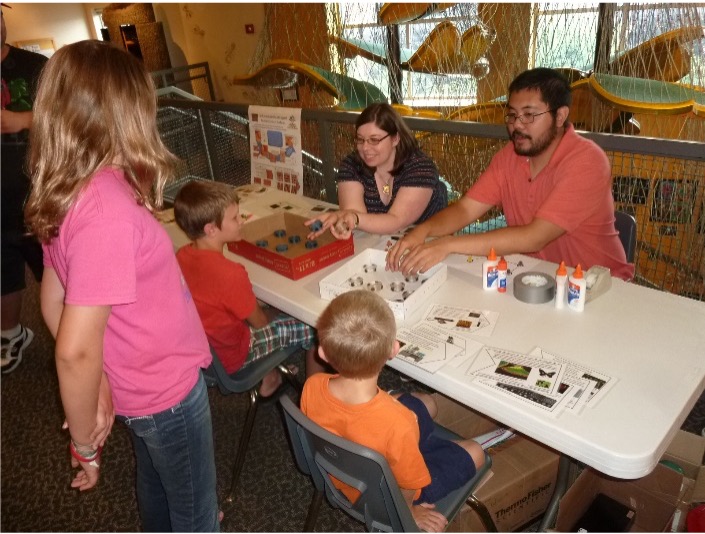
Molecular Assembly in K-12 and Innovation
8/21/2018 | Amar H. Flood (PI), Steven L. Tait, Krishnan Raghavachari, Peter J. Ortoleva
Benefits to K-12 and public education by outreach activities that highlight the way materials are made in our project by self-assembly.
Discovery, Development and Deployment of High Temperature Coating – Substrate Systems
5/18/2018
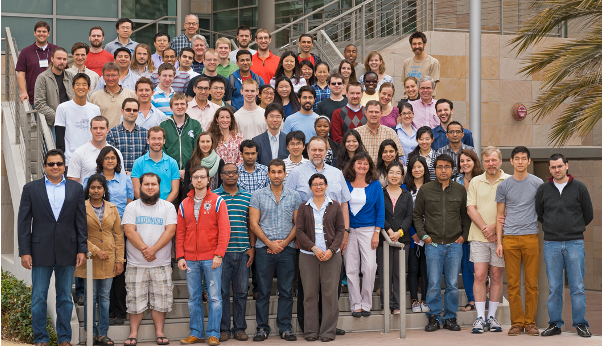
UCSB NSF DMREF students along with 55 other students from 15 countries had the opportunity to participate in the Summer School on Materials in 3D: Modeling and Imaging at Multiple Length Scales.
Polymer-based Outreach Activities
3/20/2018 | Karen Wooley (Texas A&M University)
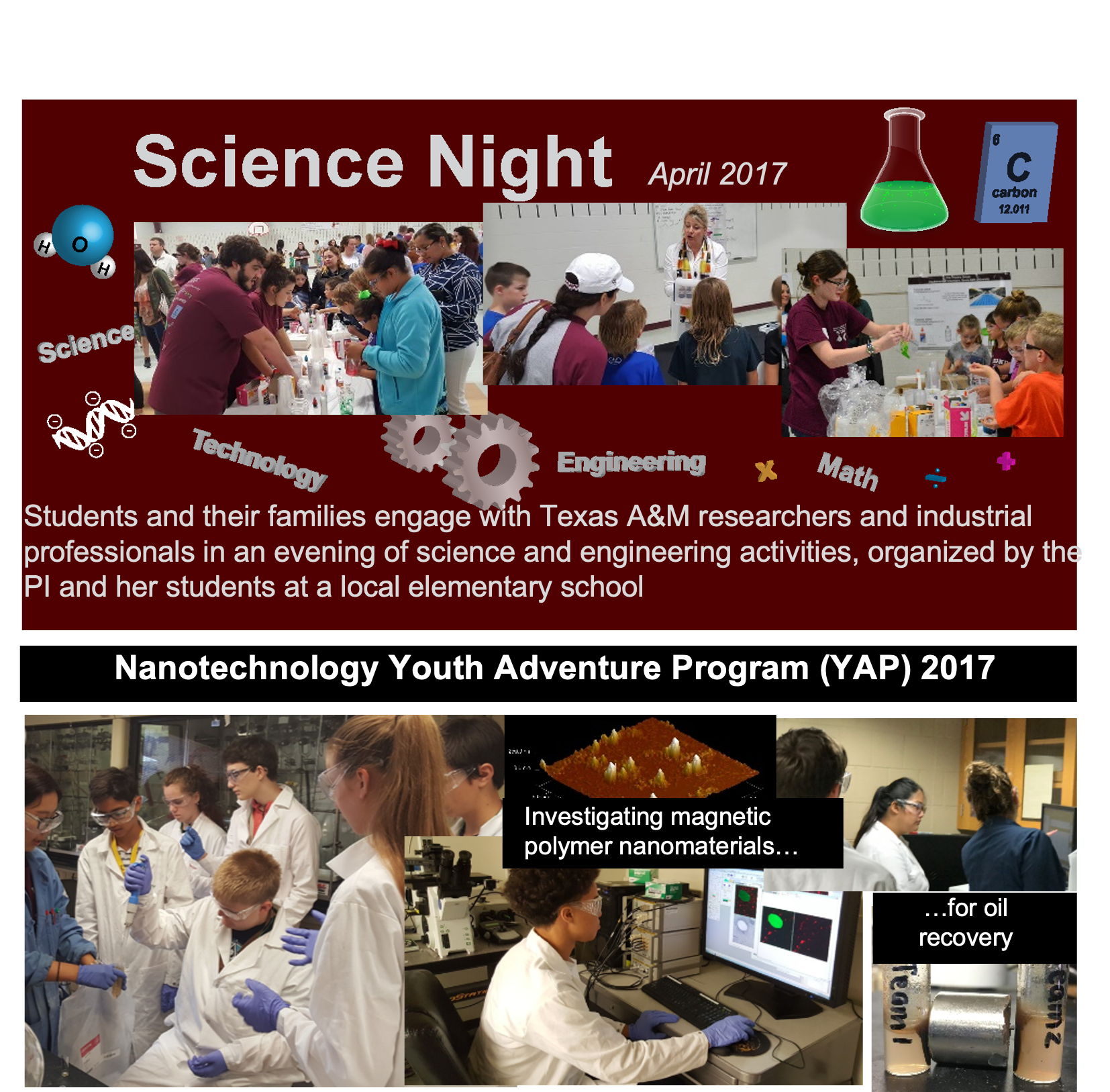
The PI and her students are actively involved in educational and outreach activities, including hosting visiting students, mentoring undergraduate researchers in the laboratories, and leading polymer-based outreach activities at several local venues.
Teaching Crystal Polymorphism through Dance
3/20/2018 | M. Tuckerman, M. Rogal, A. Shtukenberg, and M. Ward (New York University)
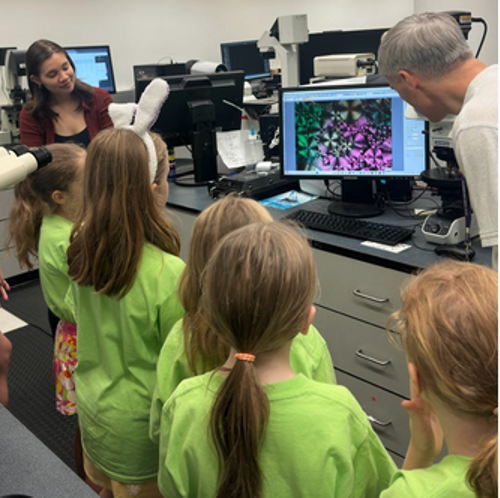
The NSF DMREF team builds on strong relationships with NYC schools to introduce students to crystals and crystal growth through age-appropriate activities, from anthropomorphic crystallization through the eyes of dance to workshops related to concepts of machine learning and ‘big data’ in the science of molecular materials.
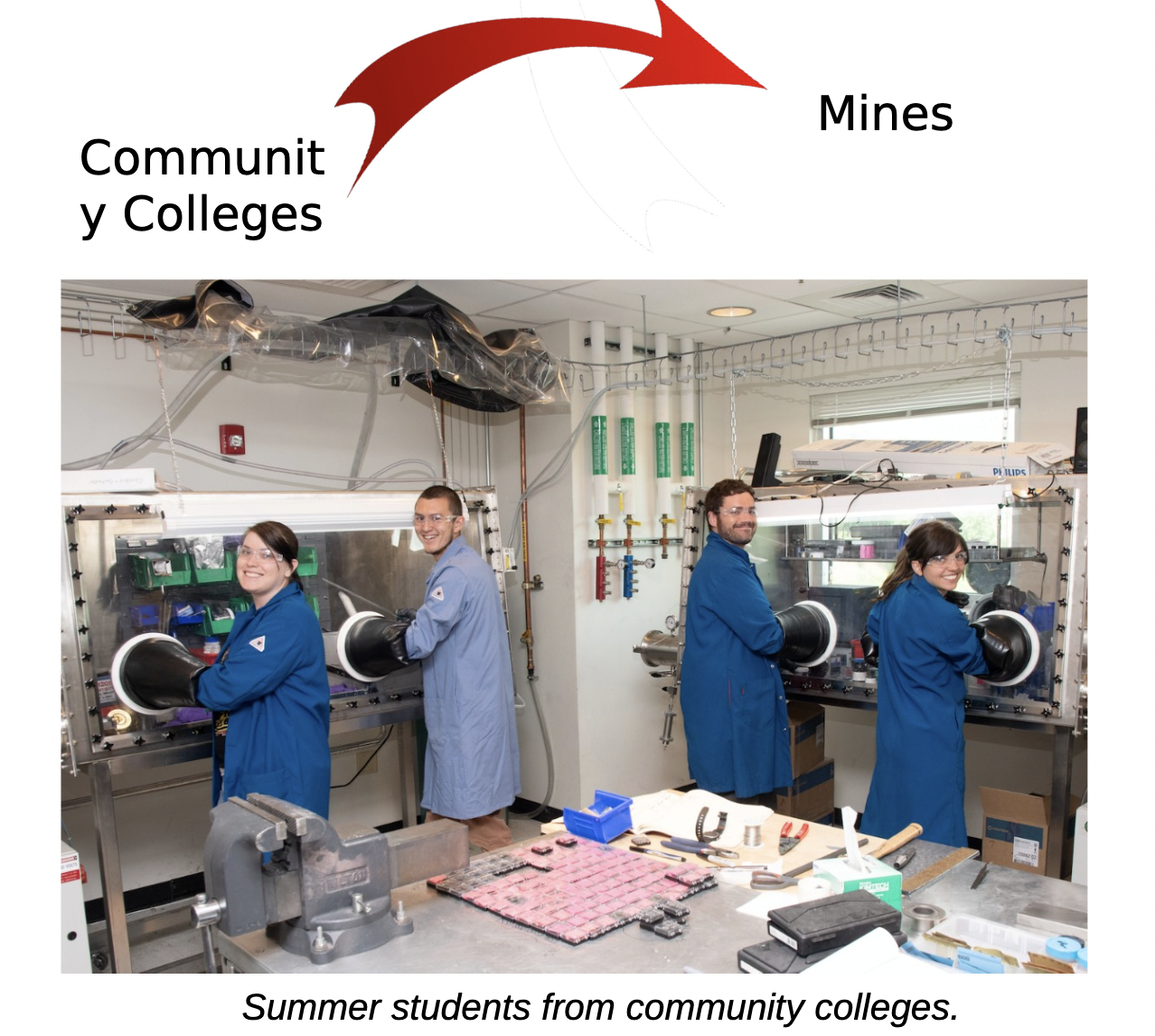
Bridge Opportunity for Transfer Student Success
3/20/2018
Due to the systemic challenges facing underrepresented groups in STEM, solutions require long-term support rather than brief interventions.
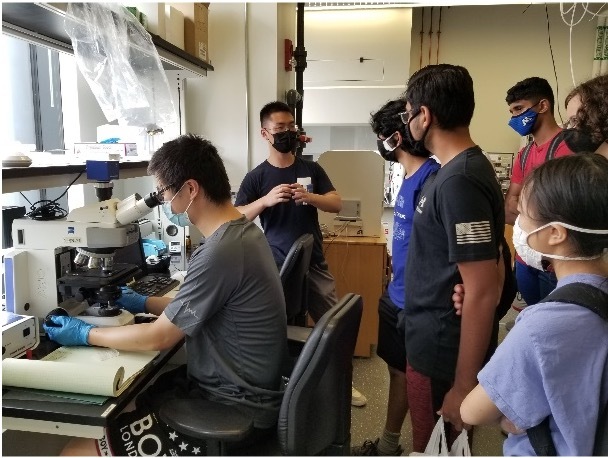
Educating High School Students at the Interface of Applied Mathematics and 2D Quantum Physics
3/20/2018 | P. Kim, E. Kaxiras (Harvard) M. Luskin, K. Wang (U. Minnesota)
The PIs tightly integrate the education and outreach program with the research in the frontier of low-dimensional materials systems. The PIs have been training graduate and undergraduate students in quantum matter research at the interface of experimental and theoretical science. This effort benefits students in their career development in both academia and industry.
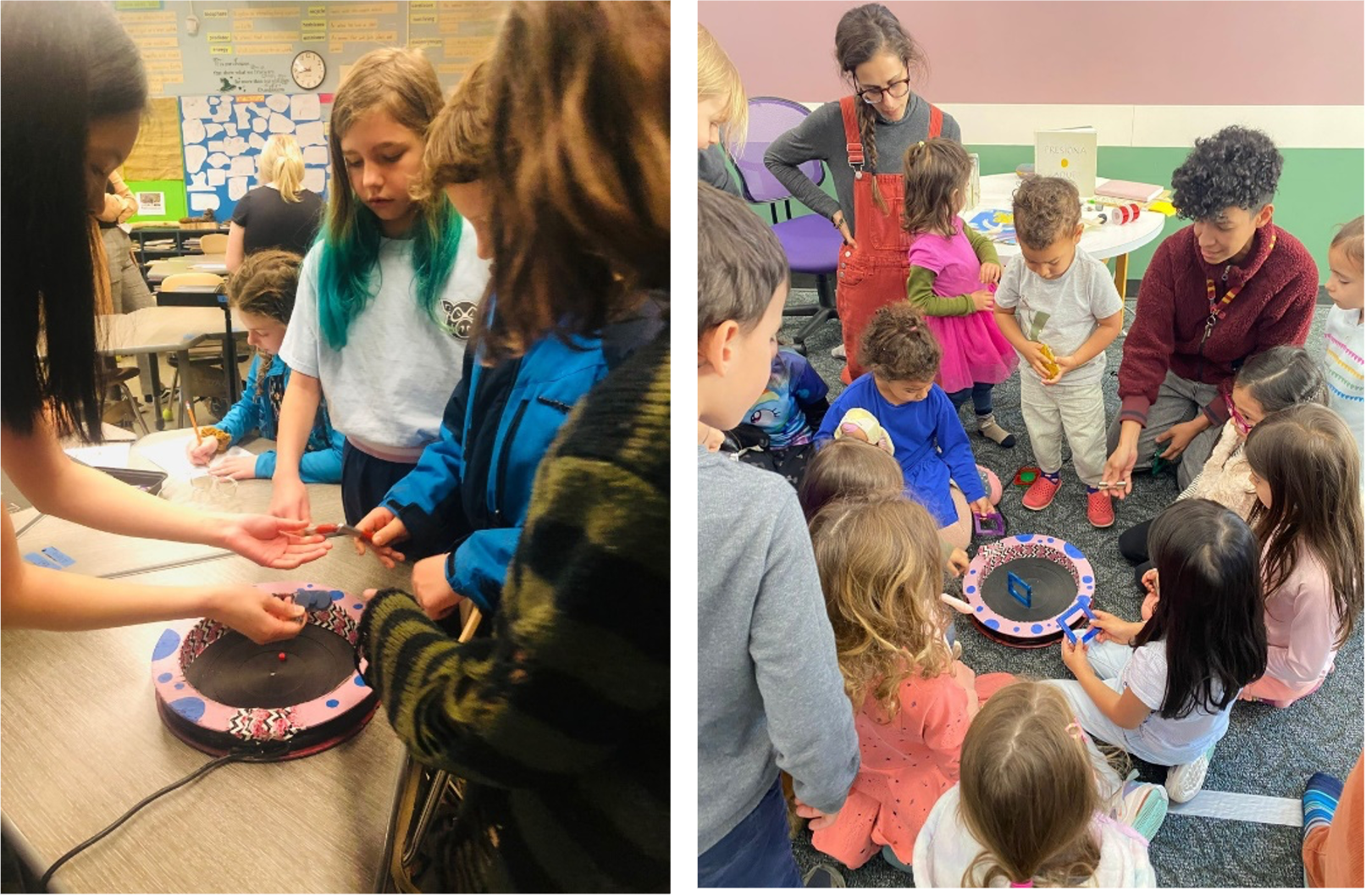
Conveying the Excitement of Magnetism To Elementary School Children
3/20/2018 | I. Cohen
A kit has been created that allows kids to play with magnetic systems that are jostled by a time varying magnetic field. A single magnet will oscillate wildly due to the field oscillating back and forth. When two magnets are put together interesting things happen. When the magnets are aligned they continue to jostle. When they are antiferromagnetically aligned, however, the dipoles cancel, the magnet becomes a quadrupole, and the system is decoupled from the magnetic field. In other words the magnets do not jostle at all! This is always super surprising to the kids. This is also the key idea behind the team’s self-assembling systems.
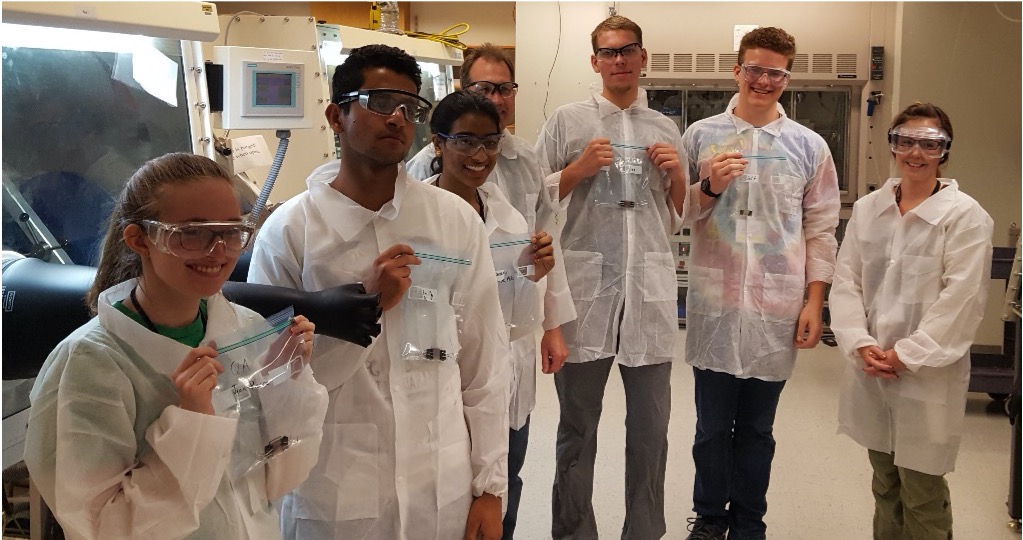
Solar Cells from Earth Abundant Cu3VVI4 Materials
12/13/2017
We have developed a novel technique to grow thin films from nanoparticles in the Cu3VVI4 system. Such films display micron-sized dense grains suitable for semiconductor device applications.
Attracting College and High School Students to STEM
6/23/2017 | Jana Shen
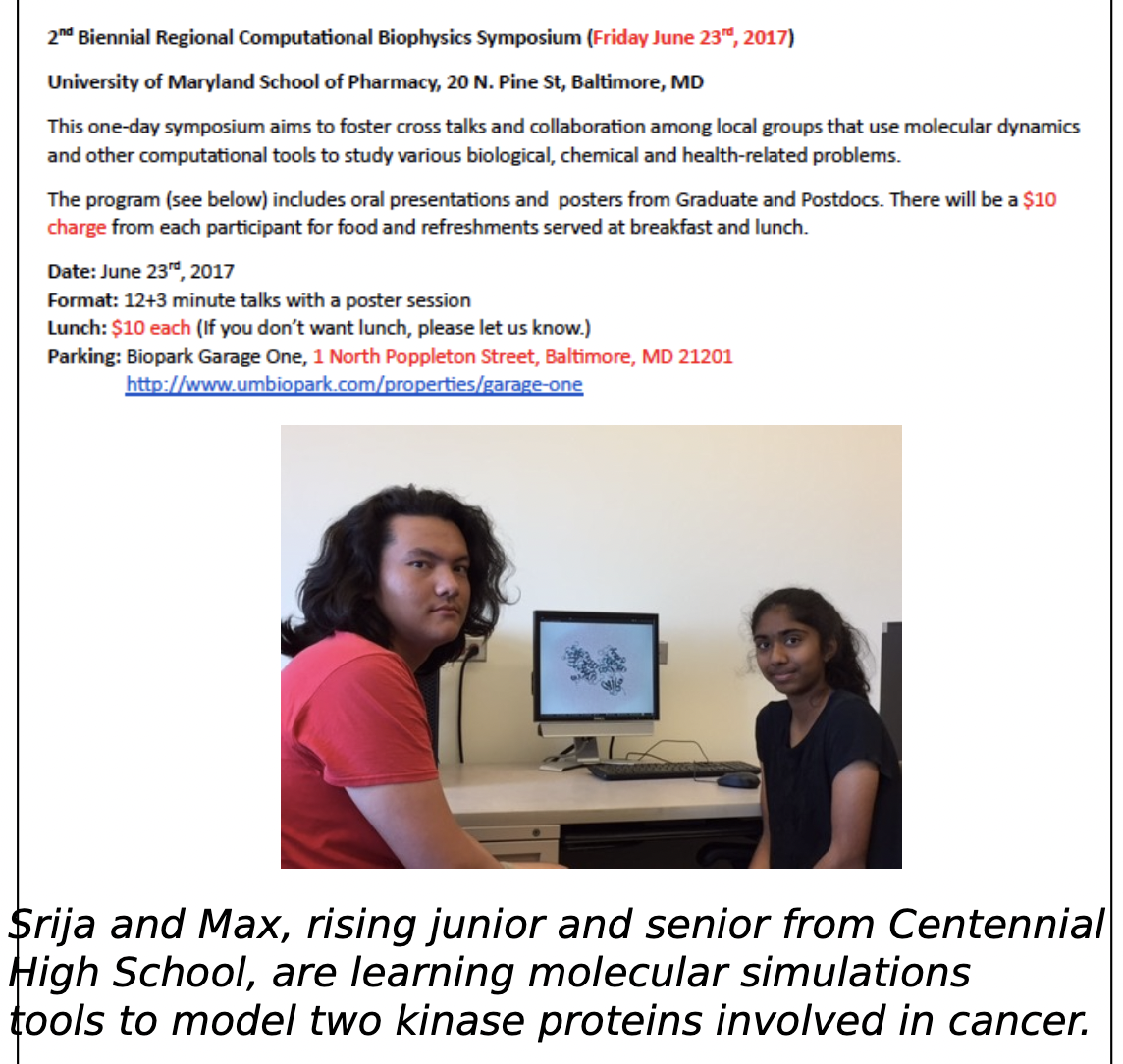
Dr. Shen’s lab hosted a Regional Computational Biophysics Symposium for students and postdocs on June 23, 2017. We had 53 registered participants including 9 junior and senior local high school students. Graduate students and postdoctoral fellows from DC/Baltimore/Delaware colleges gave 17 short talks covering a range of topics, including state-of-the-art molecular simulations of proteins, lipids, polysaccharides, transmembrane proteins as well as computational protein design, coarse-grained and polarizable models.
Scientists as Ambassadors
2/20/2017 | Gregory Payne
HE Huimin’s first authored-paper was highlighted in Advanced Functional Materials. Mr. HE stands besides his American mentor Greg Payne (University of Maryland) and his advisor DONG Hua (Prof. South China University of Technology)
Showing 61 to 70 of 74