Research Highlights
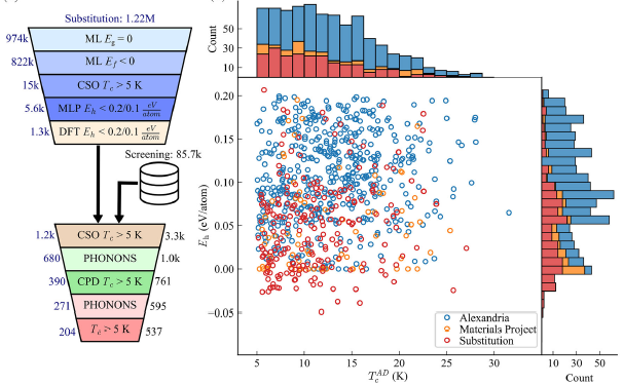
Developing a Complete AI-accelerated Workflow for Superconductor Discovery
9/28/2026 | J. Hamlin, G. Steward, P. Hirschfeld, R. Hennig (University of Florida)
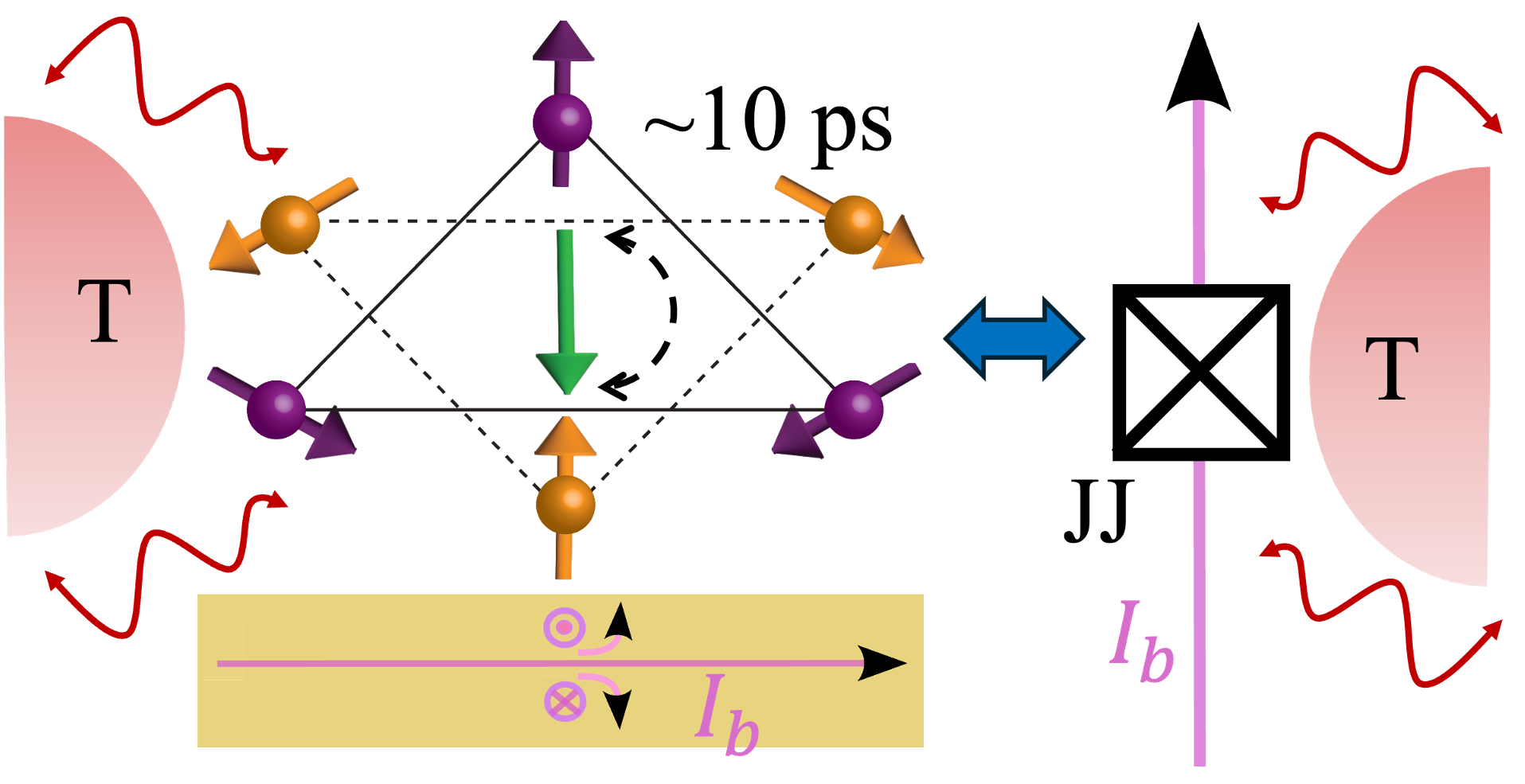
Electrically Tunable Picosecond-scale Octupole Fluctuations in Chiral Antiferromagnets
6/22/2026 | Pramey Upadhyaya (Purdue University)
Probabilistic computing is an emerging approach that leverages controlled randomness to solve complex problems—such as optimization, machine learning, and AI—more efficiently than traditional computers. To make probabilistic computing practical at scale, compact, fast, and tunable elements are needed that can generate randomness reliably on a chip. Low barrier ferromagnets are considered promising for this purpose, however, they face major challenges: their bits switch slowly and produce strong stray fields, which interfere with neighboring bits and limit the speed, reliability, and tunability of randomness.

Conductivity Determines Efficacy of 1D and 2D p-Conjugated Materials
6/17/2026 | Bryan Wong (U. CA - Riverside)
Conjugated materials have attracted significant interest for their electronic properties, which have enabled technological advancements in a variety of optoelectronic applications. A recent study showed that the HOMO−LUMO (highest occupied molecular orbital lowest unoccupied molecular orbital) gaps of 2D conjugated materials are smaller than their 1D counterparts built from the same parent molecular repeat unit.
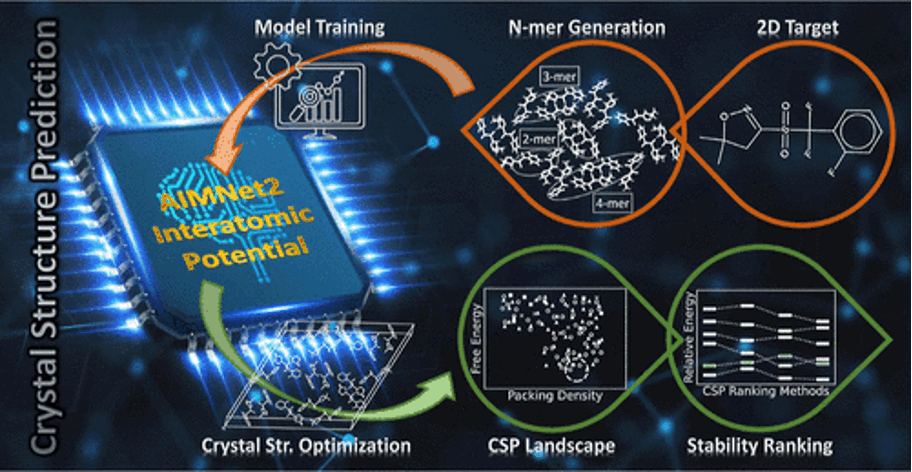
Efficient Molecular Crystal Structure Prediction and Stability Assessment with AIMNet2 Neural Network Potentials
5/21/2026 | Noa Marom and Olexandr Isayev (Carnegie Mellon University)
Identifying thermodynamically stable crystal structures remains a key challenge in materials chemistry. Computational crystal structure prediction (CSP) workflows typically rank candidate structures by lattice energy to assess relative stability. Approaches using self-consistent first-principles calculations become prohibitively expensive, especially when millions of energy evaluations are required for complex molecular systems with many atoms per unit cell. Here, an approach that significantly accelerates CSP by training target-specific machine-learned interatomic potentials (MLIPs) is presented.
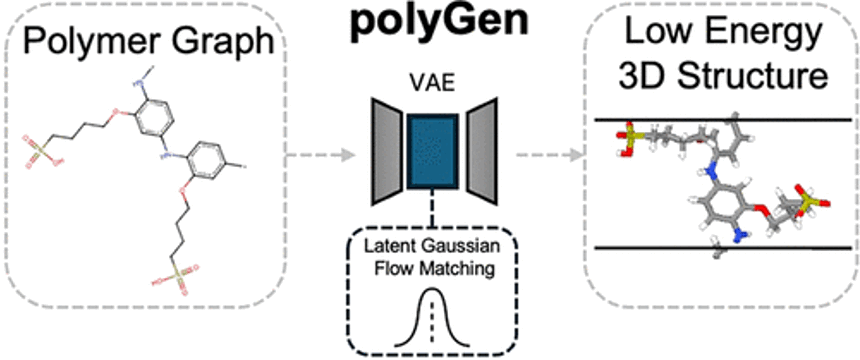
A Learning Framework for Atomic-level Polymer Structure Generation
5/20/2026 | Rampi Ramprasad (Georgia Tech.)
Synthetic polymeric materials underpin fundamental technologies in the energy, electronics, consumer goods, and medical sectors, yet their development still suffers from prolonged design timelines. Although polymer informatics tools have supported speedup, polymer simulation protocols continue to face significant challenges in the on-demand generation of realistic 3D atomic structures that respect the conformational diversity of polymers.

Machine-guided Discovery of Acrylate Photopolymer Compositions
5/20/2026 | Rampi Ramprasad and Jerry Qi (Georgia Tech.)
Additive manufacturing (AM) can be advanced by the diverse characteristics offered by thermoplastic and thermoset polymers and the further benefits of copolymerization. However, the availability of suitable polymeric materials for AM is limited and may not always be ideal for specific applications. Additionally, the extensive number of potential monomers and their combinations make experimental determination of resin compositions extremely time-consuming and costly. To overcome these challenges, an active learning (AL) approach was developed to effectively choose compositions in a ternary monomer space ranging from rigid to elastomeric.
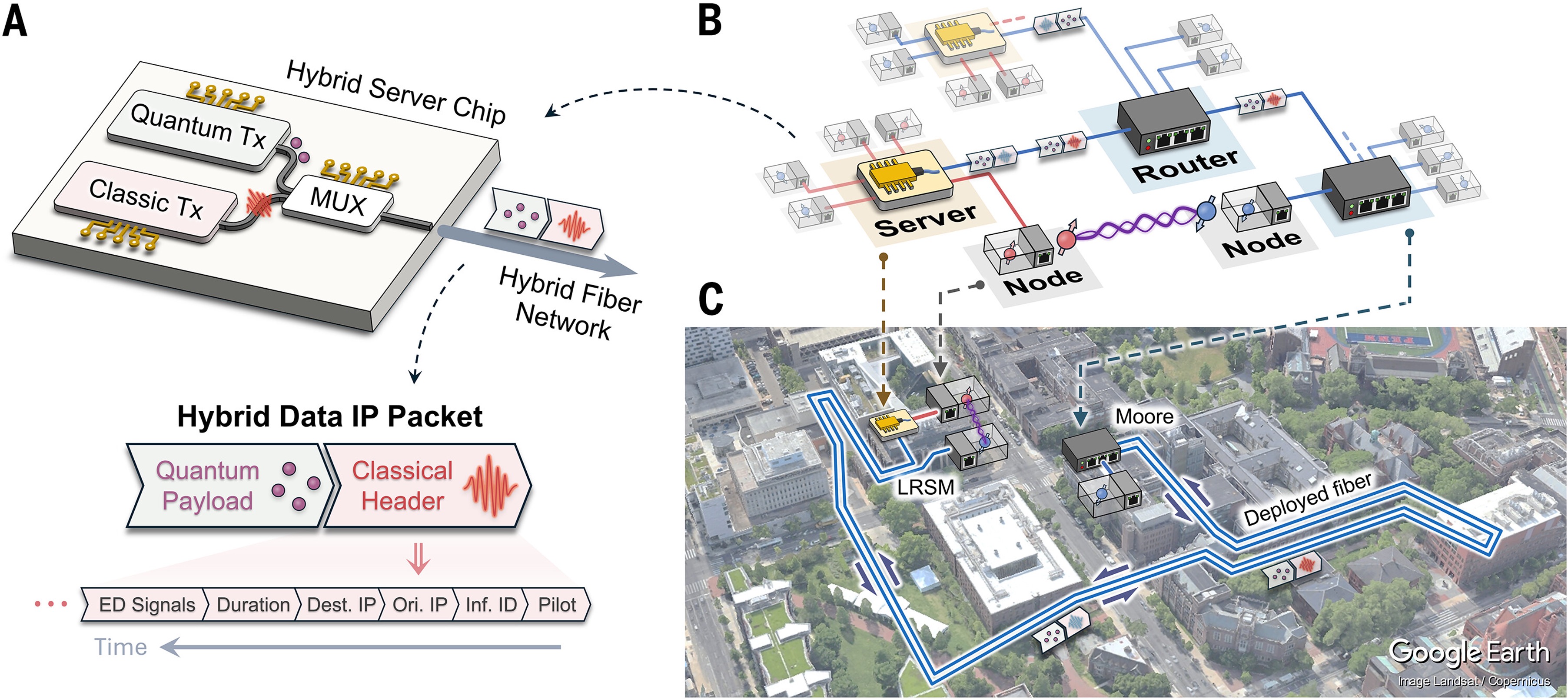
Classical-decisive Quantum Internet by Integrated Photonics
5/20/2026 | Liang Feng (University of Pennsylvania)
Classical and quantum technologies have traditionally been viewed as orthogonal, with classical systems being deterministic and quantum systems inherently probabilistic. This distinction hinders the development of a scalable quantum internet even as the global internet continues expanding. Here, a classical-decisive quantum internet architecture is reported in which the integration of quantum information into advanced photonic technologies enables efficient entanglement distribution over a commercially deployed fiber network.
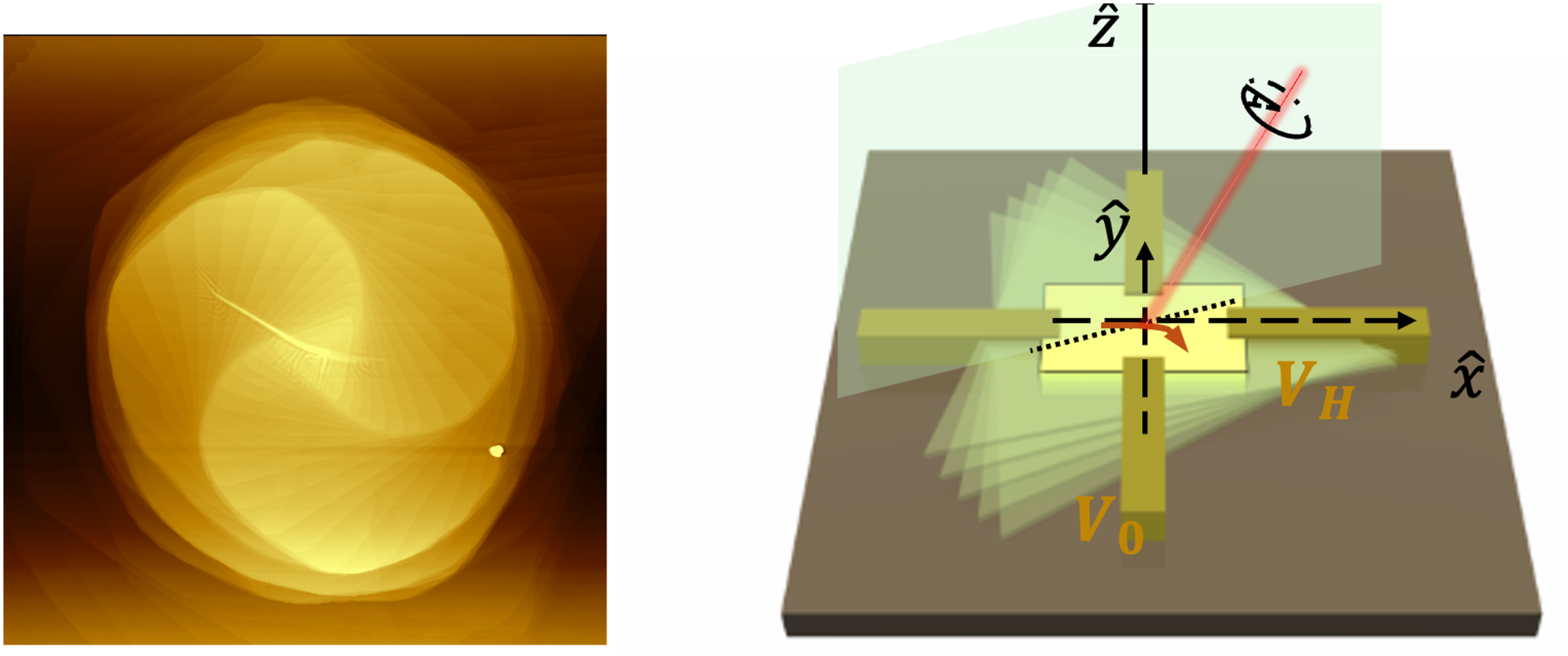
Opto-twistronic Hall Effect in a Three-dimensional Spiral Lattice
5/20/2026 | Song Jin (University of Wisconsin), Ritesh Agarwal (University of Pennsylvania)
Studies of moire systems have explained the effect of superlattice modulations on their properties, demonstrating new correlated phases. However, most experimental studies have focused on a few layers in 2D systems. Extending twistronics to three dimensions, in which the twist extends into the third dimension, remains underexplored because of the challenges associated with the manual stacking of layers. In this work, three-dimensional twistronics are studied using a self-assembled twisted spiral superlattice of multilayered WS2.

Bend Instabilities and Topological Turbulence in Shear-aligned Living Liquid Crystal
4/27/2026 | Sergij Shiyanovskii and Oleg Lavrentovich (Kent State University)
Flagellated microswimmers B. subtilis dispersed in a nematic phase of a lyotropic chromonic liquid crystal form a living liquid crystal (LLC). The combination of the passive and active components allows analysis of how the active component transitions from the shear-imposed alignment into topological turbulence. The LLCs in which the active nematic part, the dispersion of swimming bacteria, is controlled by an orientationally ordered background of the passive nematic was analyzed, representing a lyotropic chromonic liquid crystal disodium cromoglycate (DSCG).

Toroidal Nuclei of Columnar Lyotropic Chromonic Liquid Crystals Coexisting with an Isotropic Phase
4/27/2026 | Dmitry Golovaty (U. Akron), M. Carme Calderer (U. MN), Oleg Lavrentovich (Kent St. U.)
Surface tension defines the shapes of finite-size condensed matter. Tiny droplets of water in air are spherical to minimize their surface area, while solid crystals have facets due to the orientational dependence of surface tension. Bulk interactions are irrelevant here: too weak to resist surface tension in the first example or too strong to permit internal curvatures in the second example. Liquid crystals show a more delicate balance between the bulk and surface energies yielding rich morphology of droplet shapes. Nuclei of ordered materials emerging from the isotropic state usually show a shape topologically equivalent to a sphere. In this work, the toroidal in shape nuclei of columnar lyotropic chromonic liquid crystals coexisting with the isotropic phase were experimentally and theoretically explored.
Showing 1 to 10 of 245