Research Highlights

Shear-induced Polydomain Structures of Nematic Lyotropic Chromonic Liquid Crystal
4/27/2026 | Oleg Lavrentovich (Kent State University)
Dynamics of nematic liquid crystals driven out of equilibrium by externally applied shear is a fascinating domain of soft matter physics. Lyotropic chromonic liquid crystals (LCLCs) represent aqueous dispersions of organic disk-like molecules that form cylindrical aggregates. Despite the growing interest in these materials, their flow behavior is poorly understood. Here, the effect of shear on dynamic structures of the nematic LCLC, formed by 14 wt% water dispersion of disodium cromoglycate (DSCG), is explored.
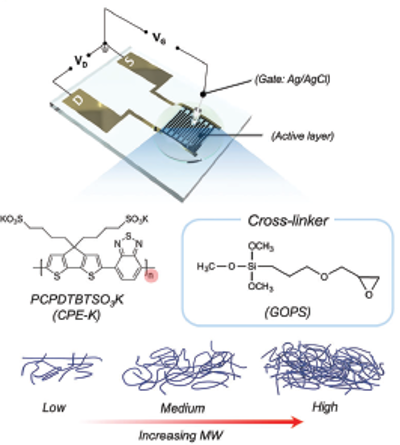
Impact of Molecular Weight on Transport in Conjugated Polyelectrolytes Relevant to Organic Electrochemical Transistors
4/9/2026 | Thuc-Quyen Nguyen & Guillermo Bazan (UCSB)
Organic electrochemical transistors (OECTs) have gained considerable attention due to their potential applications in emerging biosensor platforms. The use of conjugated polyelectrolytes (CPEs) as active materials in OECTs is particularly advantageous owing to their functional, water-processable, and biocompatible nature, as well as their tunable electronic and ionic transport properties. However, there exists a lack of systematic studies of the structure-property relationships of these materials with respect to OECT performance.
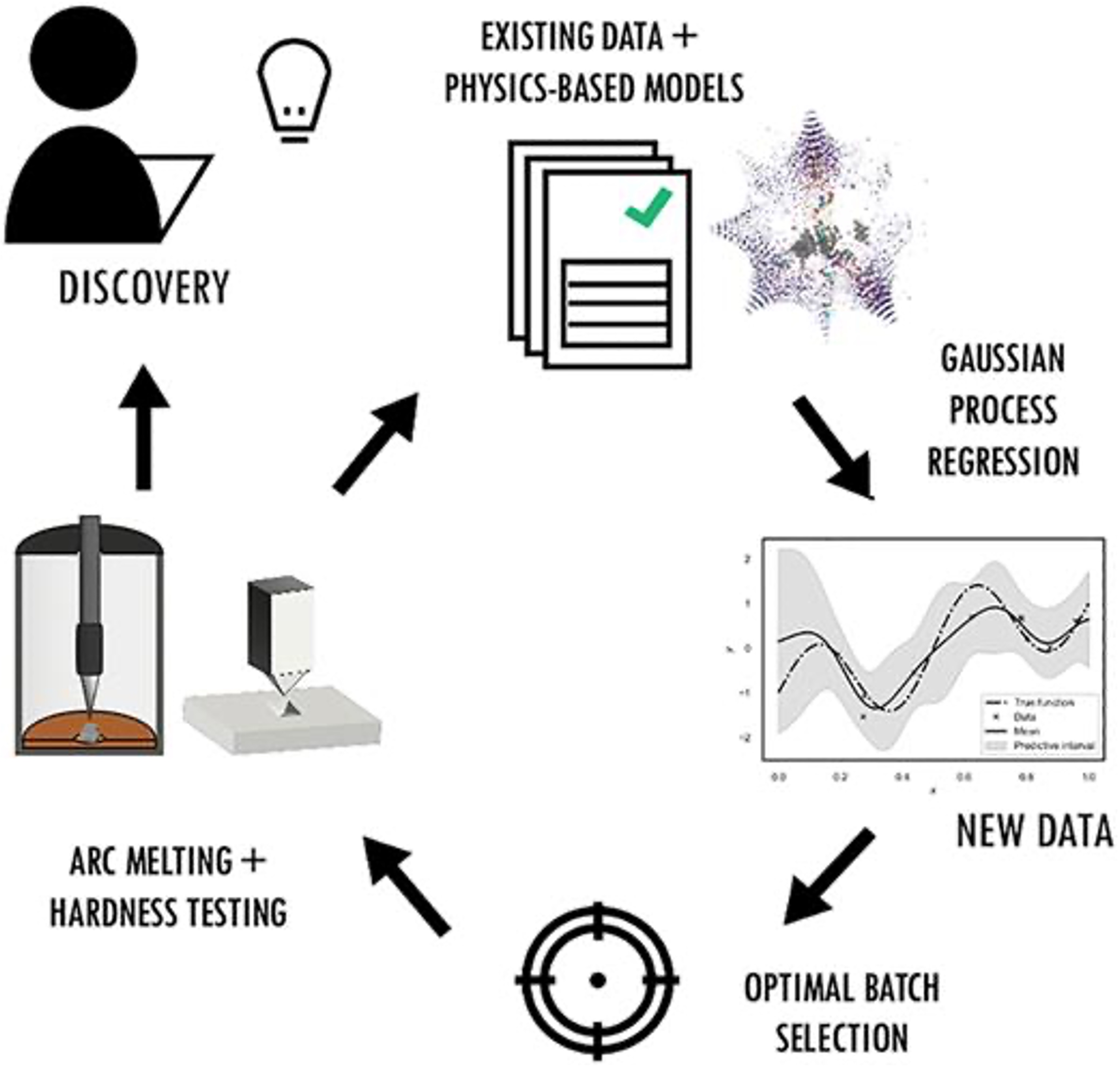
Design of High-hardness Complex Concentrated Alloys from Physics, Machine Learning, and Experiments
4/3/2026 | A. Strachan, I. Bilionis, K. Sandhage, M. Titus (Purdue University)
High-strength alloys are intimately connected to human development, from the bronze age to the current applications in aerospace and energy. State-of-the-art alloys are engineered to harness strengthening mechanisms across scales, from crystal-level processes to complex hierarchical microstructures that are designed to hinder the mobility of dislocations and other carriers of plasticity.
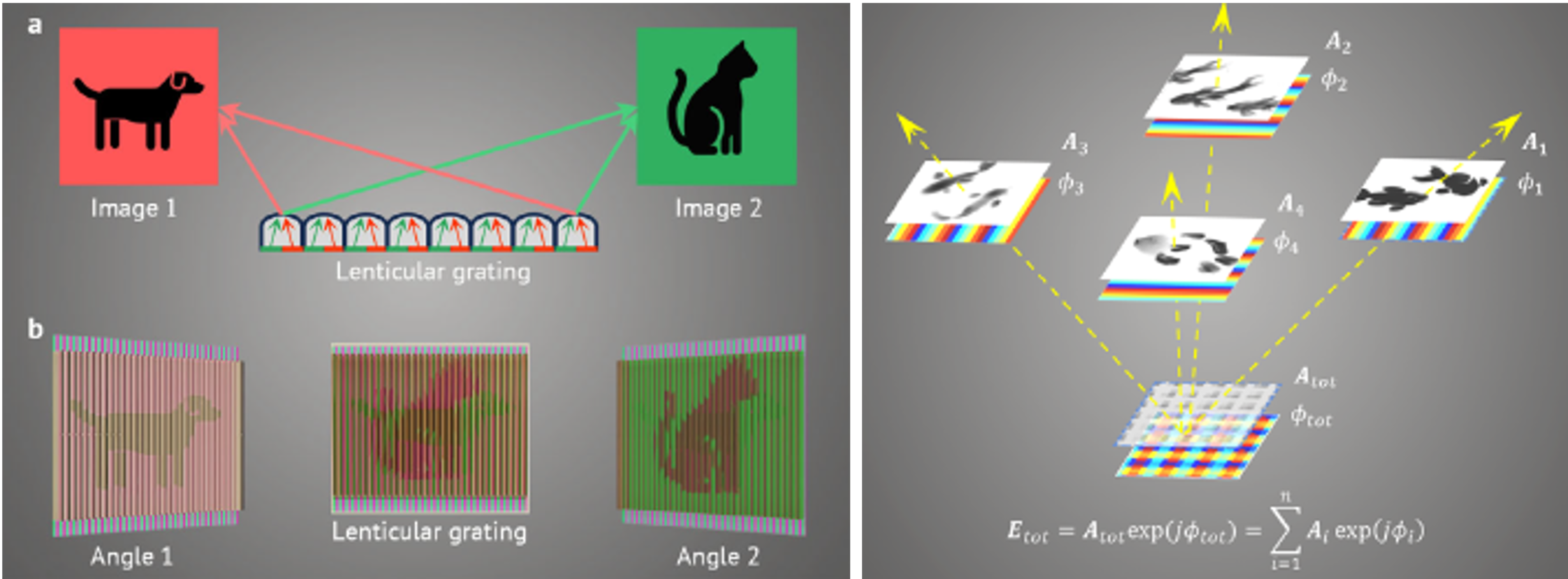
Polarization-Encoded Lenticular Nano-Printing with Single-Layer Metasurfaces
4/2/2026 | Yongmin Liu (Northwestern University)
Lenticular printing can create printed images that appear to change or move at different viewing angles. Metasurface-based nano-printing has enabled ultrahigh-resolution displays. However, the maximum number of independent nano-printing images achieved with one single-layer metasurface remains limited.
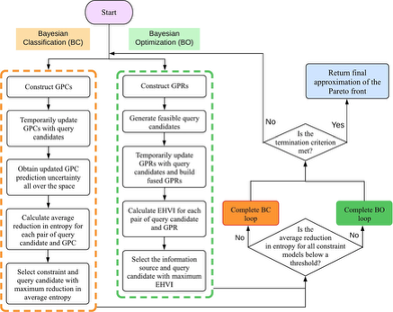
Bayesian Optimization with Active Learning of Design Constraints using an Entropy-based Approach
3/31/2026 | R. Arroyave (Texas A&M University)
The design of alloys for use in gas turbine engine blades is a complex task that involves balancing multiple objectives and constraints. Candidate alloys must be ductile at room temperature and retain their yield strength at high temperatures, as well as possess low density, high thermal conductivity, narrow solidification range, high solidus temperature, and a small linear thermal expansion coefficient.
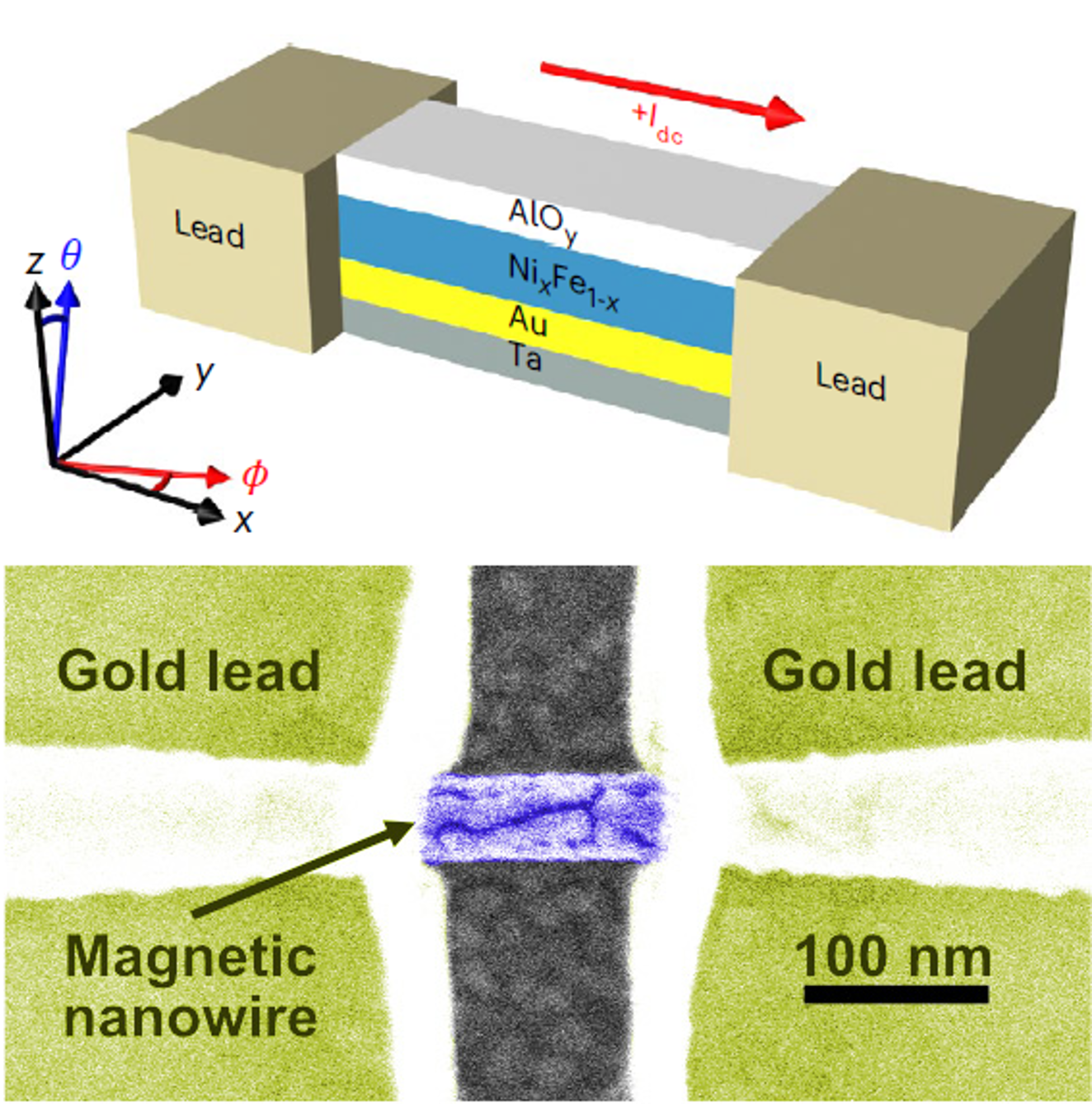
First Spintronic Prototype Device that Exploits the Anomalous Hall Torque Effect
3/27/2026 | I. Krivorotov (U. California - Irvine)
Spin–orbit torques enable energy-efficient manipulation of magnetization by electric current and hold promise for applications ranging from non-volatile memory to neuromorphic computing. Here the discovery of a giant spin–orbit torque induced by anomalous Hall current in ferromagnetic conductors is reported.
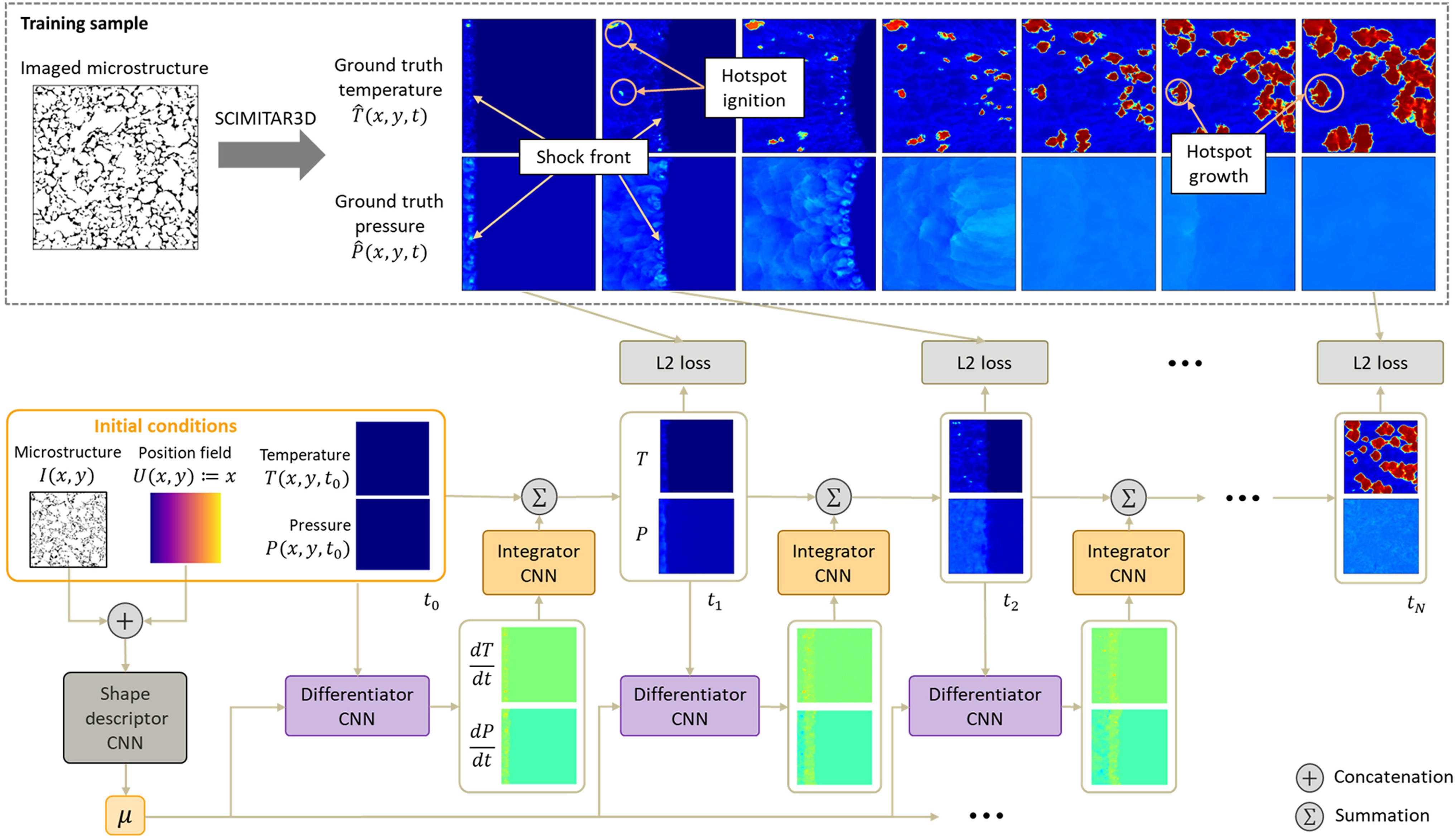
Physics-aware Recurrent Convolutional Neural Network to Assimilate Mesoscale Reactive Mechanics of Energetic Materials
3/24/2026 | H. S. Udaykumar (University of Iowa) S. S. Baek (University of Virginia)
The thermo-mechanical response of shock-initiated energetic materials (EMs) is highly influenced by their microstructures, presenting an opportunity to engineer EM microstructures in a “materials-by-design” framework. However, the current design practice is limited, as a large ensemble of simulations is required to construct the complex EM structure-property-performance linkages.
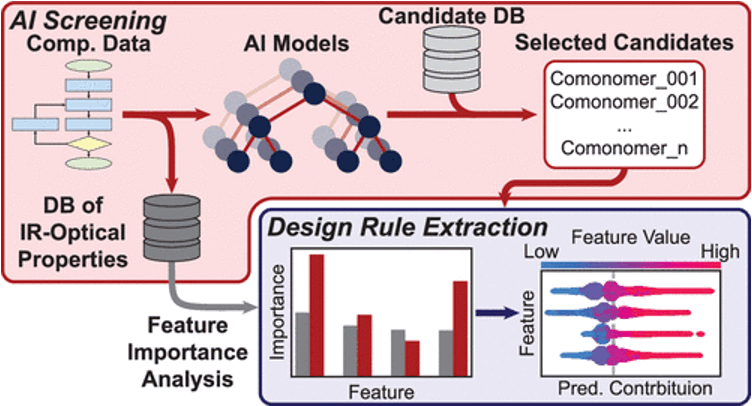
Artificial Intelligence Guided Search for Chalcogenide Hybrid Inorganic / Organic Polymers Comonomers
3/24/2026 | T. Purcell (U. Arizona)
Chalcogenide hybrid inorganic/organic polymers (CHIPs) have the potential to revolutionize infrared (IR) optics and create sustainable and recyclable devices. CHIPs combine elemental sulfur with organic comonomers via inverse vulcanization to create a high-sulfur-content polymer, with optical properties that rival state-of-the-art inorganic solids with the processability and recyclability of plastic materials. However, the optimal comonomer for these applications remains unknown.
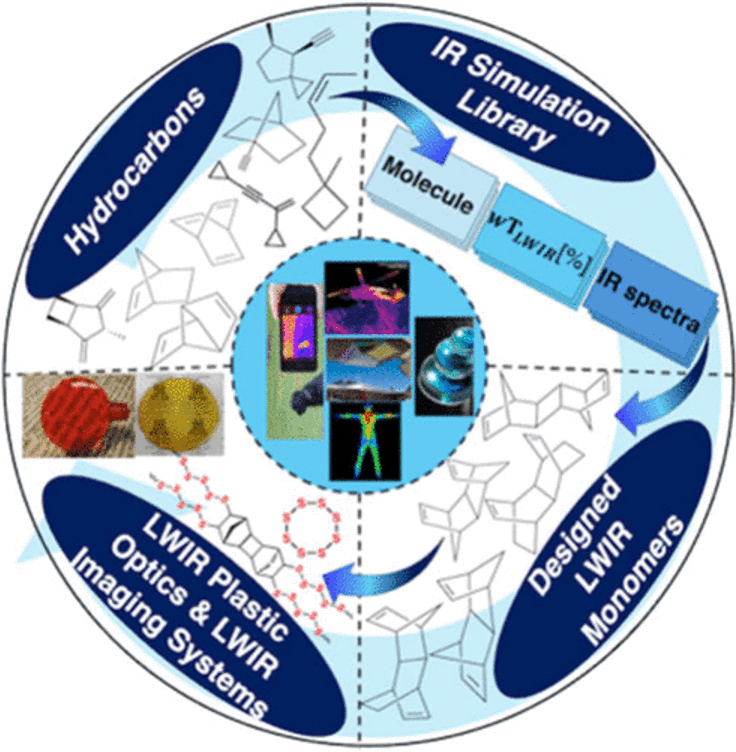
High-throughput Computational Screening of Hydrocarbon Molecules for Long-wavelength Infrared Imaging
3/24/2026 | J. Pyun, D. Lichtenberger, and JL Bredas (U. Arizona)
The development of organic or sulfur/organic hybrid polymeric materials for infrared (IR) thermal imaging applications has attracted significant interest as an alternative to expensive semiconductor transmissive materials, particularly for long-wavelength IR (LWIR, 1250–800 cm–1). To accelerate the design of new candidate IR polymers with enhanced LWIR optical transparency, a protocol has been developed that integrates density functional theory calculations for simulating IR spectra with high-throughput screening.
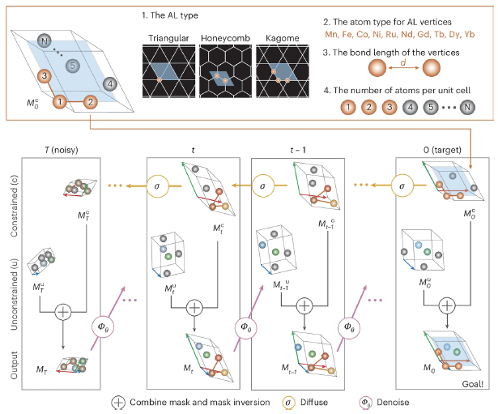
Structural Constraint Integration in a Generative Model for the Discovery of Quantum Materials
3/11/2026 | Mingda Li (MIT)
Billions of organic molecules have been computationally generated, yet functional inorganic materials remain scarce due to limited data and structural complexity. Here Structural Constraint Integration in a GENerative model (SCIGEN) is introduced, a framework that enforces geometric constraints, such as honeycomb and kagome lattices, within diffusion-based generative models to discover stable quantum materials candidates.
Showing 11 to 20 of 245