NSF DMREF Specific Highlights
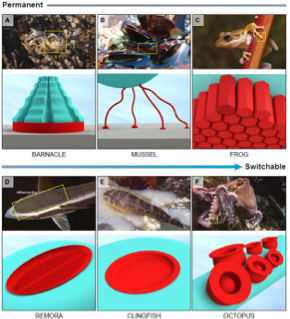
Bioinspired Materials for Underwater Adhesion with Pathways to Switchability
5/30/2024 | M. Bartlett (Virginia Tech.), B. Lee (MI Tech.) R. Long (U. CO-Boulder), G. Gu (U. CA-Berkeley)
Strong adherence to underwater or wet surfaces for applications like tissue adhesion and underwater robotics is a significant challenge. This is especially apparent when switchable adhesion is required that demands rapid attachment, high adhesive capacity, and easy release. Nature displays a spectrum of permanent to reversible attachment from organisms ranging from the mussel to the octopus, providing inspiration for underwater adhesion design that has yet to be fully leveraged in synthetic systems. Here, we review the challenges and opportunities for creating underwater adhesives with a pathway to switchability.
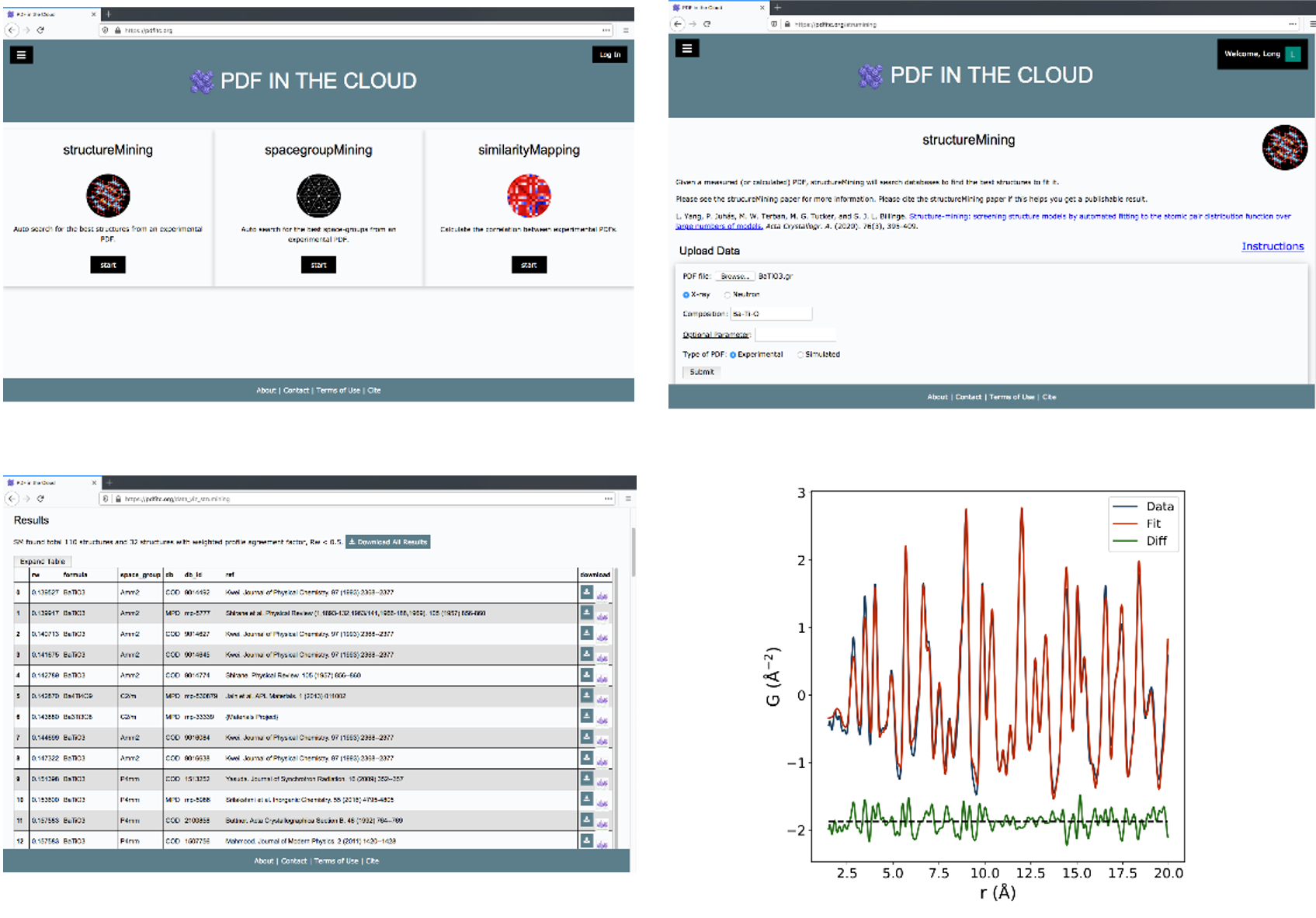
An AI-driven, Cloud-based, Materials Discovery Platform for Nanomaterial Structure: PDFitc
5/28/2024 | S. Billinge, Q. Du, D. Hsu (Columbia U.)
Discovery of novel functional materials relies on a quantitative understanding of nanostructure. There is a need for advanced artificial intelligence (AI) and machine learning (ML) approaches to nanostructure determination
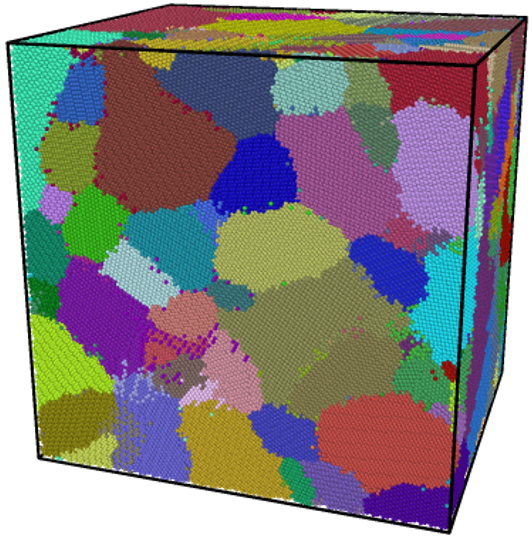
Data Flow Between Experiment, Continuum Models, and Atomistic Models
5/22/2024 | Gregory S. Rohrer, Carnegie Mellon University
A key challenge of learning from the outcomes of experiments and simulations is consistency of data formats and analysis techniques. We have developed the ability to seamlessly integrate findings from atomistic simulations, mesoscale simulations, and experiments.
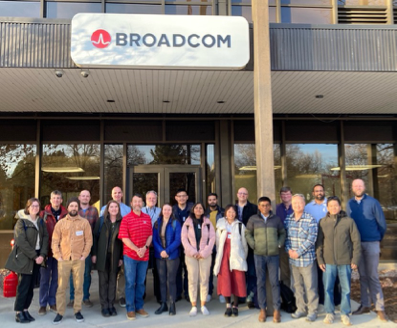
Advancing the State of the Art In Piezoelectric Materials through Industry Partnership
5/14/2024 | David Martin (Broadcom)
As a GOALI project, the relationship between the NSF DMREF team led by Geoff Brennecka and industry partner, Broadcom, is key to the success of the project. Broadcom is a global leader in Thin-film Bulk Acoustic Resonator (FBAR) products and a major supplier of radio frequency (RF) filters to leading smartphone manufacturers.
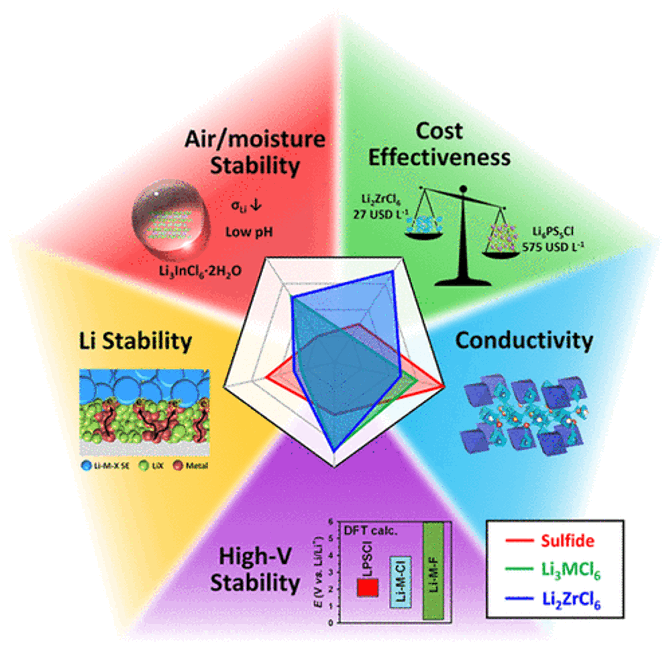
Review: Emerging Halide Superionic Conductors for All-Solid-State Batteries: Design, Synthesis, and Application
5/10/2024 | Yifei Mo (University of Maryland)
Recently, halide superionic conductors have emerged as promising solid electrolyte (SE) materials for all-solid-state batteries (ASSBs), owing to their inherent properties combining high Li+ conductivity, good chemical and electrochemical oxidation stabilities, and mechanical deformability, compared to sulfide or oxide SEs. In this Review, recent advances in halide Li+- and Na+-conducting SEs are comprehensively summarized.
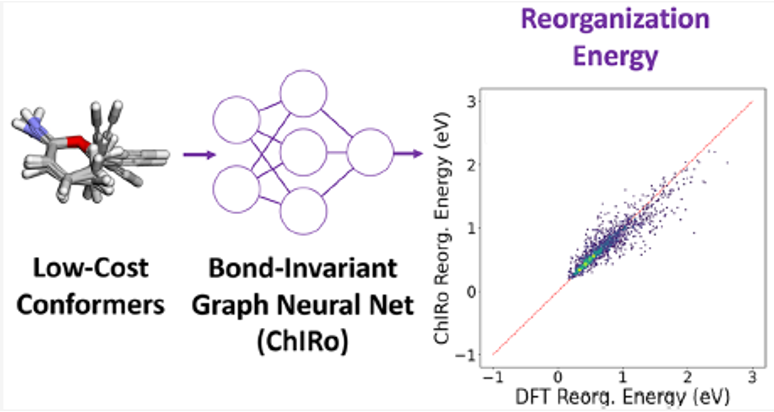
Reorganization Energy Predictions with Graph Neural Networks
4/22/2024 | Daniel Tabor
These results demonstrate the feasibility of reorganization energy predictions on the benchmark QM9 data set without needing DFT-optimized geometries and demonstrate the types of features needed for robust models that work on diverse chemical spaces.
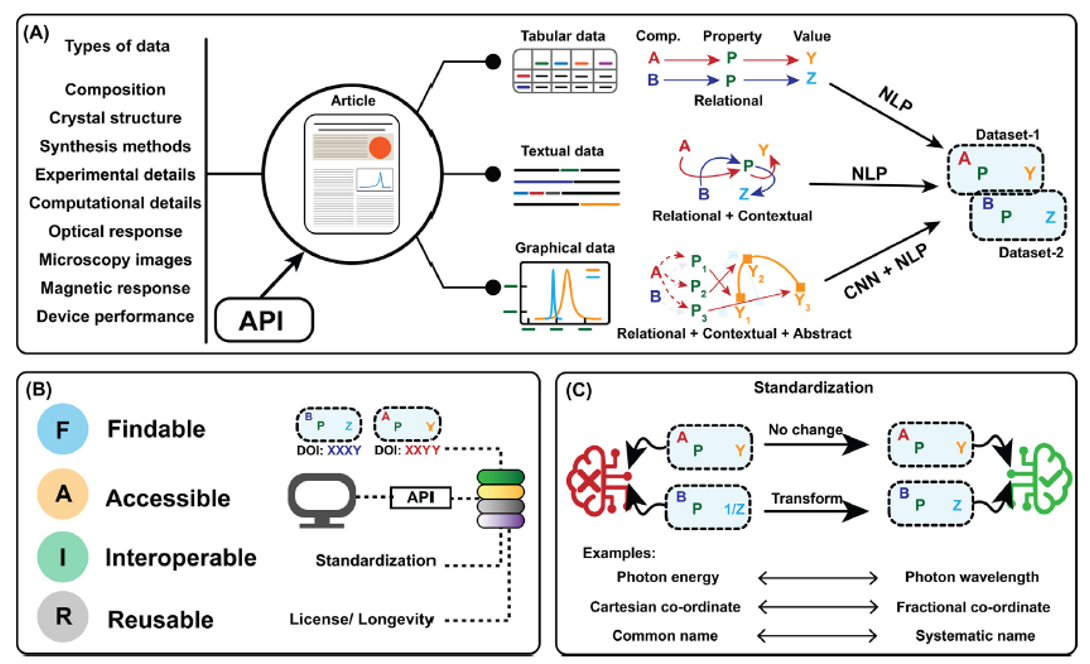
Curated Materials Data of Hybrid Perovskites
10/1/2023 | Volker Blum (Duke University)
Hybrid perovskites have emerged as a group of semiconductors that can solve key problems involving efficiency and production in optoelectronics and spintronics research. Over the past decade, this field has evolved to a point where the literature contains an enormous volume of chemical and physical information. The dispersed nature of the large, rapidly growing body of hybrid perovskite materials data poses a barrier to systematic discovery efforts, which can be solved by materials property databases, either by high-throughput or by systematic, accurate human-curated efforts.
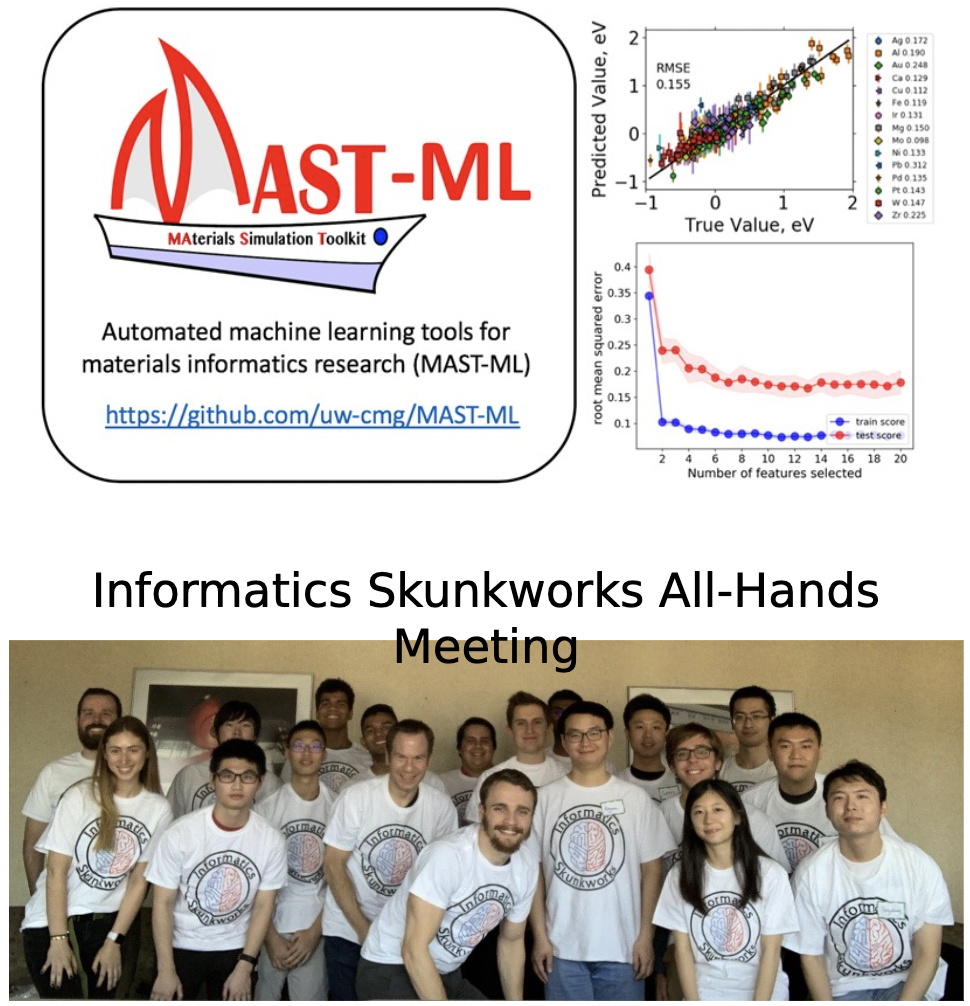
Materials Simulation Toolkit
3/10/2023 | Dane Morgan (University of Wisconsin)
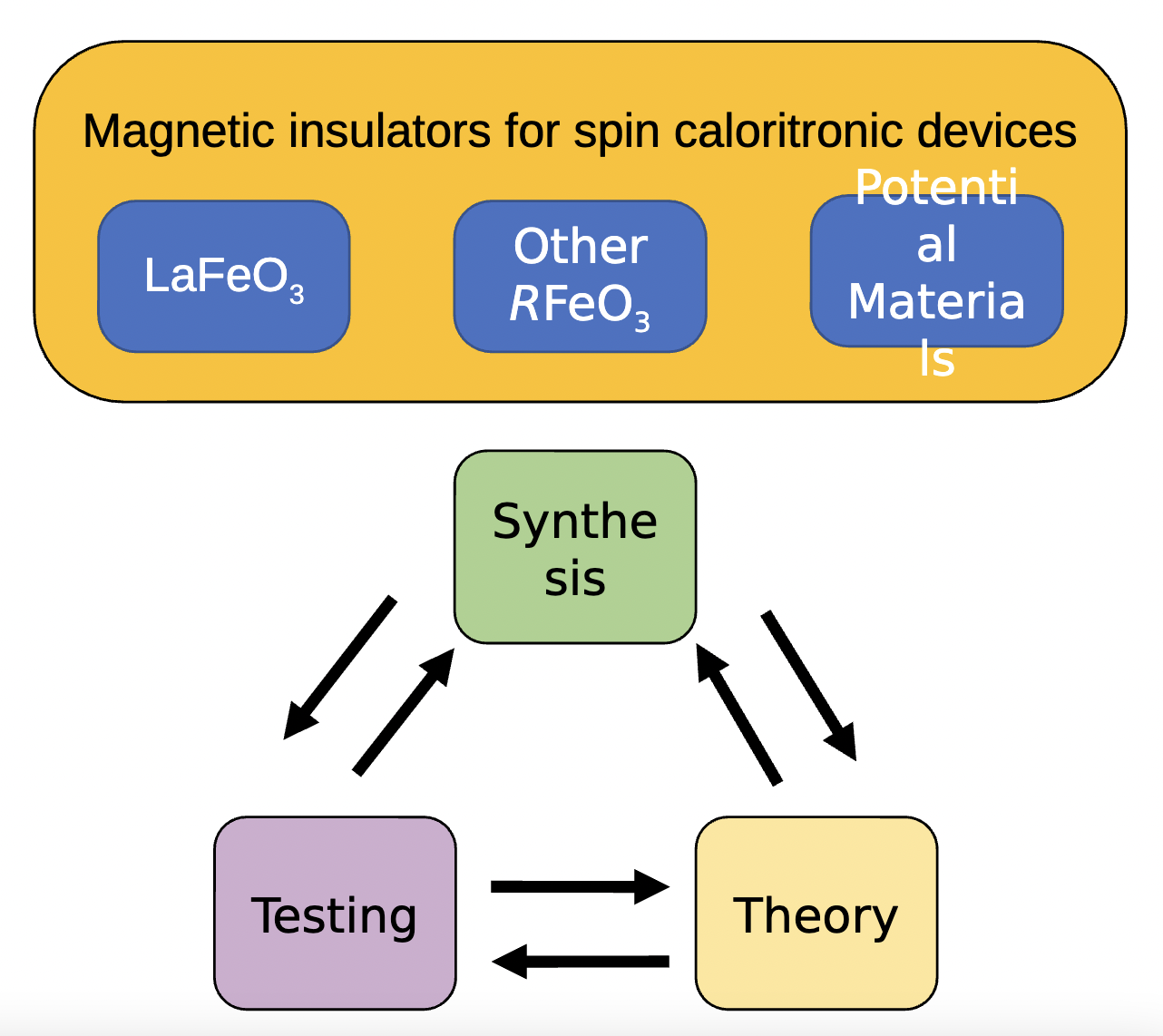
Evidence for Spin Swapping in an Antiferromagnet
3/2/2023 | J. Zhou (U. Texas-Austin); G. Fiete (Northeastern U.); C.L. Chien (Johns Hopkins U.)
In accordance with the MGI mission to convert materials discovery to application as quickly as possible, the LaFeO3material we studied has now been incorporated into spin caloritronic devices.
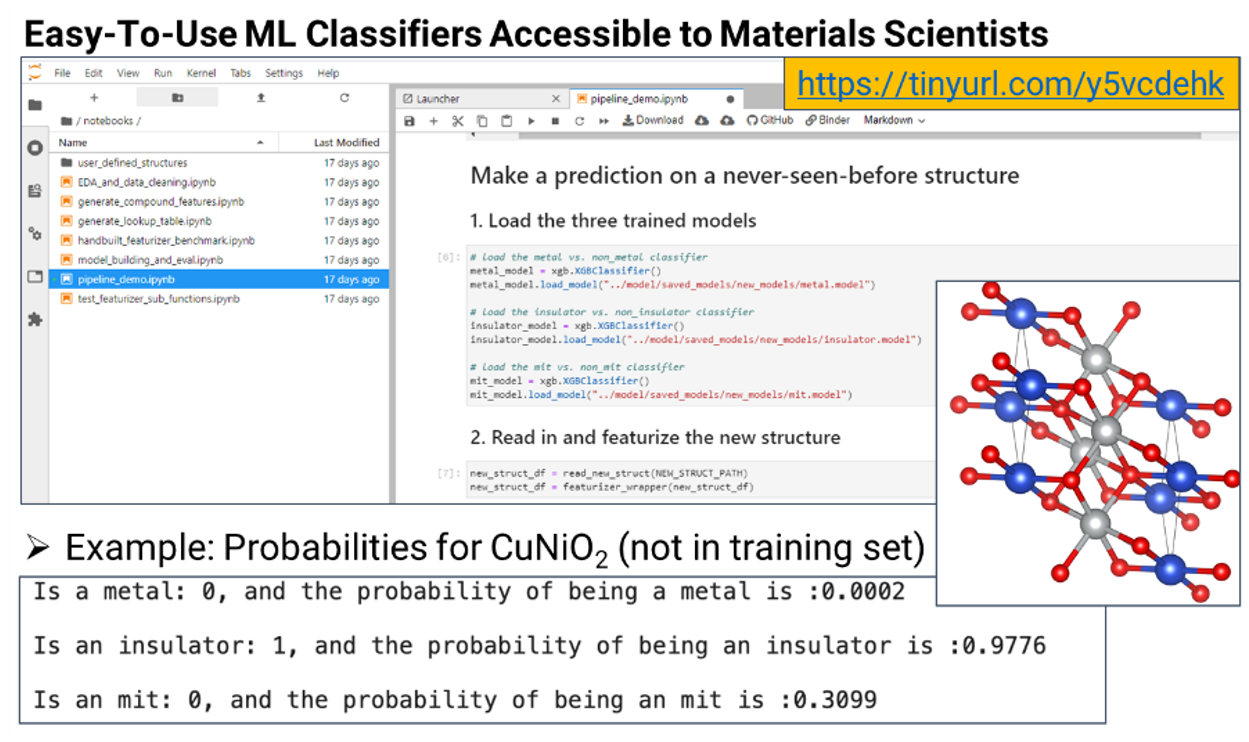
Broadening Participation in Electronic Materials Research
2/21/2023 | James Rondinelli (Northwestern University)Stephen Wilson and Ram Seshadri (UCSB)
Enhancing Access to Machine-Learning Models. We packaged our electronic classifiers and made them publically available. They are easily accessible via an interactive Jupyter notebookhosted by Binder.
Showing 11 to 20 of 40