NSF DMREF Specific Highlights
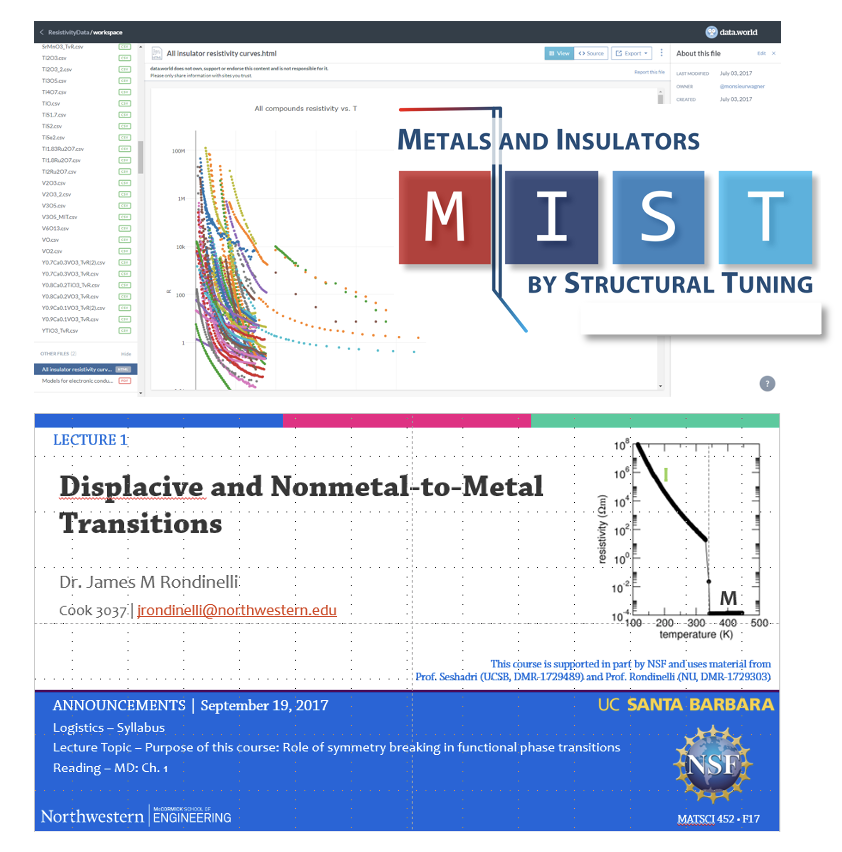
Broadening Participation in Electronic Materials Research Through Knowledge and Data Exchange
2/21/2023 | James Rondinelli (Northwestern University)
Enhancing Access to Data. In collaboration with DMR-1729489, we are working to deliver an open data/software ecosystem by disseminating broadly research data through the Metals and Insulators through Structural Tuning (MIST) website hosted on data.world (https://data.world/dmref-mist).
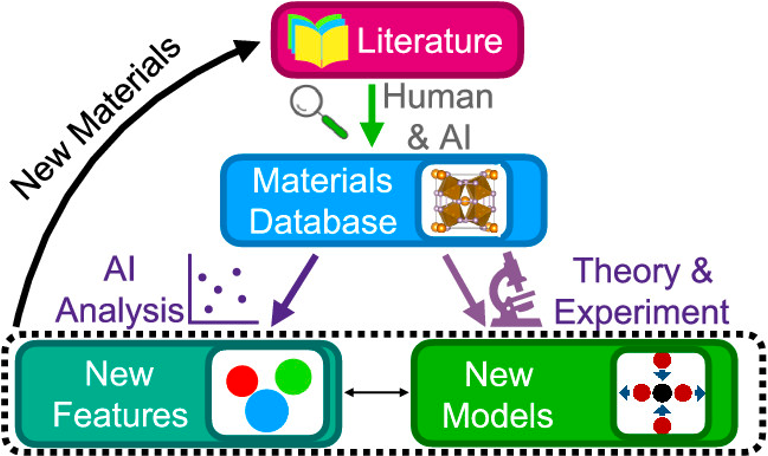
Integrating Physics-based Models with Data-driven Methods for Materials Discovery
2/21/2023 | James Rondinelli (Northwestern University)
Accelerated discovery is challenging using high-throughput screening because high-fidelity quantum-mechanical simulations are computationally prohibitive to perform. We solved this problem by building a supervised machine-learning model that can classify whether a material, given its structure as input, would exhibit a thermal MIT.
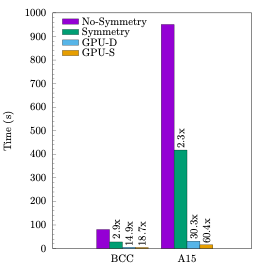
Tools for Block Polymer Materials Discovery
2/10/2023 | Glenn H. Fredrickson and Kevin D. Dorfman
Implementing the Materials Genome Initiative-inspired approach for block polymer materials discovery employed by the PIs requires the availability of fast computational software for computing block polymer phase behavior
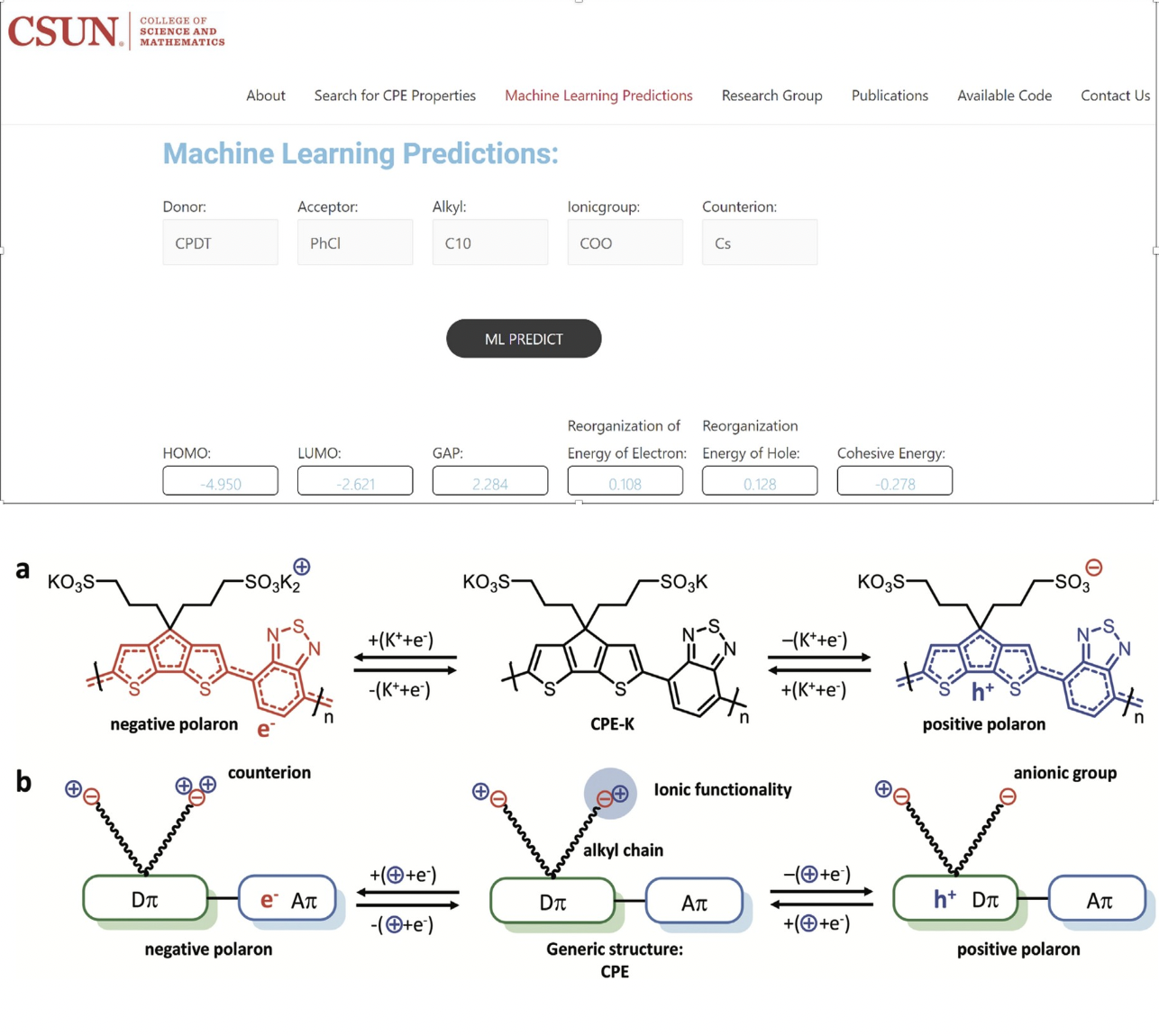
Data Driven Discovery of Conjugated Polyelectrolytes for Neuromorphic Computing
2/6/2023 | Gang Lu & Xu Zhang (California State University Northridge), Thuc-Quyen Nguyen & Guillermo Bazan (UCSB)
In this project, we have constructed a database on conjugated polyelectrolytes (CPEs) based on high-throughput first-principles calculations and machine learning modeling.
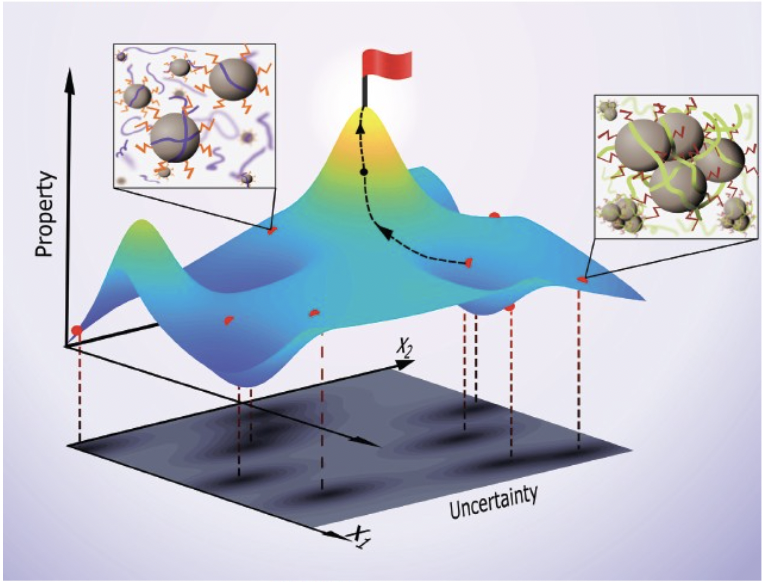
Data Centric Nanocomposite Design via Mixed-variable Bayesian Optimization
2/1/2023 | L. C. Brinson (Duke U.), W. Chen (Northwestern U.), L. Schadler (U. VT)
With an unprecedented combination of mechanical and electrical properties, polymer nanocomposites have the potential to be widely used across multiple industries. Tailoring nanocomposites to meet application specific requirements remains a challenging task, owing to the vast, mixed-variable design space that includes composition and microstructures of the nanocomposite material.
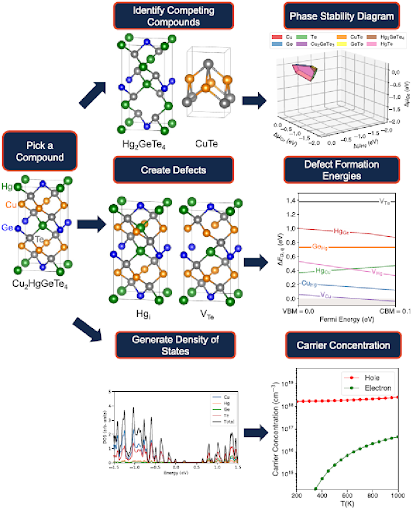
VTAnDeM: A Python Toolkit for Simultaneously Visualizing Phase Stability, Defect Energetics, and Carrier Concentration
1/1/2023 | Elif Ertikin (University of Illinois)
VTAnDeM offers a graphical interface that allows the user to interact directly with the chemical phase space of a given material and to visualize the defect formation energetics and ensuing carrier concentrations.

Data-Driven Elucidation of Solution-to- Device Feature Transfer for π‐Conjugated Polymer Semiconductors
11/23/2022
The NSF DMREF team recently published a perspective article that discusses the need for additional fundamental insight into the solution behavior of donor-acceptor based organic semiconducting (OSC) conjugated polymers.
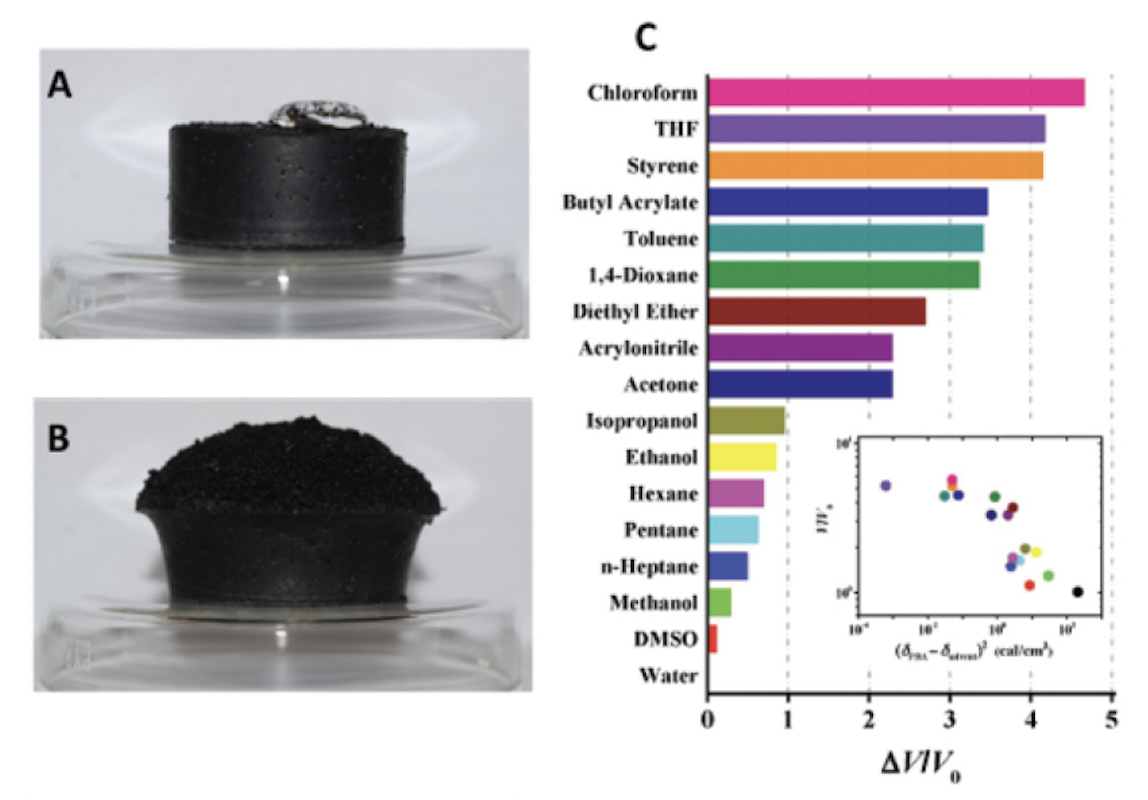
Polymer Foams for Oil Recovery
11/3/2022 | Douglas Adamson
This unique combination of solvent selectivity and electro-mechanical response opens a path for the design of foam-like materials that could find applications in oil recovery, mechano-chemical sensors, flexible electronics, and energy storage.
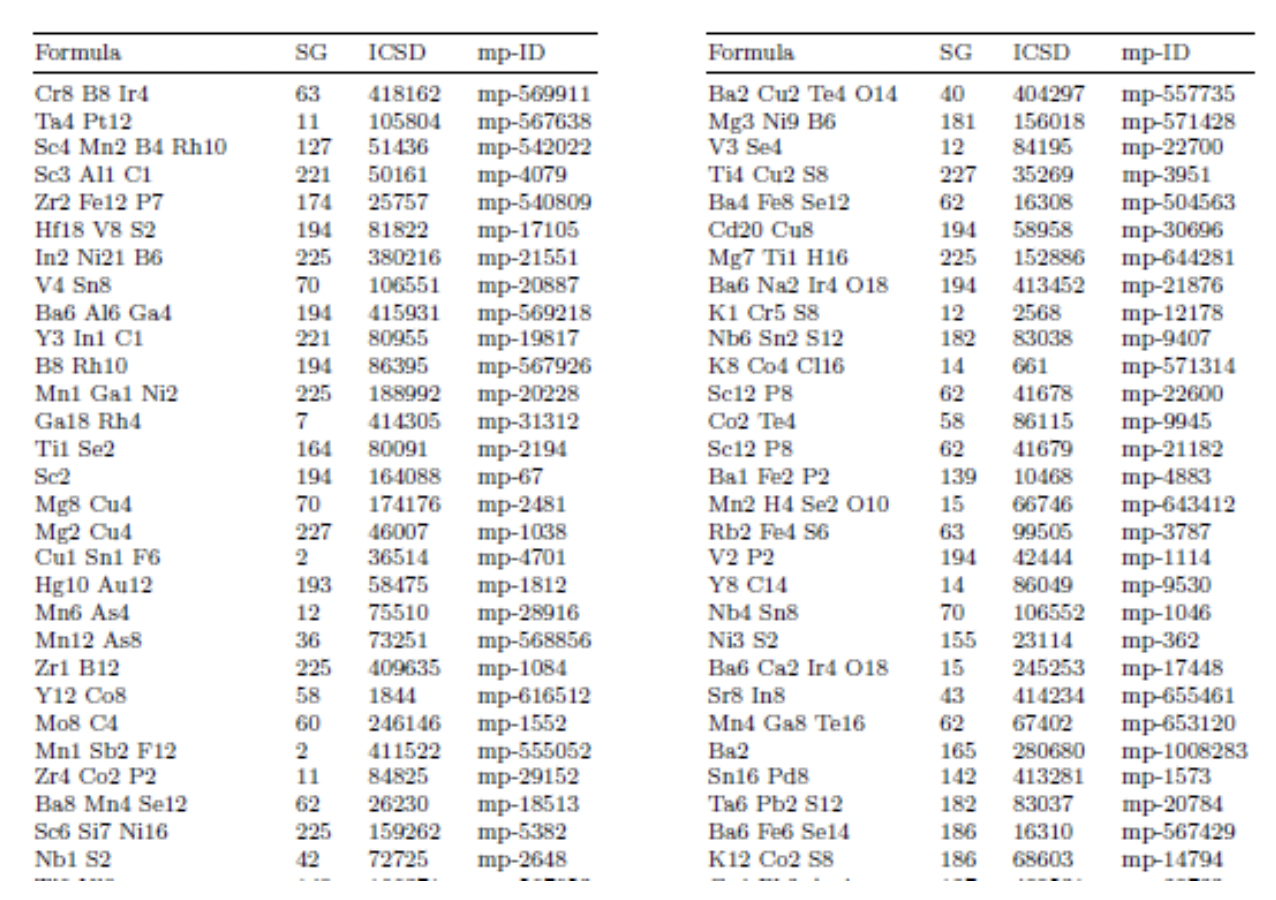
Data Driven Discovery of Topological Phononic Materials
10/1/2022 | Mingda Li, Massachusetts Institute of Technology
This NSF DMREF project has demonstrated an alternative avenue for the prediction of new topological materials from simple spectroscopic features, addressing the NSF DMREF value of “significantly accelerate materials discovery and development”. In particular, the synergy of machine-learning modeling with the experimental validation addresses the NSF DMREF concept to “work synergistically in a closed loop fashion.” The broadening of materials candidates further supports the NSF DMREF mission to foster the “translation of materials research toward application”.
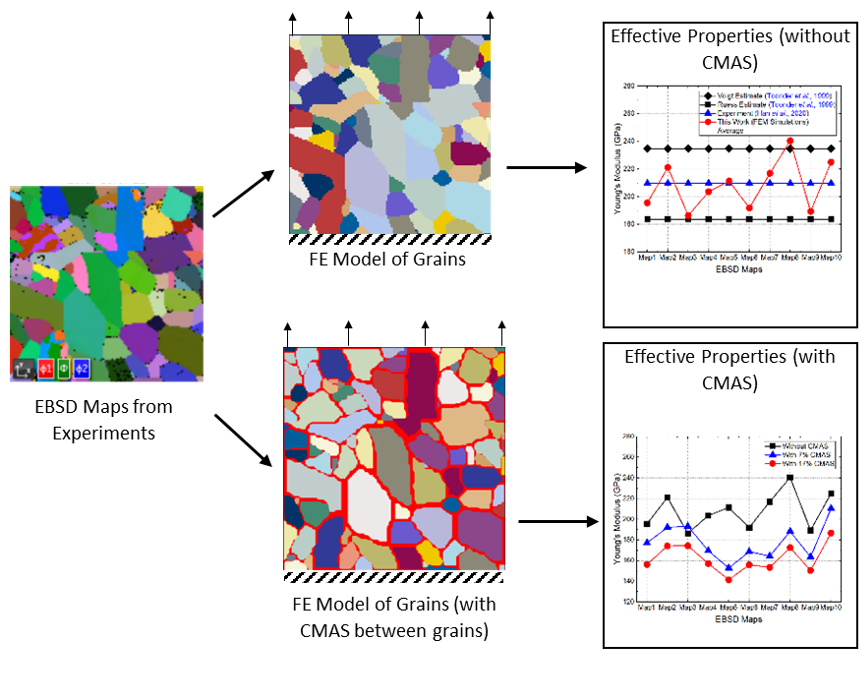
Machine Learning Accelerated Design and Discovery of Rare-earth Phosphates as Next Generation Environmental Barrier Coatings
9/24/2022 | Jie Lian, Rensselaer Polytechnic Institute
Algorithms are being developed to generate synthetic microstructures based on experimentally-obtained microstructures and simulation of generated microstructure for materials properties simulations.
Showing 21 to 30 of 40