Research Highlights

Predicting and Accelerating Nanomaterials Synthesis using Machine Learning Featurization
8/27/2025 | Christopher Hinkle (U. Notre Dame)
A study has shown that using machine learning to analyze reflection high energy electron diffraction (RHEED) data can greatly speed up the process of materials synthesis. By automating the extraction of features, researchers can accurately predict the grain alignment and dopant concentration of materials without needing extensive retraining for different systems. This method demonstrated significant time savings, potentially cutting down processing time by 80% during sample synthesis, while helping to avoid unproductive trials and improving overall control.
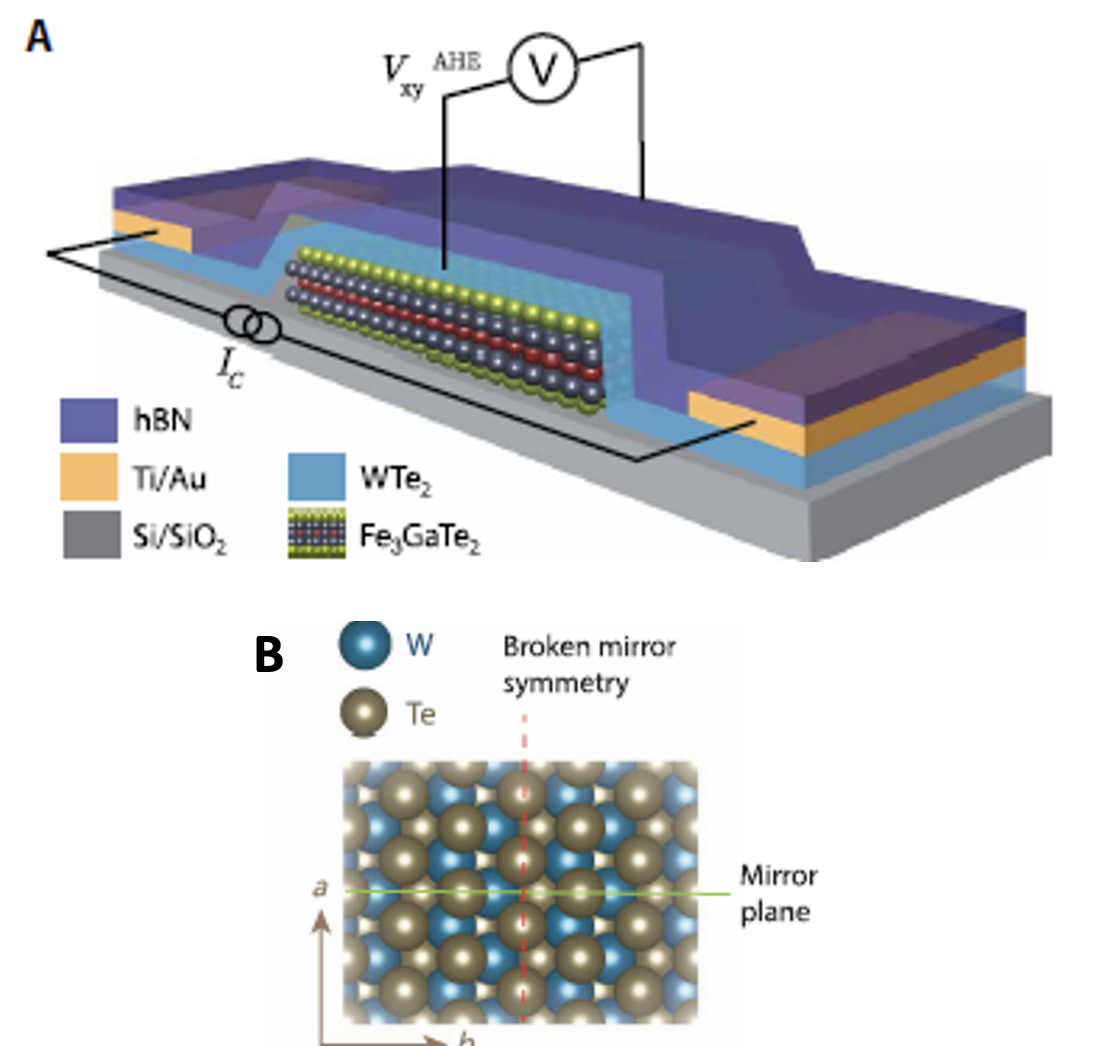
Field-free Deterministic Switching of all-van der Waals Spin-orbit Torque System Above Room Temperature
8/22/2025 | Mingda Li (MIT)
A recent study reports a breakthrough in the field of two-dimensional van der Waals (vdW) magnetic materials, particularly focusing on Fe3GaTe2. Researchers successfully achieved a method for switching this type of ferromagnet at room temperature without needing an external magnetic field. This advancement paves the way for more energy-efficient spintronic devices, which could lead to better memory and computation technologies in the future.

Data-driven Discovery of Photocatalysts for Solar Hydrogen Generation
8/22/2025 | I. Dabo, R. Schaak, V. Gopalan (Penn State U.); H. Abruna (Cornell University)
A recent study explored how to improve the discovery of materials that can efficiently produce hydrogen from sunlight. By comparing theoretical predictions with experimental results, researchers developed a method that increased the success rate of finding effective photocatalysts. Many of the materials tested not only produced hydrogen but also had promising properties for splitting water. This work highlights a practical approach to advancing solar hydrogen production technologies.
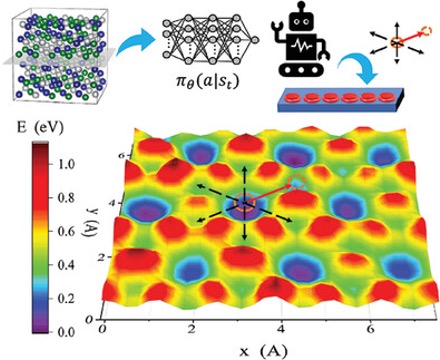
Reinforcement Learning-guided Long-timescale Simulation of Hydrogen Transport in Metals
8/20/2025 | Ju Li (MIT)
This paper explores new methods for simulating how atoms diffuse in complex metal alloys over longer timescales. By using reinforcement learning, two techniques were developed to enhance simulation capabilities: one for tracking transition kinetics and another for sampling low-energy states. The researchers tested these methods by studying hydrogen movement in pure metals and a specific alloy, showing that they could reveal unexpected movement patterns. Overall, these advancements improve the accuracy of simulations compared to traditional approaches.

Thousands of Conductance Levels in Memristors Integrated on CMOS
8/20/2025 | Ju Li (MIT)
Researchers have made significant advances with memristors, a type of electronic component that can remember previous charge flows. They achieved 2,048 distinct conductance levels in memristors, greatly surpassing previous records. This enhancement helps improve machine learning and AI efficiency. By studying the causes of conductance fluctuations, they developed a method to enhance precision in memristor operations. These findings pave the way for better memristor technology in commercial applications, particularly in edge computing for AI.
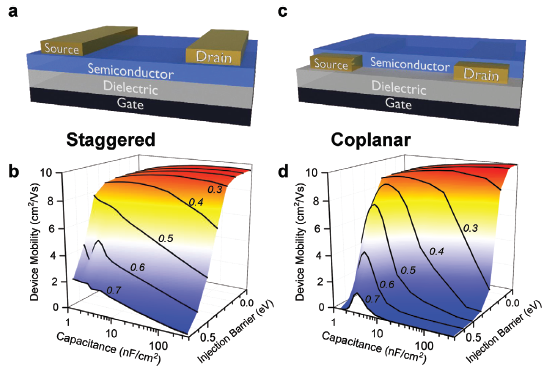
Designing Contact Independent High-performance Low-Cost Flexible Electronics
8/19/2025 | Oana Jurchescu (Wake Forest University)
Researchers used simulations to find a way to create organic transistors with high mobility, independent of contact work function. This led to the design of affordable, high-performance transistors made entirely from solution-deposited materials, suitable for flexible surfaces. By testing over 2000 virtual designs, they minimized the need for physical prototypes, ultimately achieving transistors with mobility higher than 5 cm²/V/s, marking a significant advancement in all-solution-processed devices.

Computational Fluid Dynamic Modeling of Methane-Hydrogen Mixture in Pipelines
8/18/2025 | T. A. Venkatesh (Stony Brook University)
A recent study focused on the blending of hydrogen with natural gas as a step towards carbon neutrality. Using computer modeling, researchers examined how these gas mixtures behave in pipelines. Findings showed that transporting methane-hydrogen blends requires more energy depending on factors like hydrogen volume, pipe size, and surface roughness. The study also revealed that the gas mixture forms a specific flow pattern, with denser methane flowing along the walls and lighter hydrogen in the center.
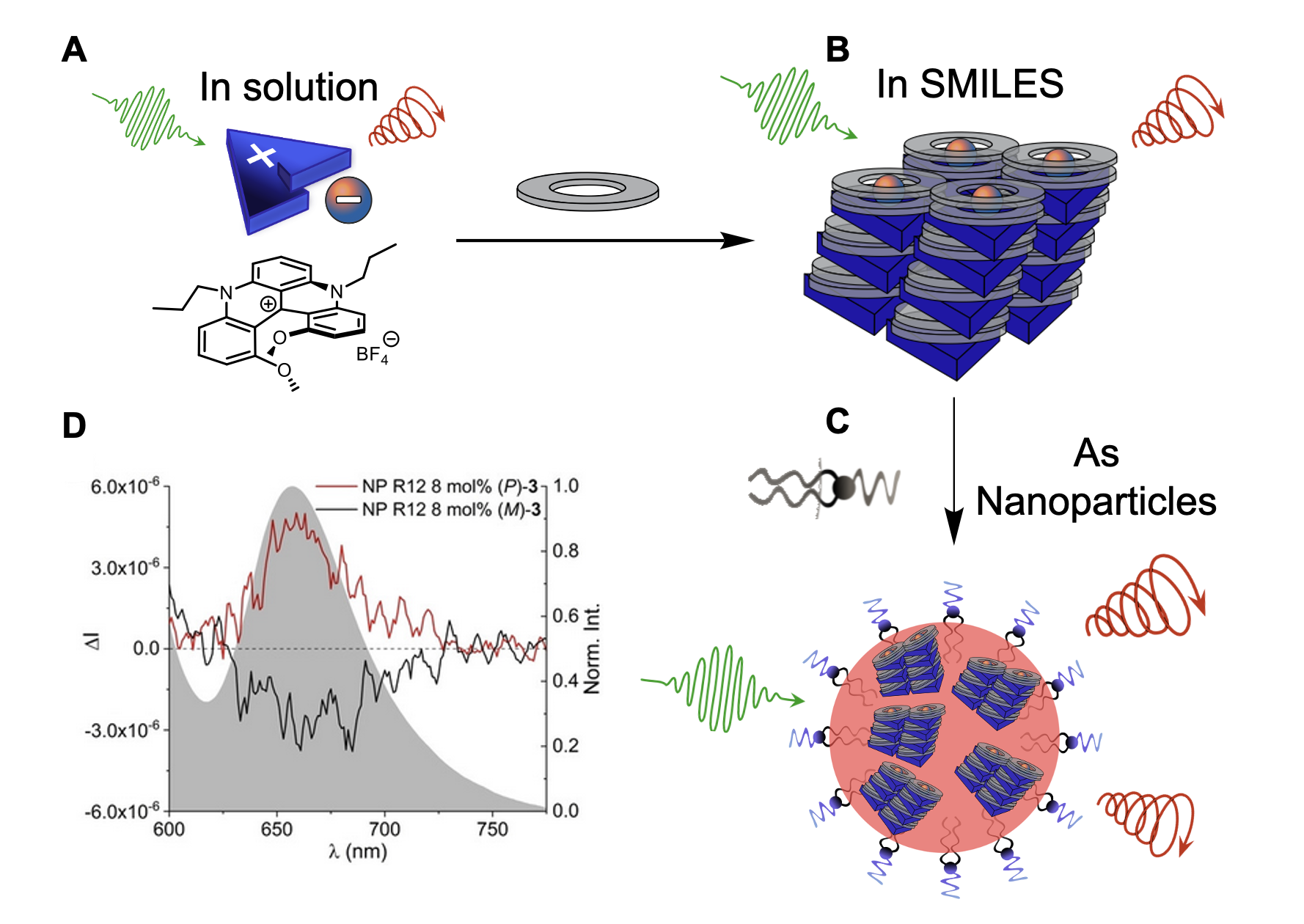
Designing Optical Materials Emit Chiral Light using Small-molecule Ionic Isolthatation Lattices (SMILES)
8/13/2025 | Amar Flood (Indiana University)
Researchers have created a new way to design optical materials using small-molecule, ionic isolation lattices (SMILES). They demonstrated that these materials can emit circularly polarized light (CPL) using a special dye called "helicene." The resulting SMILES crystals and nanoparticles show strong light-emitting capabilities, matching or exceeding previous results. This breakthrough can impact fields like 3D displays and bioimaging by translating optical properties from solutions to solid materials. Future developments will focus on improving dyes and crystal structures.

Unique Conductivity Behavior in Water-in-Salt Electrolytes Driven by Ion Clusters
8/12/2025 | Y Z (University of Michigan) and Tao Li (Northern Illinois University)
A new framework has been developed to better understand how ions move in watery electrolyte solutions, which is important for energy storage and biological applications. This approach shifts focus from concentration measures to volume fraction, revealing a consistent peak conductivity at a 37% volume fraction. Research using small-angle X-ray scattering and molecular dynamics shows that tiny ion clusters are key to this behavior. These findings could lead to better designs for electrolytes and enhance related scientific studies.

Stabilizing Graphite Anode in Electrolytes with Nanoscale Anion Networking for High-Rate Lithium Storage
8/12/2025 | Tao Li (Northern Illinois University)
A recent study introduced a new type of electrolyte designed to better support graphite anodes in lithium-ion batteries. By using a concentrated mixture of long-chain lithium salts, the researchers created a nanoscale network that reduces harmful interactions between graphite and solvent molecules. This helps to prevent graphite layer breakdown during charging, even with less stable solvents. These findings could lead to more effective battery designs by overcoming current limitations in electrolyte choices.
Showing 61 to 70 of 245