Research Highlights

Interface-Tuning of Ferroelectricity and Quadruple-Well State in CuInP2S6 via Ferroelectric Oxide
5/14/2024 | Xia Hong (University of Nebraska-Lincoln) Li Yang (Washington University in St. Louis)
Layered van der Waals CuInP2S6 (CIPS) exhibits room-temperature ferroelectricity with unconventional quadruple-well states. The relatively low Curie temperature (TC) and lack of nanoscale polarization control imposes major challenges for its technological implementation.
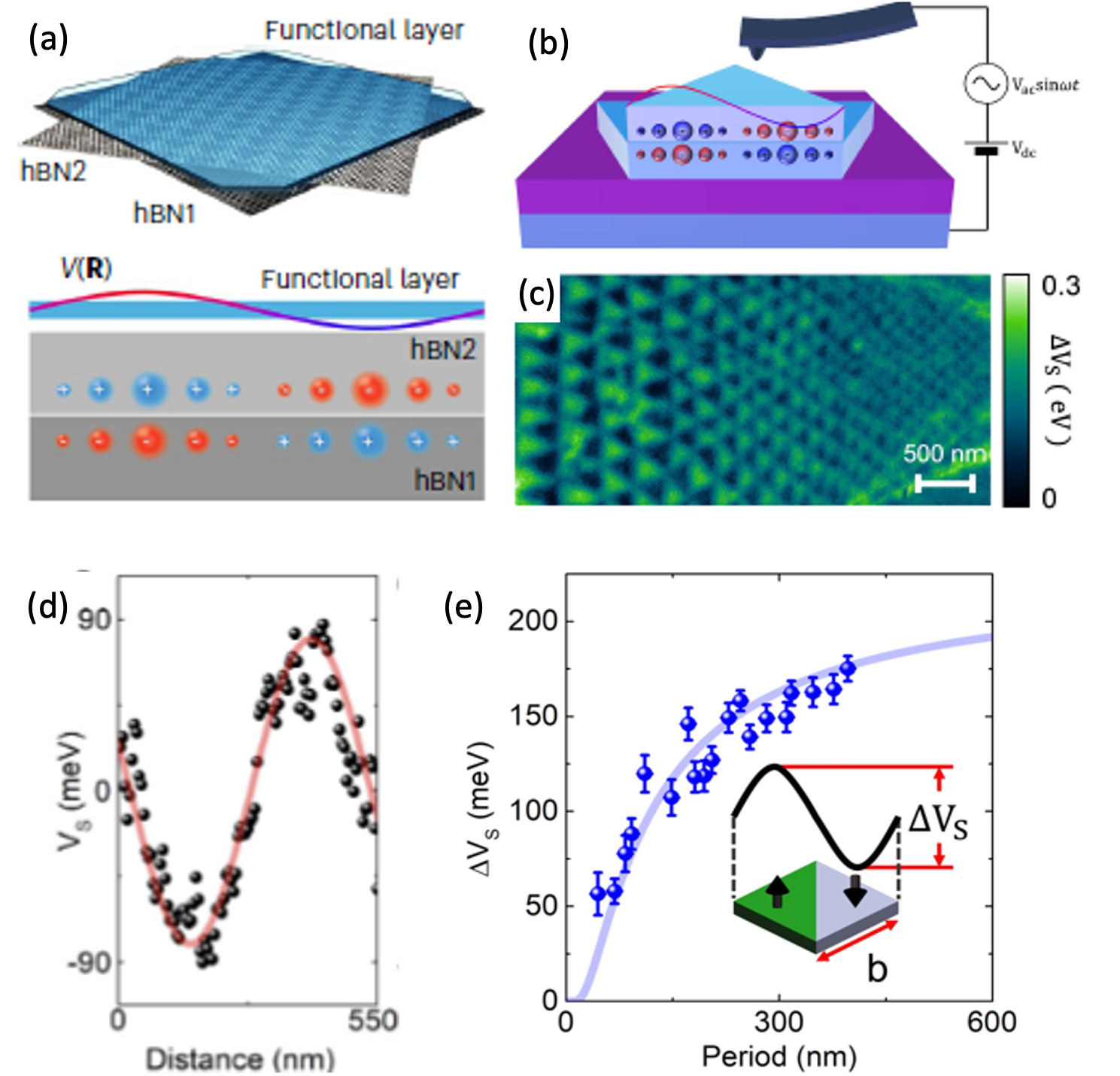
Electrostatic Moiré Potential from Twisted Hexagonal Boron Nitride Layers
5/14/2024 | Xiaoqin Elaine Li and Keji Lai (U. TX-Austin) Li Yang (Washington U.)
The central goal of this NSF DMREF project is to search for and realize artificial multiferroic materials consisting of van der Waals (vdW) material building blocks. Hexagonal boron nitride (hBN) is widely used in building vdW heterostructures as encapsulation layers, tunneling barriers.
Design Principles for Sodium Superionic Conductors
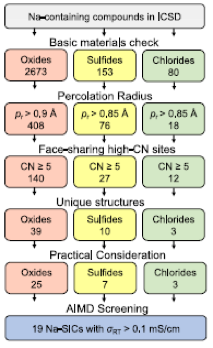
5/10/2024 | Yifei Mo (University of Maryland)
Motivated by the high-performance solid-state lithium batteries enabled by lithium superionic conductors, sodium superionic conductor materials have great potential to empower sodium batteries with high energy, low cost, and sustainability. A critical challenge lies in designing and discovering sodium superionic conductors with high ionic conductivities to enable the development of solid-state sodium batteries.
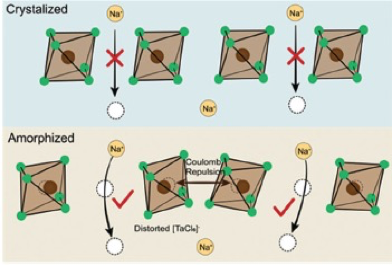
Halide Heterogeneous Structure Boosting Ionic Diffusion and High-voltage Stability of Sodium Superionic Conductors
5/10/2024 | Yifei Mo (University of Maryland)
Given the growing scarcity of lithium resources, solid-state sodium-ion batteries (SSSBs) have garnered significant attention owing to their sustainable composition, high theoretical energy density, and inherent safety advantages. The development of SSSBs heavily hinges on the development of a superionic Na+ conductor (SSC) that features high conductivity, (electro)chemical stability, and deformability.
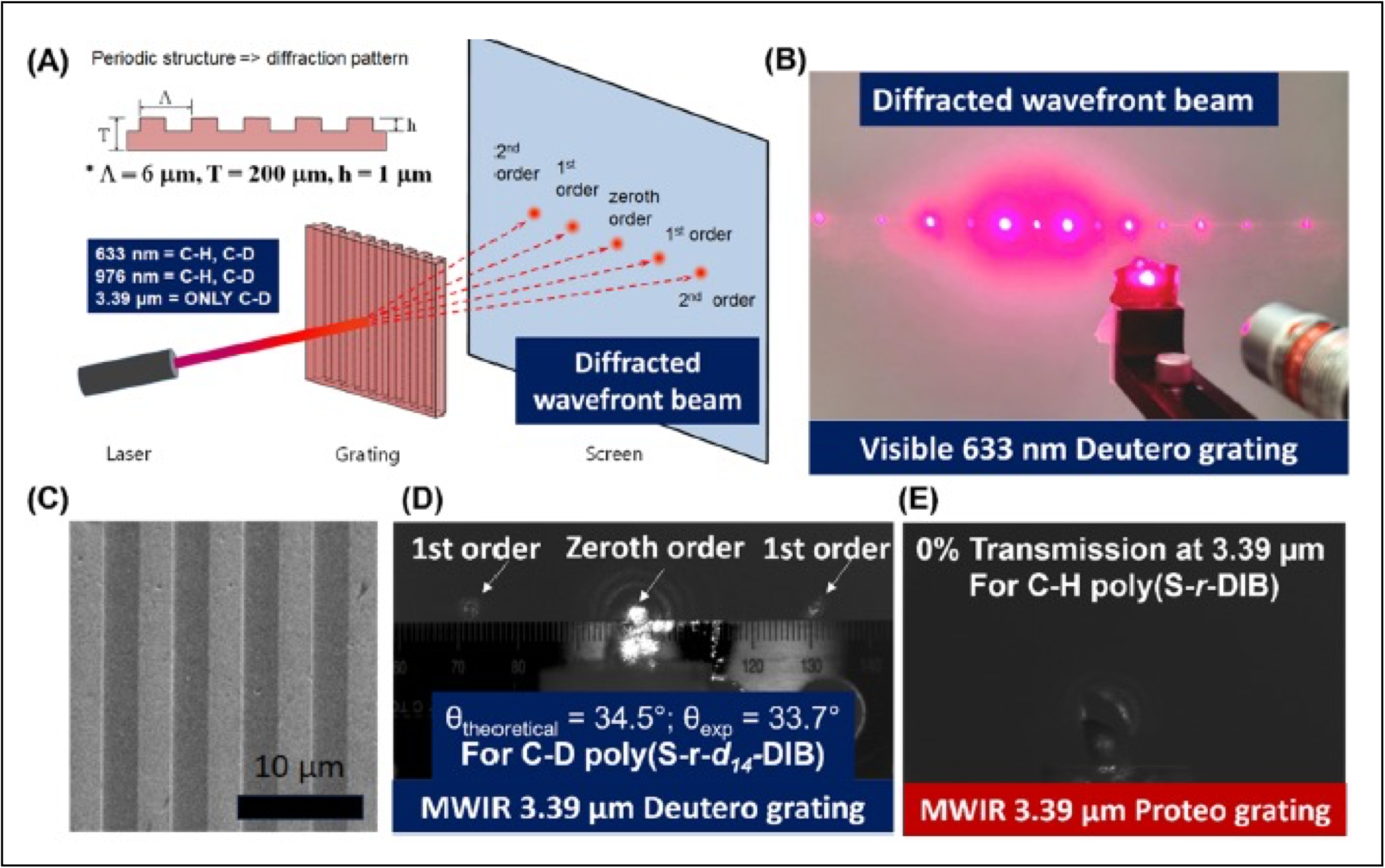
Engineering Infrared Transparency via Deuteration
5/3/2024 | J. Pyun, J. Njardarson, R. Norwood, JL Bredas, (U. Arizona); N. Godman (AFRL)
The synthesis of deuterated, sulfurated, proton-free, glassy polymers offers a route to optical polymers for infrared (IR) optics, specifically for midwave IR (MWIR) photonic devices. Prior emphasis in this field has been technologically focused on the production of high-performance commodity polymers to enable consumption of the enormous volume of S8 produced from petroleum refining.

Crystal Polymorphism and Insecticidal Activity
4/23/2024 | Alexander Shtukenberg (New York University)
The role of polymorphism in the action of pesticides and insecticides has only recently become evident. An inverse correlation between lethality of contact insecticides and thermodynamic stability of crystal polymorph has been found in several contact insecticides. The use of a more lethal polymorph of a contact insecticide can overcome resistant organisms. Greater efficiency requires the application of less active ingredient reducing the environmental impact.
Metal-free Aqueous Energy Storage Electrodes
4/22/2024 | Jodie Lutkenhaus and Daniel Tabor
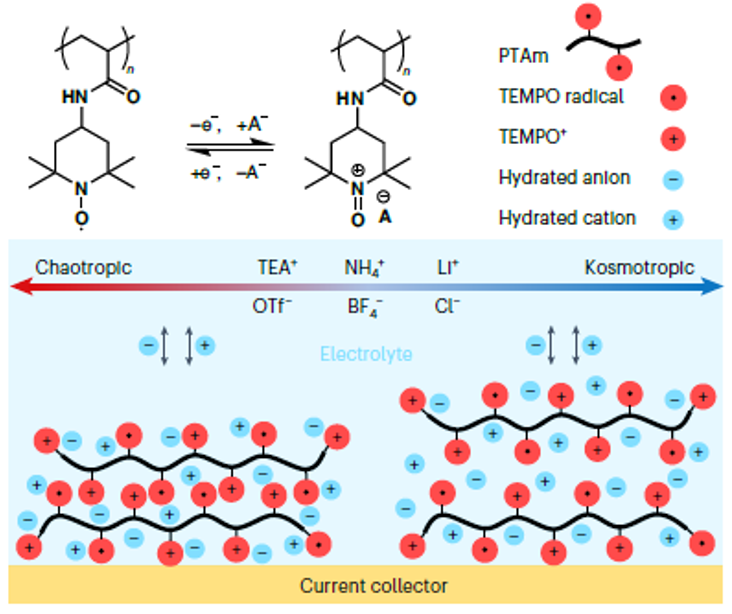
The findings of this work will provide insights into the general electrochemistry of redox-active polymers regarding ionic transfer and diffusion often observed with batteries, sensors, actuators, and other devices and materials.
Improved Carbon Dioxide Capture under High Humidity
1/31/2024
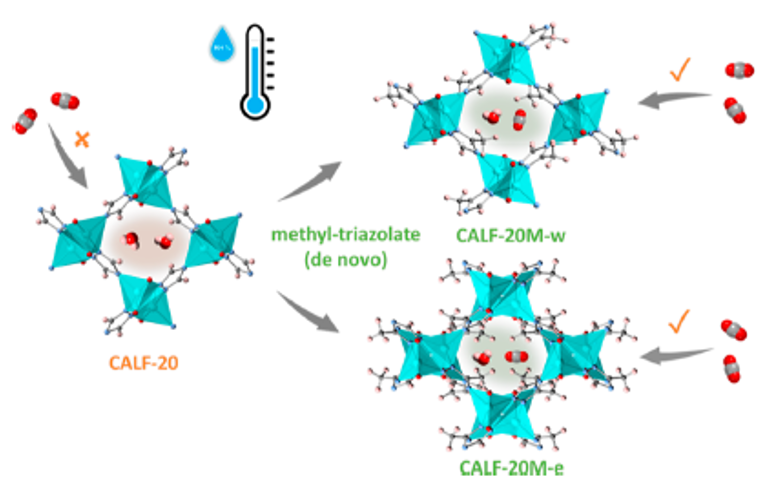
CALF-20, a Zn-triazolate-based metal−organic framework (MOF), is one of the most promising adsorbent materials for CO2 capture. However, competitive adsorption of water severely limits its performance when the relative humidity (RH) exceeds 40%, limiting the potential implementation of CALF-20 in practical settings where CO2 is saturated with moisture, such as post-combustion flue gas. In this work, three newly designed MOFs related to CALF-20, denoted as NU-220, CALF-20M-w, and CALF-20M-e that feature hydrophobic methyltriazolatelinkers, are presented.
Database Screening for CO2 Capture
6/14/2023
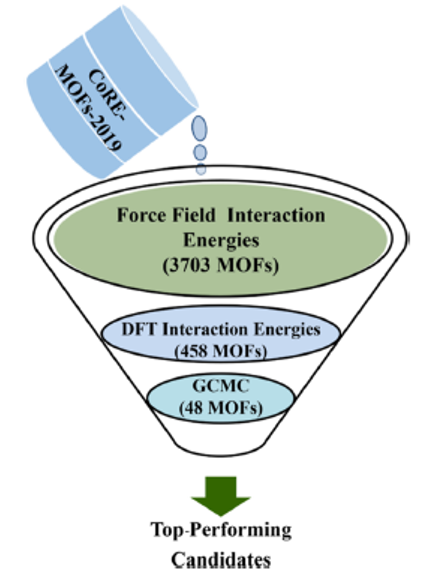
Stabilizing the escalating CO2 levels in the atmosphere is a grand challenge in view of the increasing global demand for energy, the majority of which currently comes from the burning of fossil fuels. Capturing CO2 from point source emissions using solid adsorbents may play a part in meeting this challenge, and metal−organic frameworks (MOFs) are considered to be a promising class of materials for this purpose.
Ultrahard WB2 Superconducts under Pressure
5/25/2023 | R. Hemley (U. IL-Chicago)R. Hennig, J. Hamlin, P. Hirshfeld, G. Stewart (U. FL)
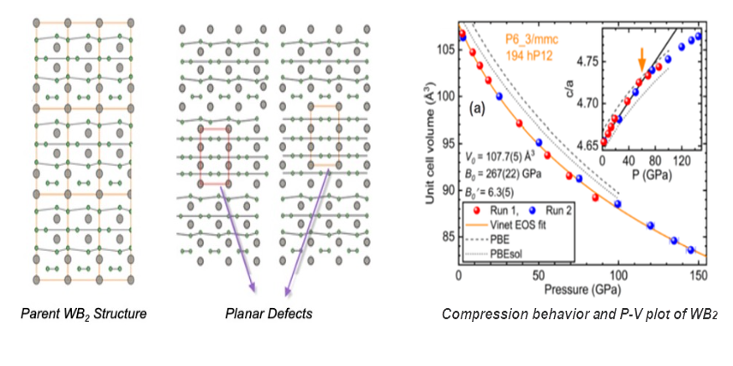
A unique combination of high-pressure structure and transport experiments, with crystal structure simulations has led to the discovery that ultrahard boride WB2becomes a superconductor under pressure.
Showing 131 to 140 of 245