Research Highlights
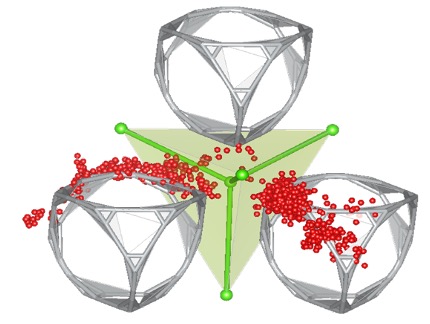
Atomic dynamics in superionic argyrodite Ag8SnSe6
5/18/2023 | Olivier Delaire
Our results provide fundamental insights into the complex atomic dynamics in superionic materials for energy conversion and storage.
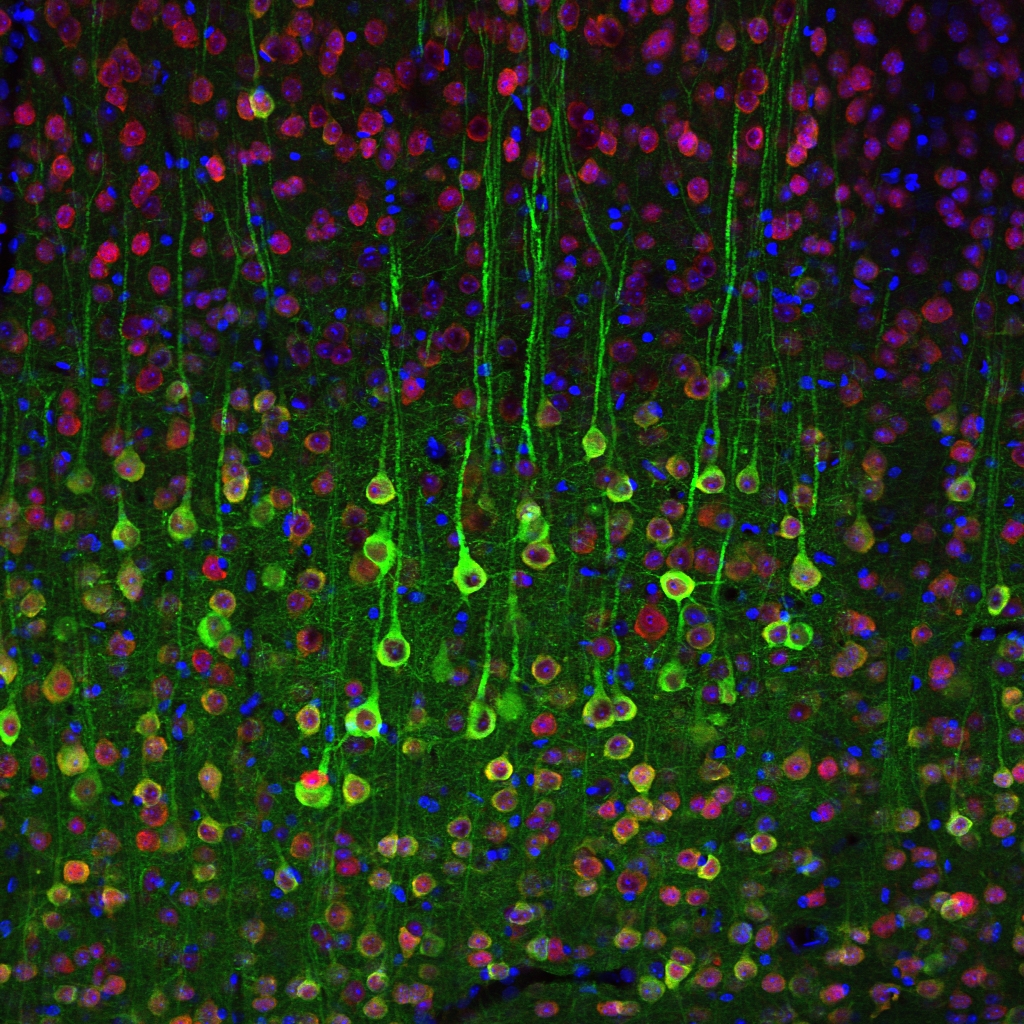
Structure Matters: Expanding the Origin of the Insulator-metal Transition in BaCo1-xNixS2
3/21/2023 | James Rondinelli (Northwestern University)Stephen Wilson and Ram Seshadri (UCSB)
We find that structural distortions play a pivotal role in the insulator-to-metal transition (IMT), in BaCo1-xNixS2despite the average structure remaining unchanged. We demonstrated that the Jahn-Teller (JT) effect, stemming from degenerate dxzand dyz orbitals sharing a single electron, is consistent with anomalous sulfide displacements observed in X-ray diffraction studies.
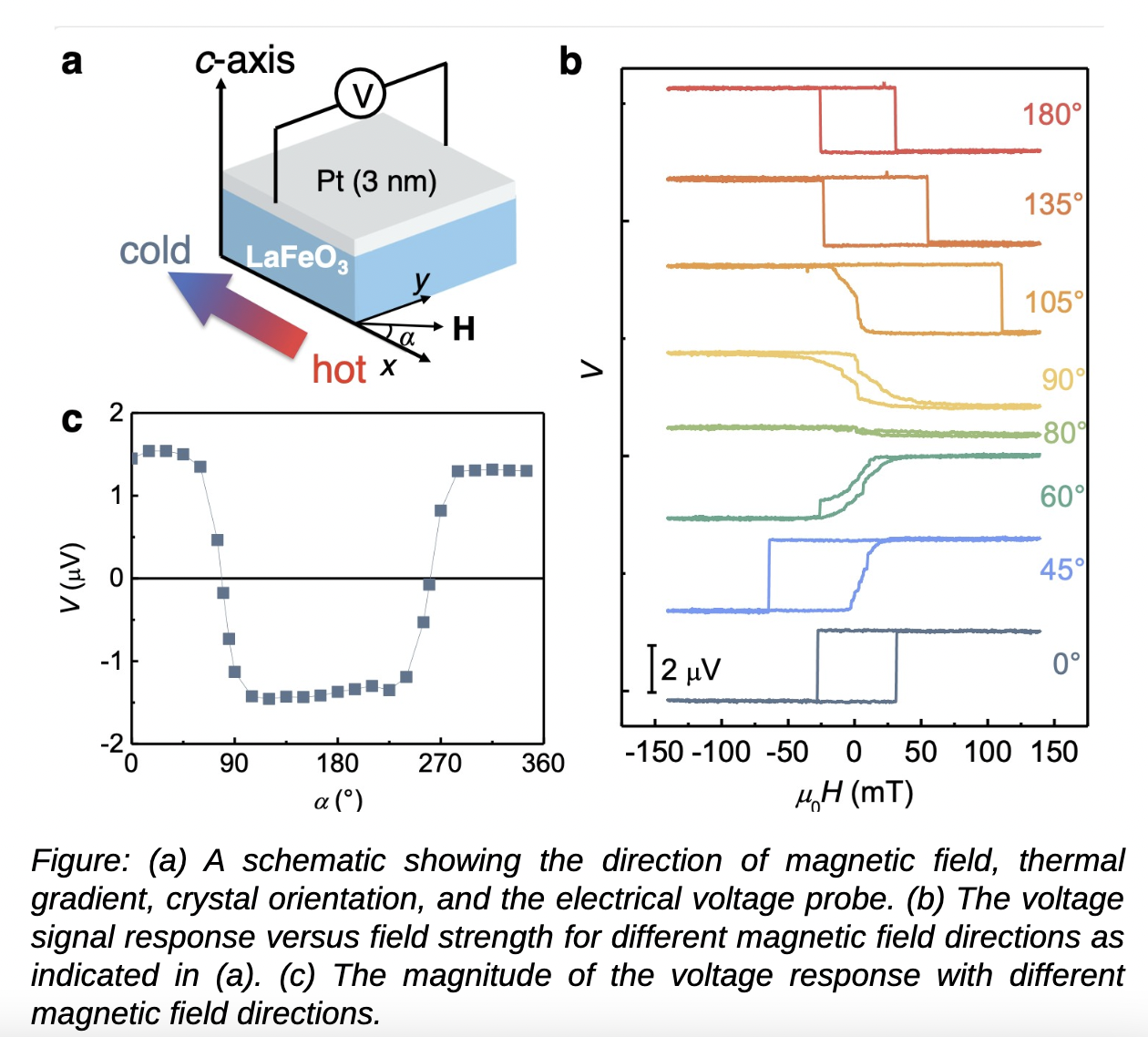
Evidence for Spin Swapping in an Antiferromagnet
3/2/2023 | J. Zhou (U. Texas-Austin); G. Fiete (Northeastern U.); C.L. Chien (Johns Hopkins U.)
In the past decades, climate change and an energy crisis have prompted researchers to focus on improving the efficiency of power-saving and energy conversion devices. Thermoelectric generation is a key materials-based idea with great potential in applications.
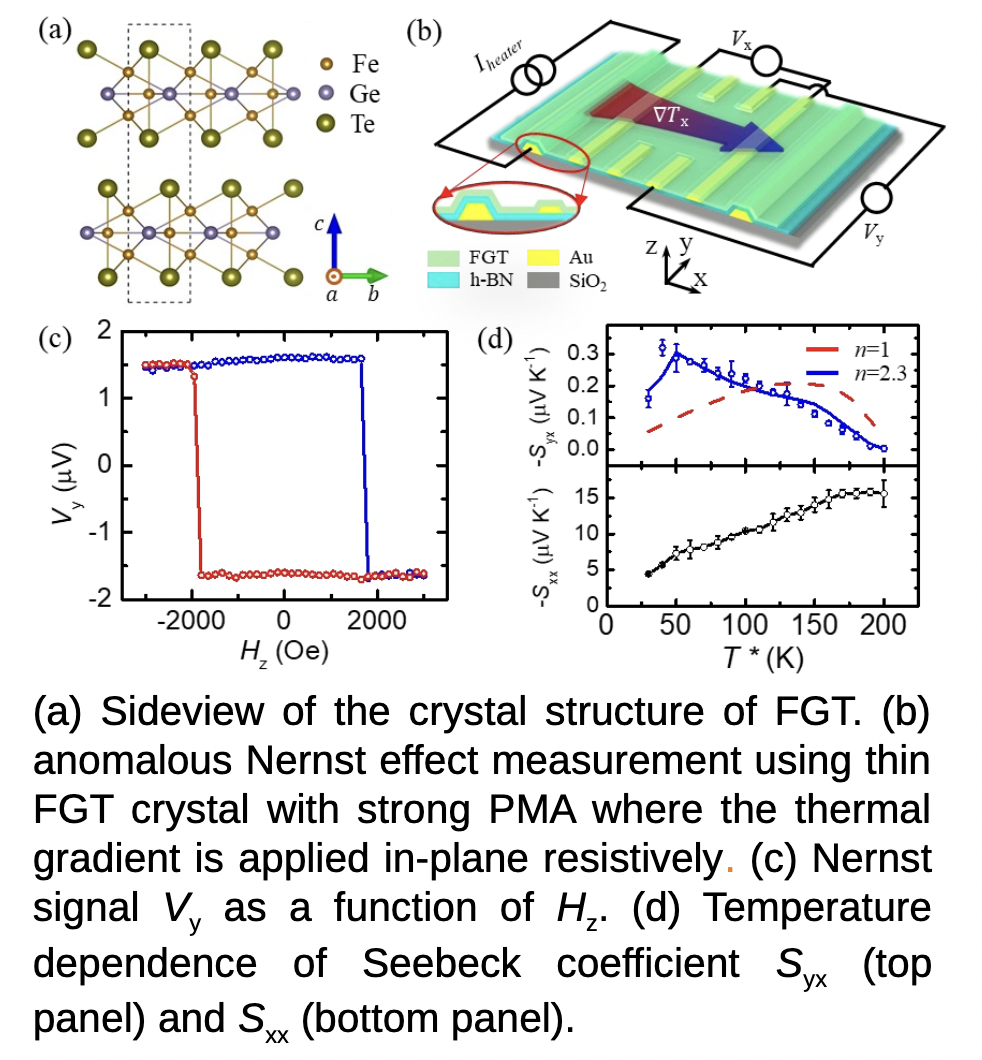
Large Anomalous Nernst Effect in a van der Waals Ferromagnet Fe3GeTe2
3/1/2023 | C. L. Chien (Johns Hopkins University)
Anomalous Nernst effect (ANE), a result of charge current driven by temperature gradient, provides a probe of the topological nature of materials due to its sensitivity to the Berry curvature near the Fermi level. Of particular interest is the ANE in topological materials because the special band topology in these materials could introduce a very large ANE.

Charge Disproportionation and Complex Magnetism in a PbMnO3Perovskite Synthesized under High Pressure
3/1/2023 | Jianshi Zhou (University of Texas-Austin)
Because of the possible crossover of Pb and 3d transition-metal (TM) redox levels, a charge transfer between Pb and TM leads to a continuous evolution from Pb2+Ti4+O3 to Pb4+Ni2+O3 in the perovskite family of PbTMO3.
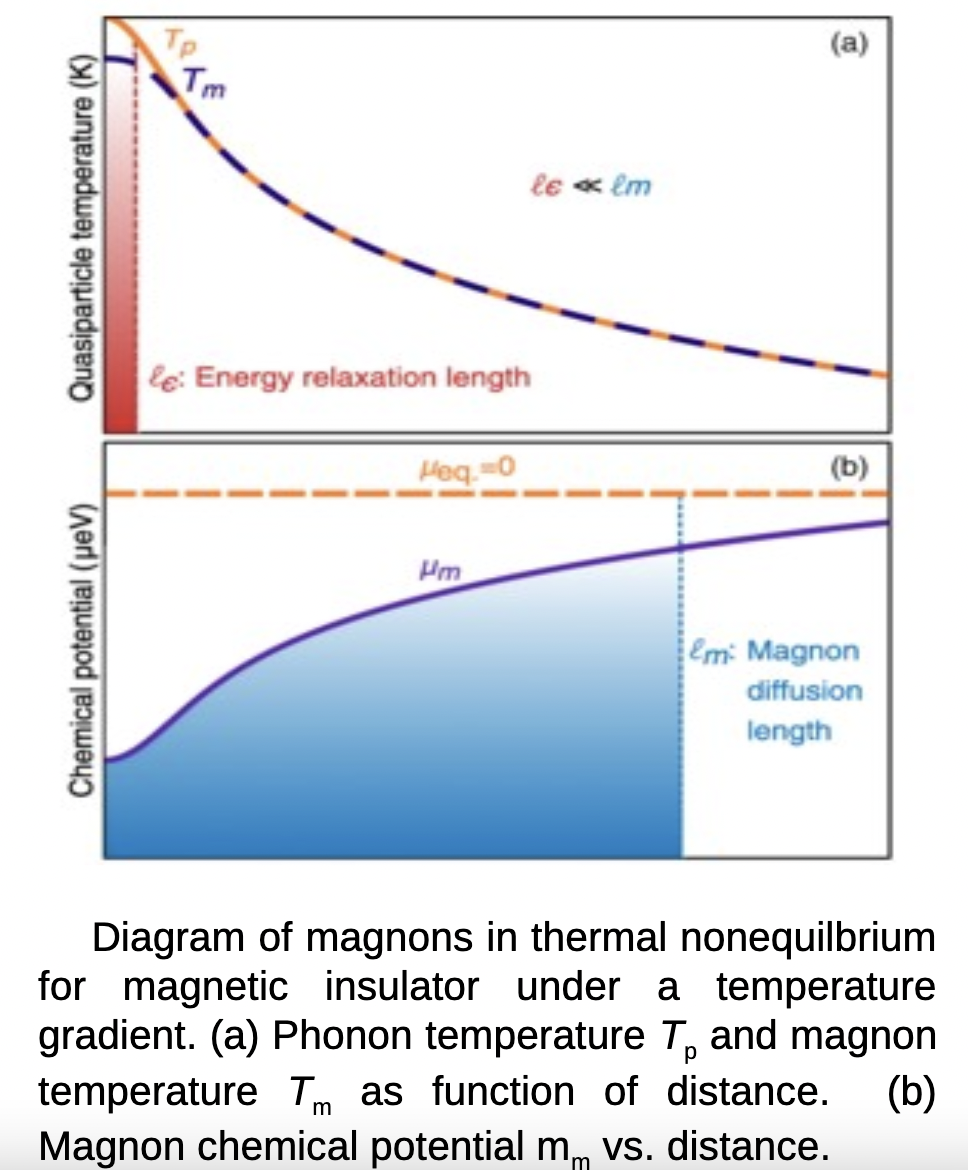
Measurement of a Magnon Chemical Potential
3/1/2023 | Gregory Fiete (Northeastern University) Jianshi Zhou (University of Texas-Austin)
For a system in equilibrium, the chemical potential of particles whose numbers are not conserved (e.g. phonons, magnons) is zero. However, for a system out-of-equilibrium, such as one where a temperature gradient is applied, there are length and time scales over which the phonon and magnon numbers are approximately conserved. For these length and time scales one may define a chemical potential for the excitations.
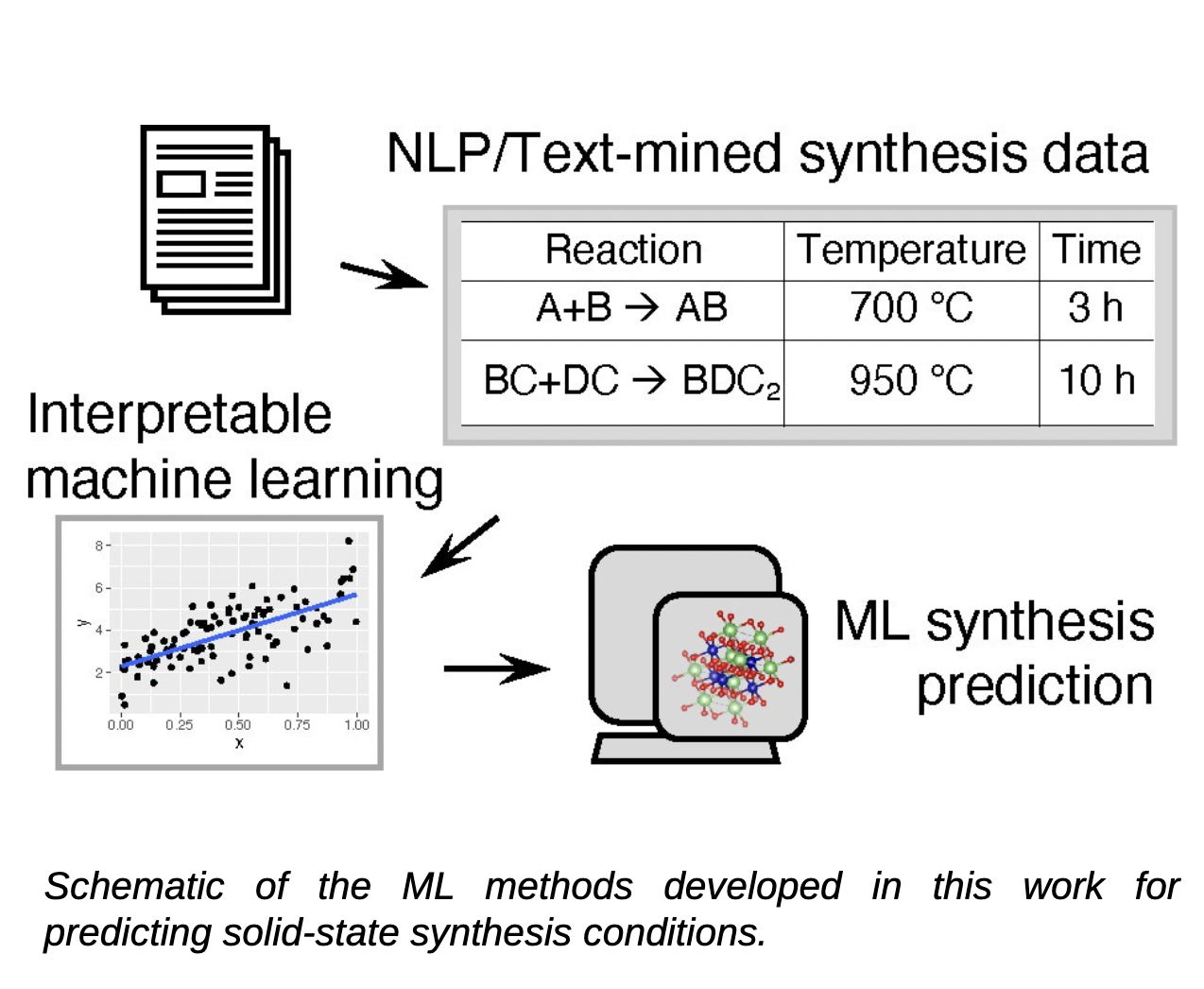
The Synthesis Genome: Data Mining for Synthesis of New Materials
2/28/2023 | Gerbrand Ceder, UC Berkeley
Interpretable machine-learning (ML) models were developed to predict two key solid-state synthesis conditions that must be specified for any reaction: heating temperature and heating time.
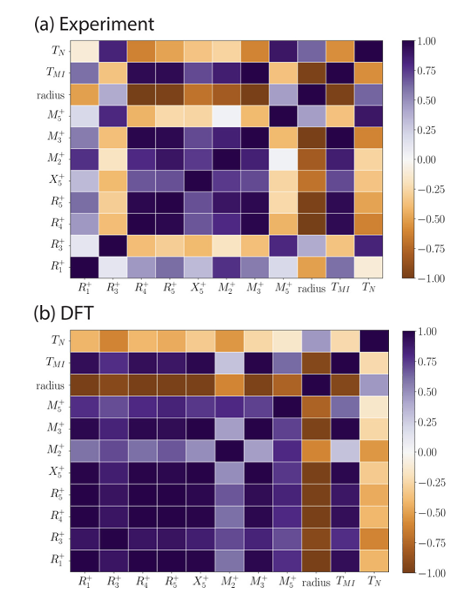
Learning from Correlations: Rare-earth Nickelates Revisited
2/21/2023 | James Rondinelli (Northwestern University)
We conducted a statistical study of the correlations between local structural distortions and critical transition temperatures of the RNiO3 family of compounds (R=rare earth). We showed gaps in scientific understanding of the reported structures of these materials known to exhibit metal-insulator and magnetic transitions and explained the discrepancies with DFT calculations.
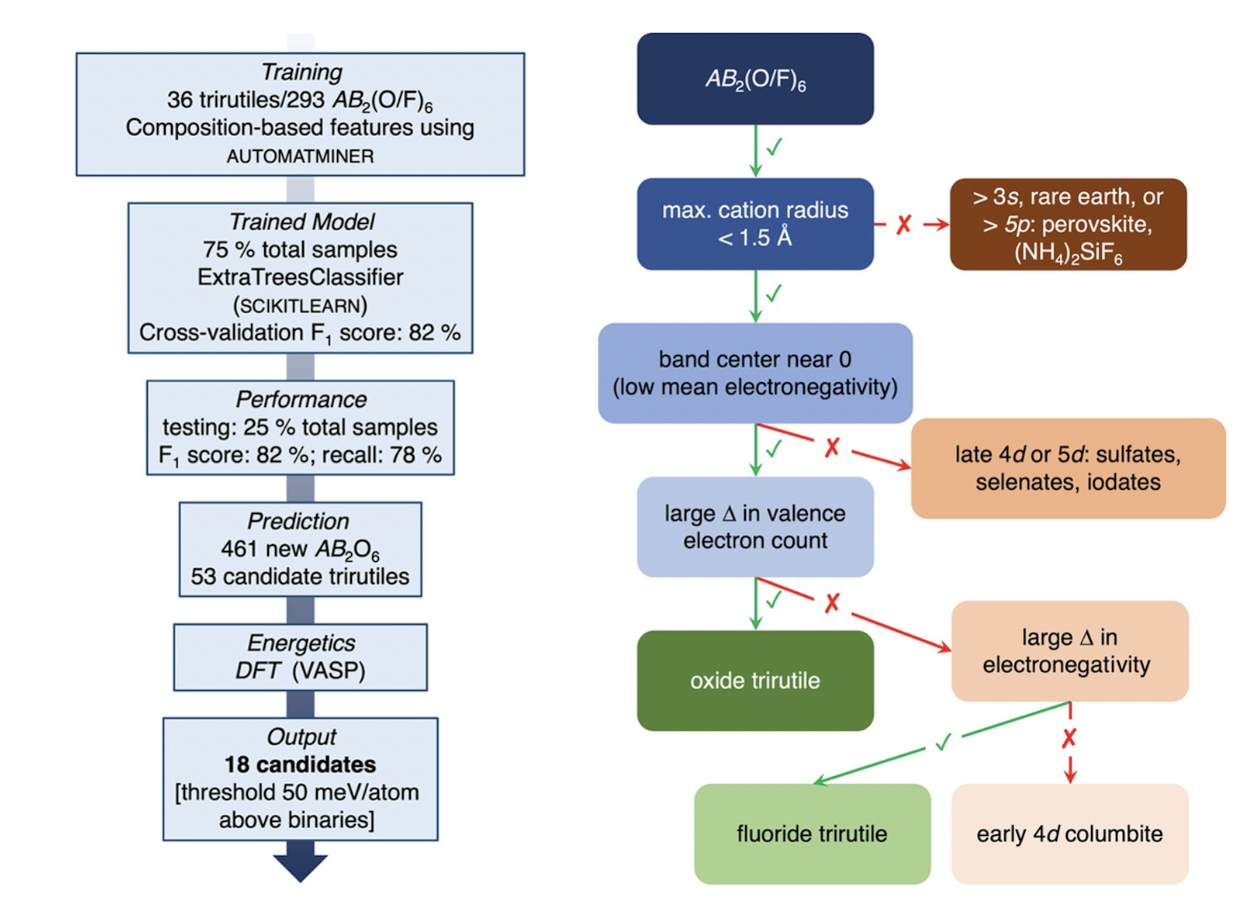
Learning Stability of AB2X6 Compounds to Guide Synthesis of Trirutile Oxides
2/21/2023 | James Rondinelli (Northwestern University), Stephen Wilson and Ram Seshadri (UCSB)
Through machine learning methods, we find that, consistent with factors determining crystallization in other structural families, geometric and bonding constraints are the most important features determining the formation of a trirutile structure.
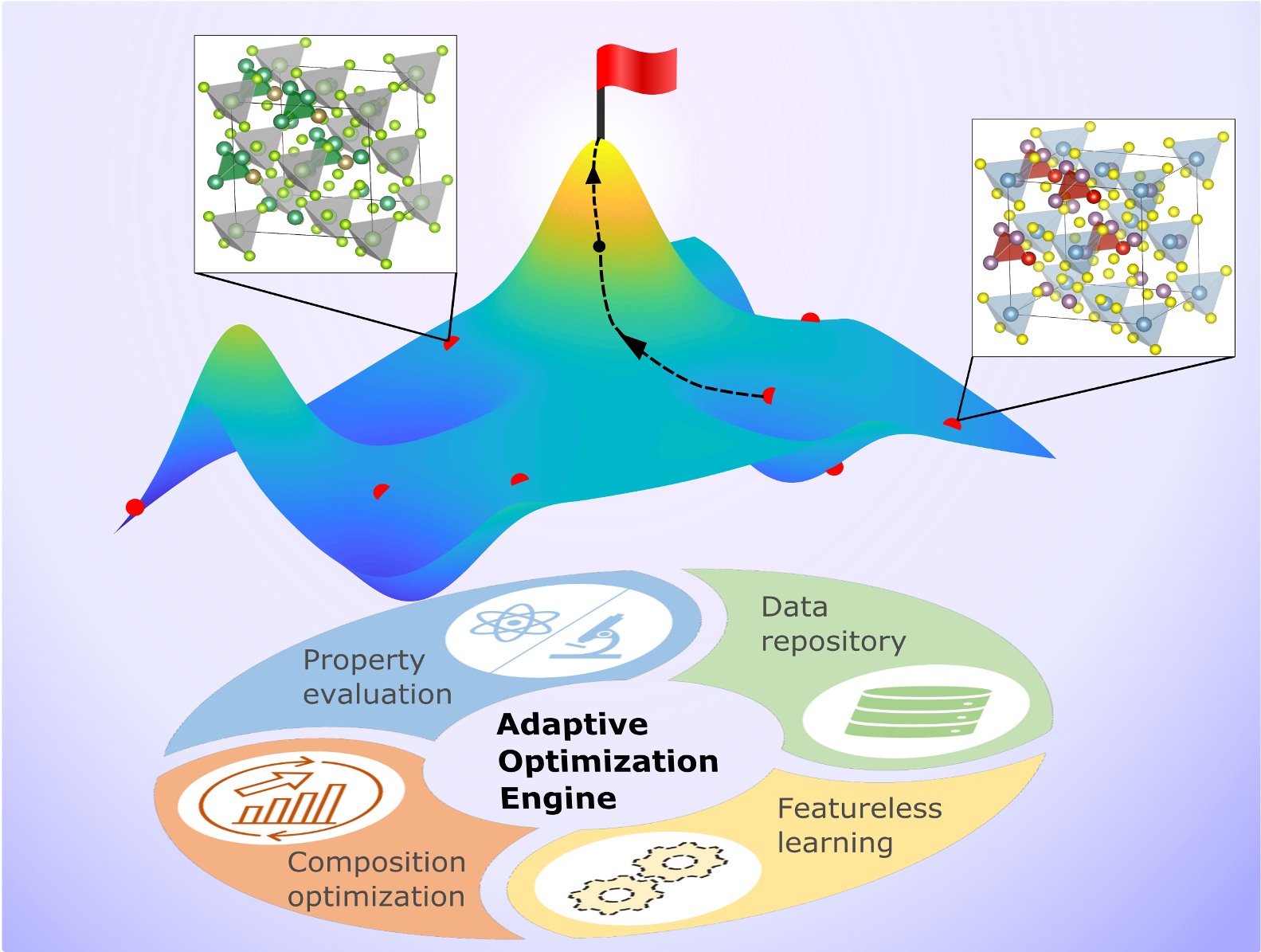
Featureless Optimization of Material Properties for Small Data Sets in Complex Ceramics
2/21/2023 | James Rondinelli (Northwestern University)
Electronic materials that exhibit phase transitions between metastable states (e.g., metal-insulator transition materials with abrupt electrical resistivity transformations) are challenging to decode. For these materials, conventional machine learning methods display limited predictive capability due to data scarcity and the absence of features that impede model training. In this work, we developed an adaptive optimization engine that overcomes these limitations
Showing 141 to 150 of 245