Research Highlights
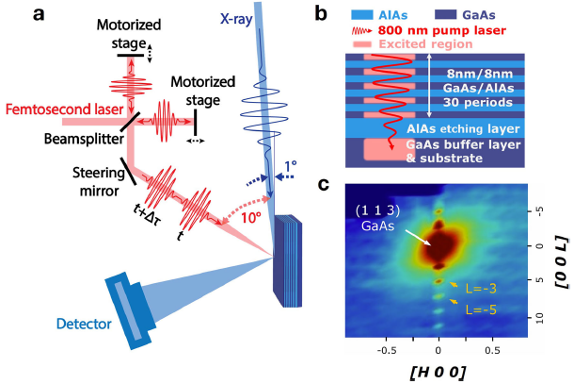
Coherent Phonon Flatband Generated in GaAs/AlAs Superlattices via Layer-selective Optical Pumping
3/10/2026 | Seth Bank (University of Texas - Austin)
Flatbands, characterized by their dispersionless energy levels in electronic, magnetic, and phononicsystems, hold substantial potential for advancements in electronics and quantum information processing. Most flatbands exist in thermal equilibrium and cannot be easily created or annihilated externally, limiting their flexibility as switchable knobs for use in microelectronics and quantum applications. In this work, the generation of a coherent phonon flatband in a GaAs/AlAs superlattice is demonstrated using 800 nm femtosecond laser pulses.
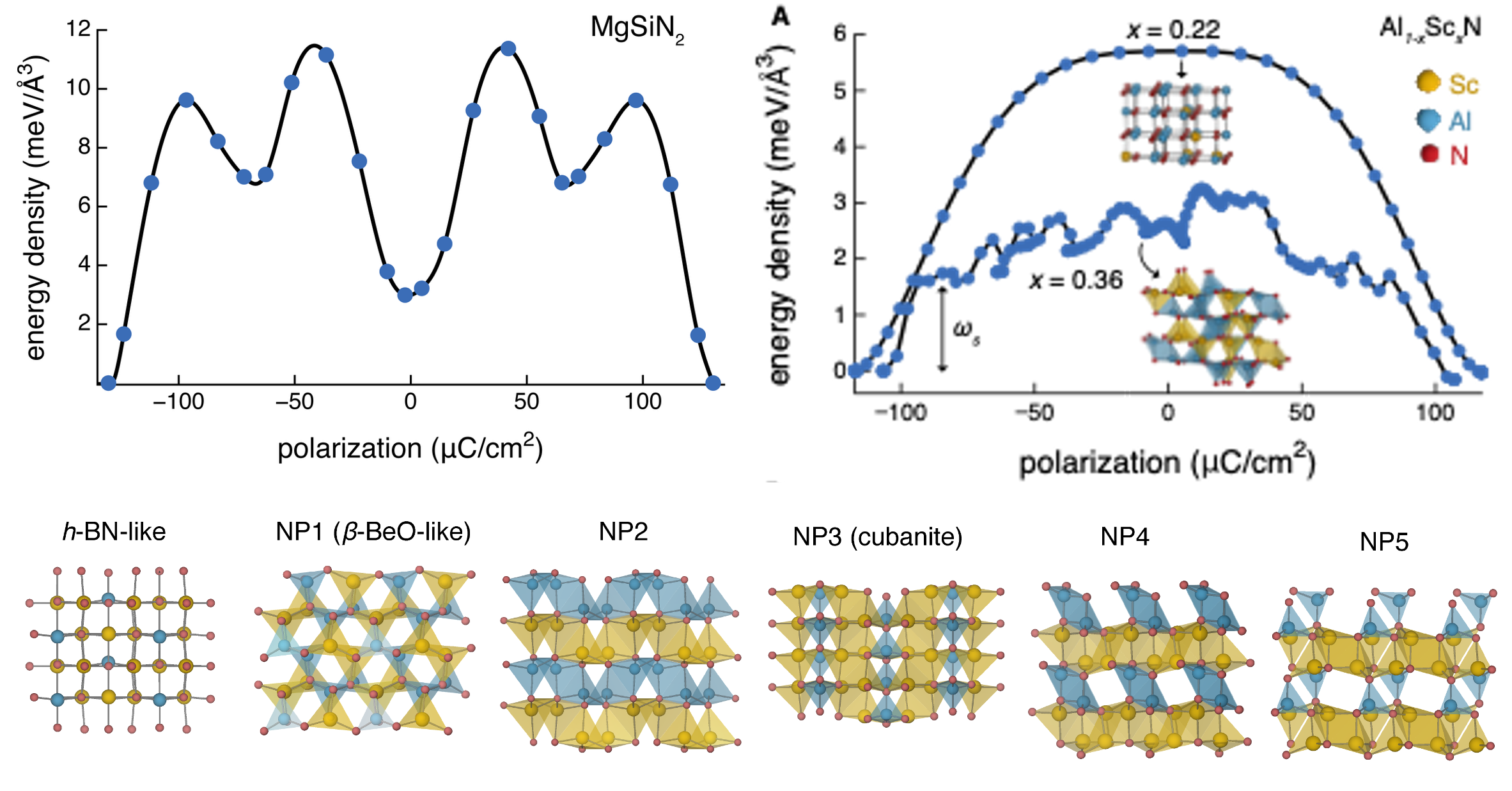
Switching Mechanisms in Wurtzite-type Ferroelectrics
3/5/2026 | Geoff Brennecka and Prashun Gorai (Colorado School of Mines)
Wurtzite-type ferroelectrics promise better performance and integration with semiconductors than traditional ferroelectrics. However, wurtzite-type ferroelectrics generally require enormous electric fields, approaching breakdown, to reverse their polarization. The underlying switching mechanism(s), especially for multinary compounds and alloys, remains elusive. Here, we examine the switching behaviors in Al1-xScxN alloys and wurtzite-type multinary candidate compounds we recently computationally identified.
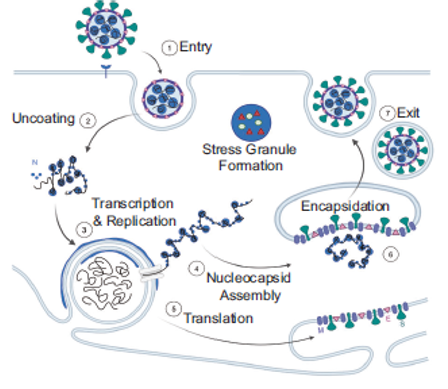
Understanding Potential Therapeutic Targets for COVID Infection
3/4/2026 | Adam Gormley (Rutgers University)
The COVID-19 pandemic has focused attention on the mechanism of SARS-CoV-2 viral replication. The Nucleocapsid protein (N) of SARS-CoV-2 plays a critical role in the viral lifecycle by regulating RNA replication and by packaging the viral genome. N and RNA phase separate to form condensates that may be important for these functions. Both functions occur at membrane surfaces, but how N toggles between these two membrane-associated functional states is unclear.

Accelerating Multicomponent Phase-coexistence Calculations with Physics-informed Neural Networks
3/4/2026 | Michael Webb (Princeton University)
Accurate phase coexistence characterization is critical for designing and optimizing systems and processes involving multiple components, yet traditional methods are often slow and computationally expensive. To overcome this, a machine learning workflow grounded in physical principles was developed to streamline and speed up these calculations.
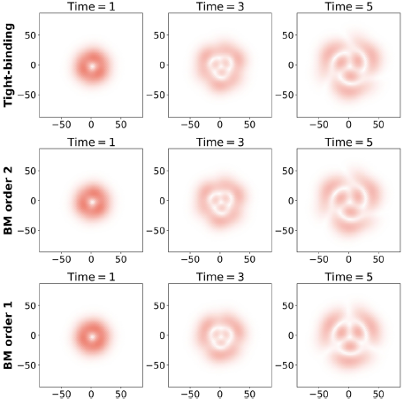
Higher-order Continuum Models for Twisted Bilayer Graphene
2/26/2026 | M. Luskin (U. Minnesota)
Twisted bilayer graphene (TBG) is obtained by stacking two sheets of graphene on top of each other with a relative twist. At incommensurate twist angles, TBG is not periodic and thus does not admit a Brillouin zone or periodic branches of spectrum. Instead, the atoms form a structure which is approximately periodic with respect to the so-called moire lattice, whose unit-cell area is inversely proportional to the square of the twist angle.
Van der Waals Quantum Dots on Layered Hexagonal Boron Nitride
2/26/2026 | T. Norris and Z. Mi (University of Michigan)
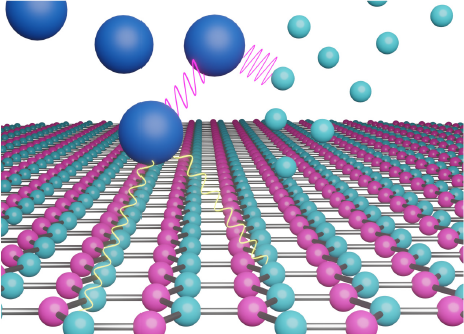
Semiconductor quantum dots (QD) promise unique electronic, optical, and chemical properties, which can be exquisitely tuned by controlling the composition, size, and morphology. Semiconductor QDs have been synthesized primarily via two approaches, namely, epitaxial growth and wet-chemical synthesis.

Controlling Quasi-1D Excitons by Magnetic Order
2/26/2026 | M. Kira (University of Michigan)
Quantitative experiment–theory proof is presented that excitonic correlations can be switched through magnetic order. By probing internal Rydberg-like transitions of excitons in the magnetic semiconductor CrSBr, their binding energy and a dramatic anisotropy of their quasi-one-dimensional orbitals was revealed manifesting in strong fine-structure splitting.
Emerging Microelectronic Materials by Design
2/20/2026 | James Rondinelli and Wei Chen (Northwestern University)
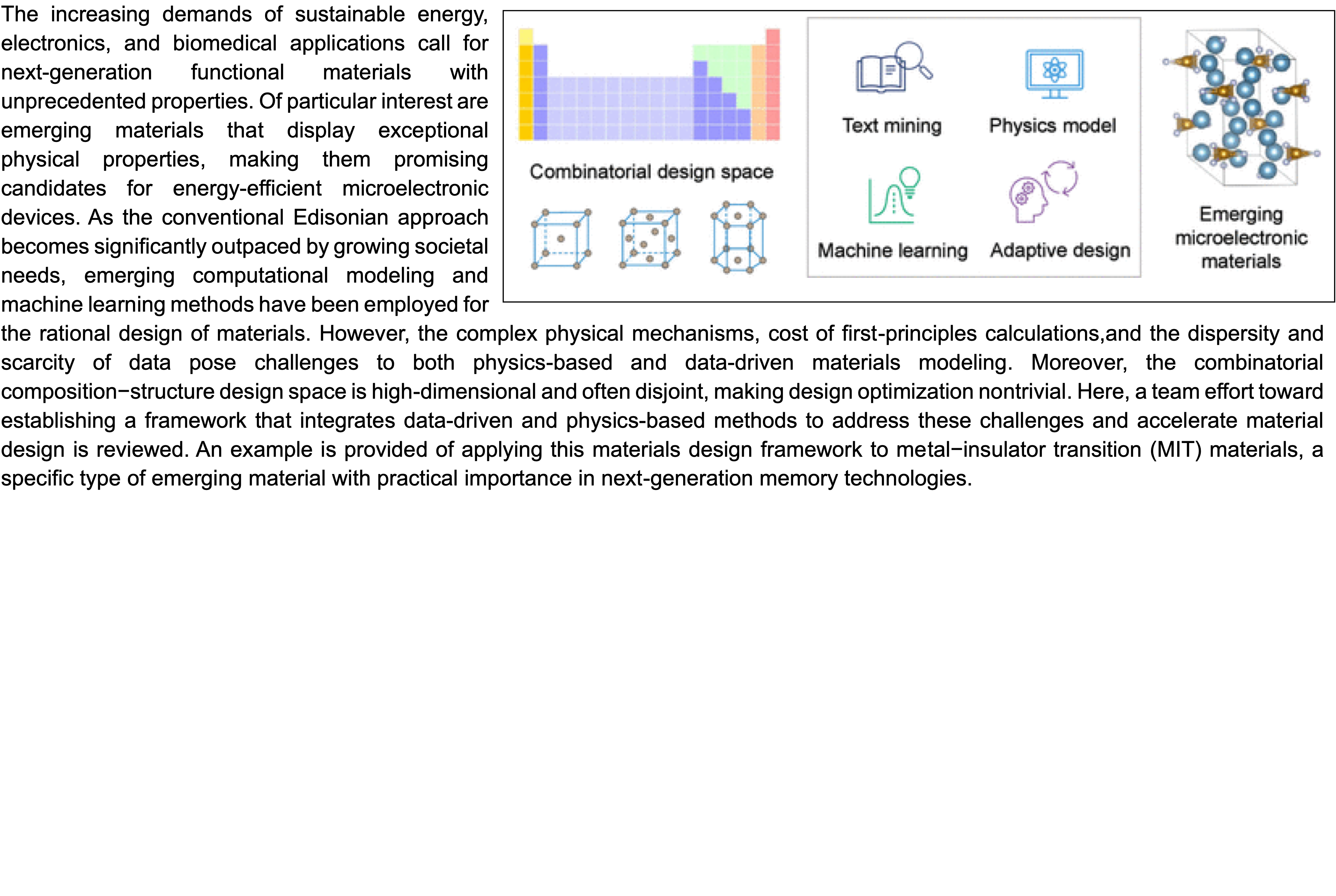
The increasing demands of sustainable energy, electronics, and biomedical applications call for next-generation functional materials with unprecedented properties. Of particular interest are emerging materials that display exceptional physical properties, making them promising candidates for energy-efficient microelectronic devices.
Predicting and Accelerating Nanomaterials Synthesis using Machine Learning Featurization
2/20/2026 | Christopher Hinkle (U. Notre Dame)
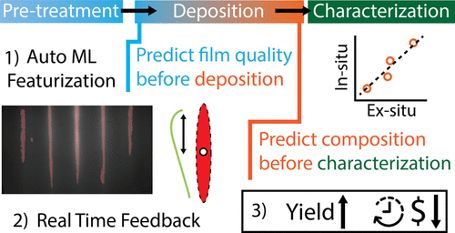
Materials synthesis optimization is constrained by serial feedback processes that rely on manual tools and intuition across multiple siloed modes of characterization. Feature extraction of reflection high energy electron diffraction (RHEED) data with machine learning has been automated and generalized to establish quantitatively predictive relationships in small sets (∼10) of expert-labeled data, saving significant time on subsequently grown samples.
Learning Molecular Mixture Property Using Chemistry-Aware Graph Neural Network
2/20/2026 | James Rondinelli and Wei Chen (Northwestern University)
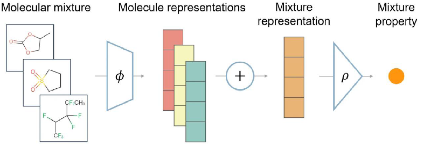
Recent advances in machine learning (ML) are expediting materials discovery and design. One significant challenge facing ML for materials is the expansive combinatorial space of potential materials formed by diverse constituents and their flexible configurations. This complexity is particularly evident in molecular mixtures, a frequently explored space for materials, such as battery electrolytes.
Showing 21 to 30 of 245