Research Highlights
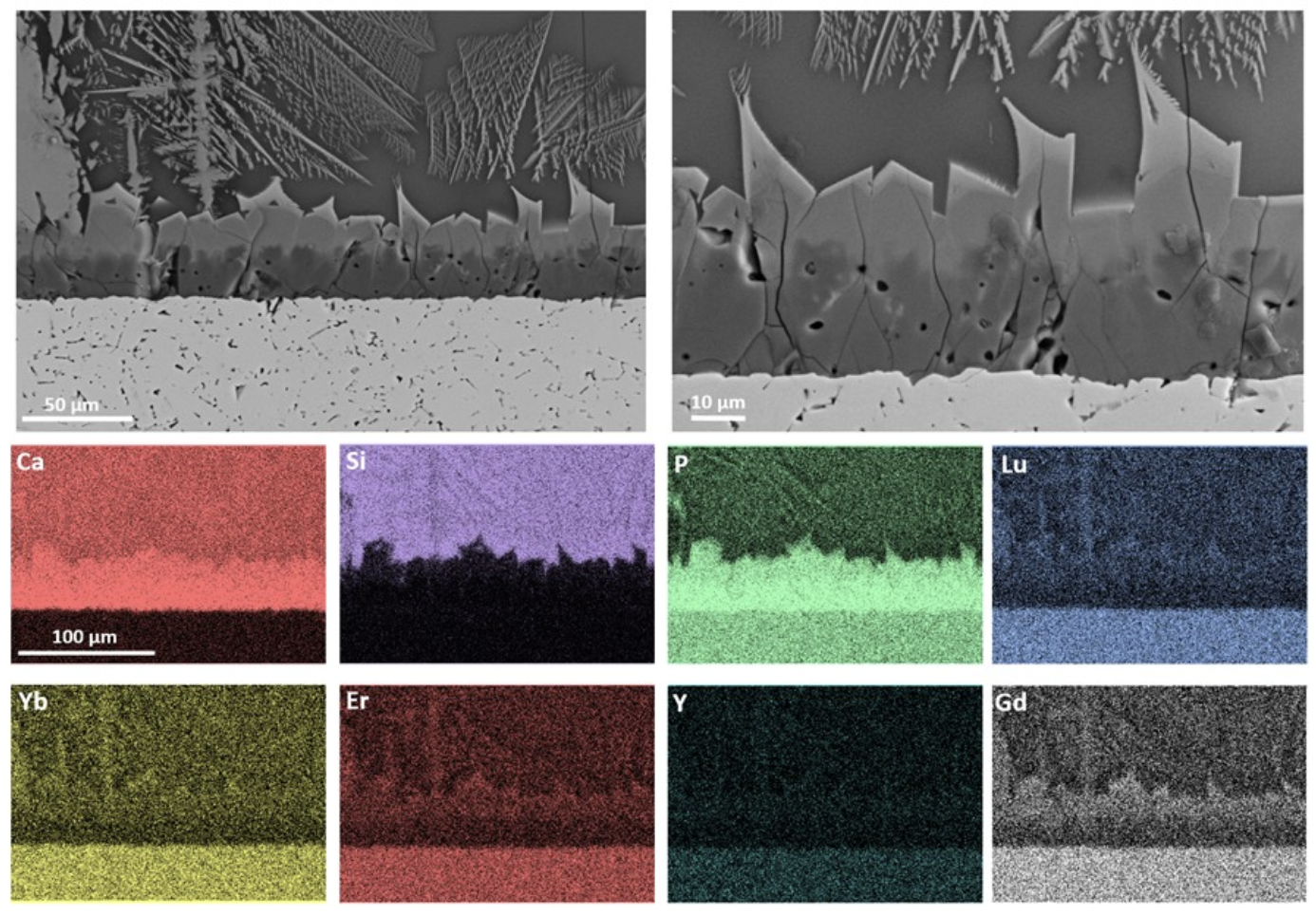
Machine Learning Accelerated Design and Discovery of Rare-earth Phosphates as Next Generation Environmental Barrier Coatings
9/24/2022
Researchers from Rensselaer Polytechnic Institute synthesized single phase multiple component rare-earth phosphate as potential environmental barrier coatings of structure materials for space and aerospace application.
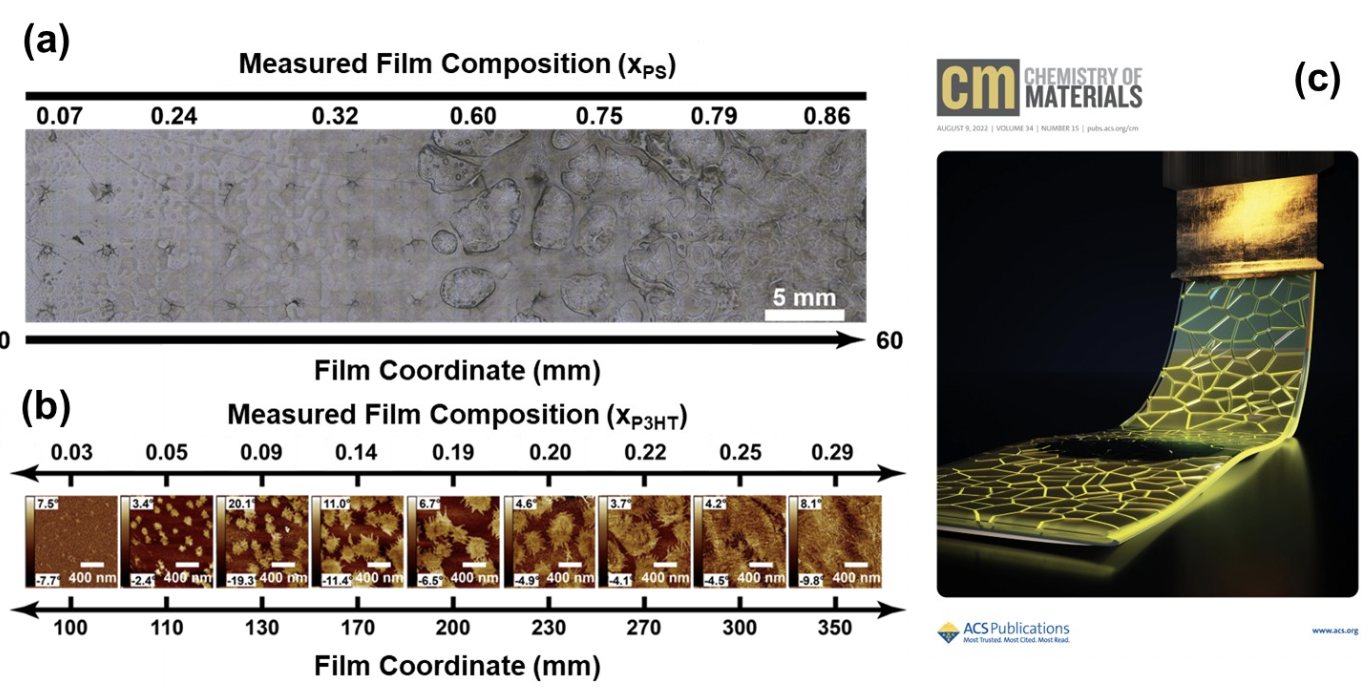
Composition Gradient High-Throughput Polymer Libraries Enabled by Passive Mixing and Elevated Temperature
7/1/2022
High-throughput experimentation (HTE) methods are key to enabling informatics-driven workflows to accelerate discovery of high-performance multicomponent materials. Here, we designed a solution coating system able to operate at temperatures over 110 °C to deposit composition gradient polymer libraries. The methodology provides an avenue for efficiently screening multiparameter spaces of a wide range of materials relevant to today’s applications.
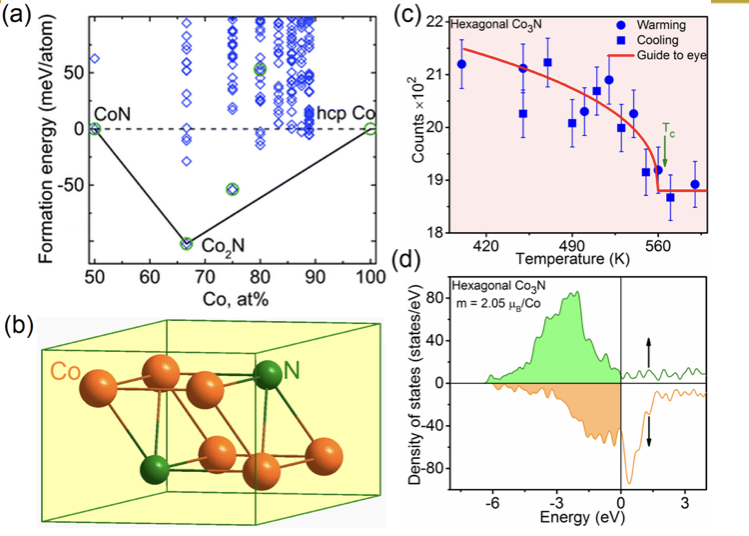
Creating Novel Magnetic Compounds with Complementary Experimental and Computational Methods
6/14/2022 | J. Chelikowsky, K. Ho, C. Wang, D. Sellmyer, X. Xu
The search for new magnetic materials with high saturation magnetic polarization (Js), magnetocrystalline anisotropy (K1), and Curie temperature (Tc) is important for a wide range of applications including information and energy processing.

Machine Learning on a Robotic Platform for the Design of Polymer-Protein Hybrids
6/11/2022 | Adam Gormley, Michael Webb
Polymer–protein hybrids are intriguing materials that can bolster protein stability in non-native environments, thereby enhancing their utility in diverse medicinal, commercial, and industrial applications
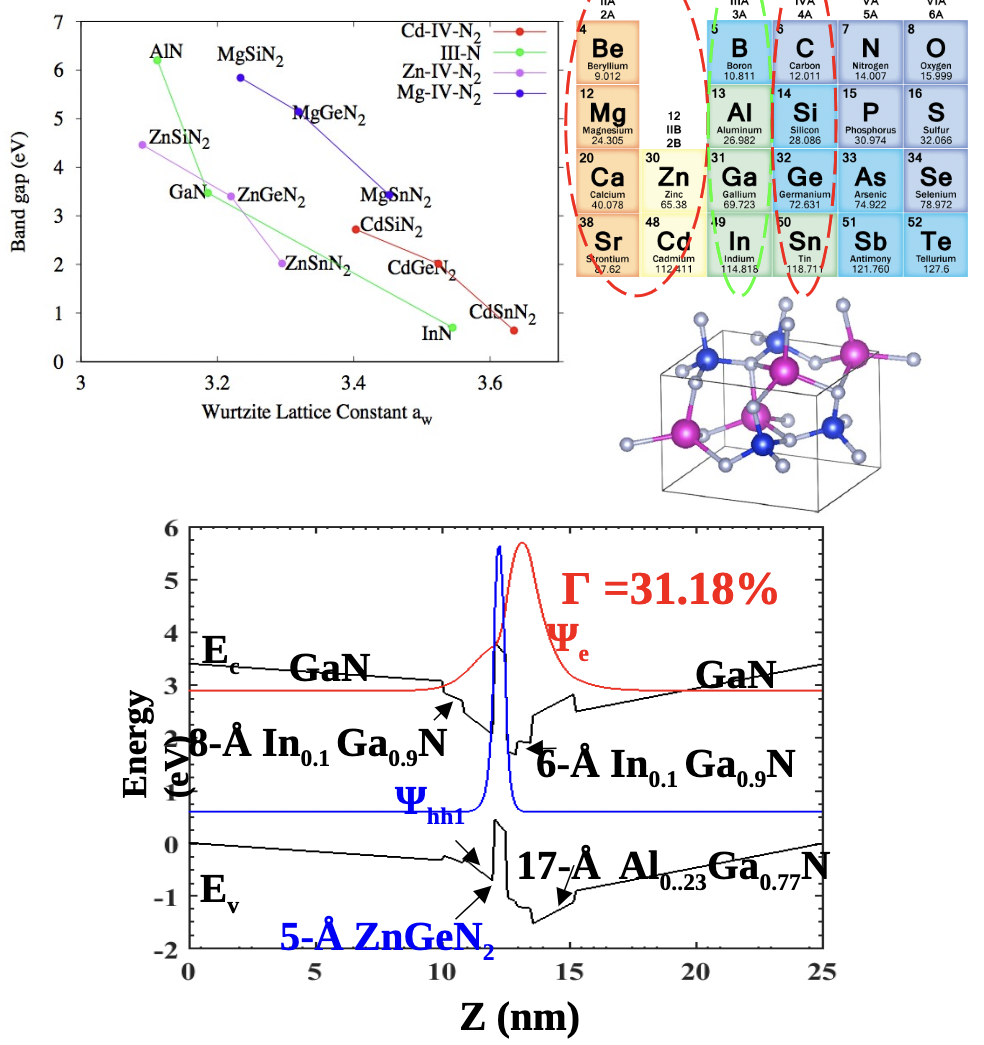
Nitride Semiconductor’s Family Expanded
5/16/2022 | K. Kash, H. Zhao, W. Lambrecht
The group III-nitrides (Al,Ga,In)N form the basis for the white LED lighting revolution, honored with the Nobel Prize in Physics in 2014.
Room-temperature Superfluorescence in Hybrid Perovskites
3/31/2022 | F. So, K. Gundogdu (NC State U.)
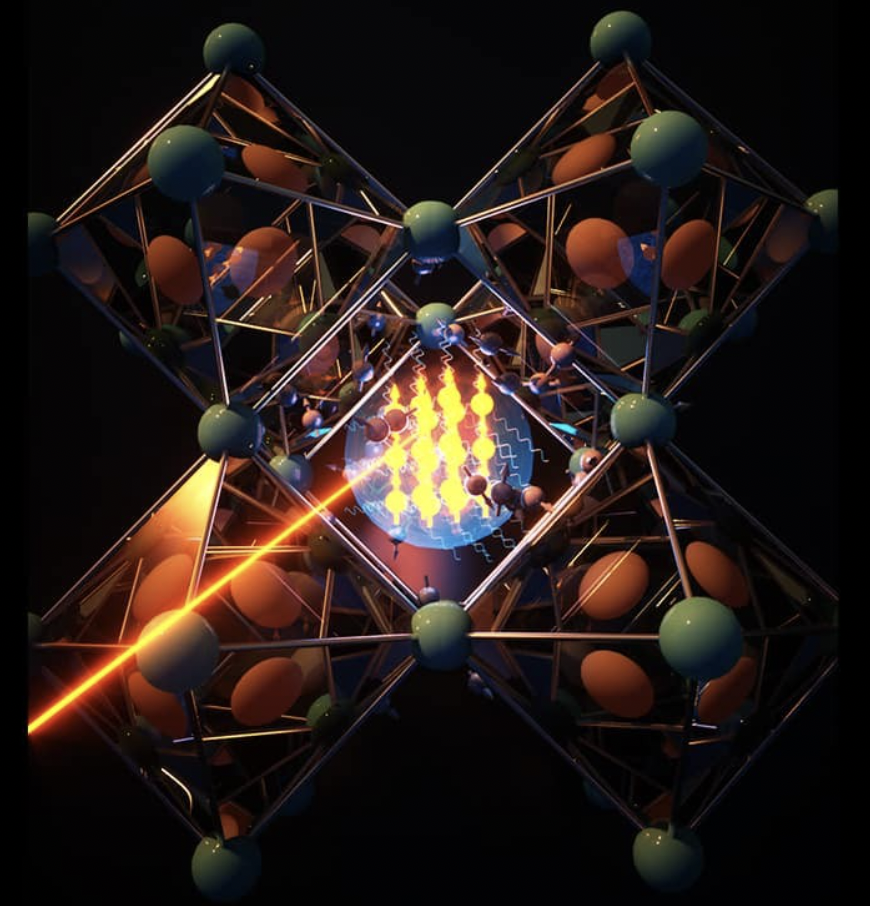
Semiconducting perovskites that exhibit superfluorescence at room temperature do so through built-in thermal “shock absorbers” which protect dipoles within the material from thermal interference.
Machine-assisted Discovery of Polymer-enzyme Complexes for Sustained Neural Regeneration
3/18/2022 | Adam Gormley and Michael Webb (Rutgers University)
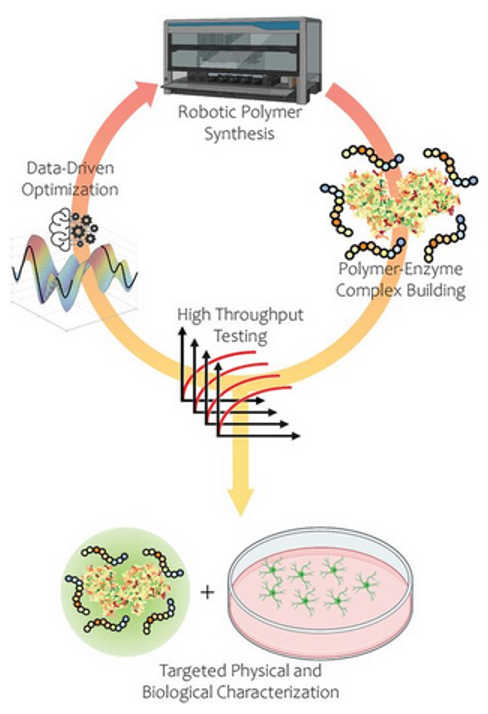
Among the many molecules that contribute to glial scarring, chondroitin sulfate proteoglycans (CSPGs) are known to be potent inhibitors of neuronal regeneration. Chondroitinase ABC (ChABC) degrades the glycosaminoglycan (GAG) side chains of CSPGs and promotes tissue regeneration. However, ChABC is thermally unstable and loses all activity within a few hours at 37 °C.

Theory-guided Discovery of New Two-dimensional Metal-Chalcogenide Alloys with Exceptional Electrocatalytic Activity
1/1/2022 | Amin Salehi Khojin and Robert Klie (University of Illinois Chicago) and Rohan Mishra (Washington University)
We report the synthesis of new two-dimensional binary alloys of transition-metal dichalcogenides. Some of these alloys show outstanding performance as electrocatalyst in Li-air batteries and for the reduction of CO2.
Excitonic Effects at the Direct Bandgap of Germanium
1/1/2022 | J. Menéndez, Arizona State University
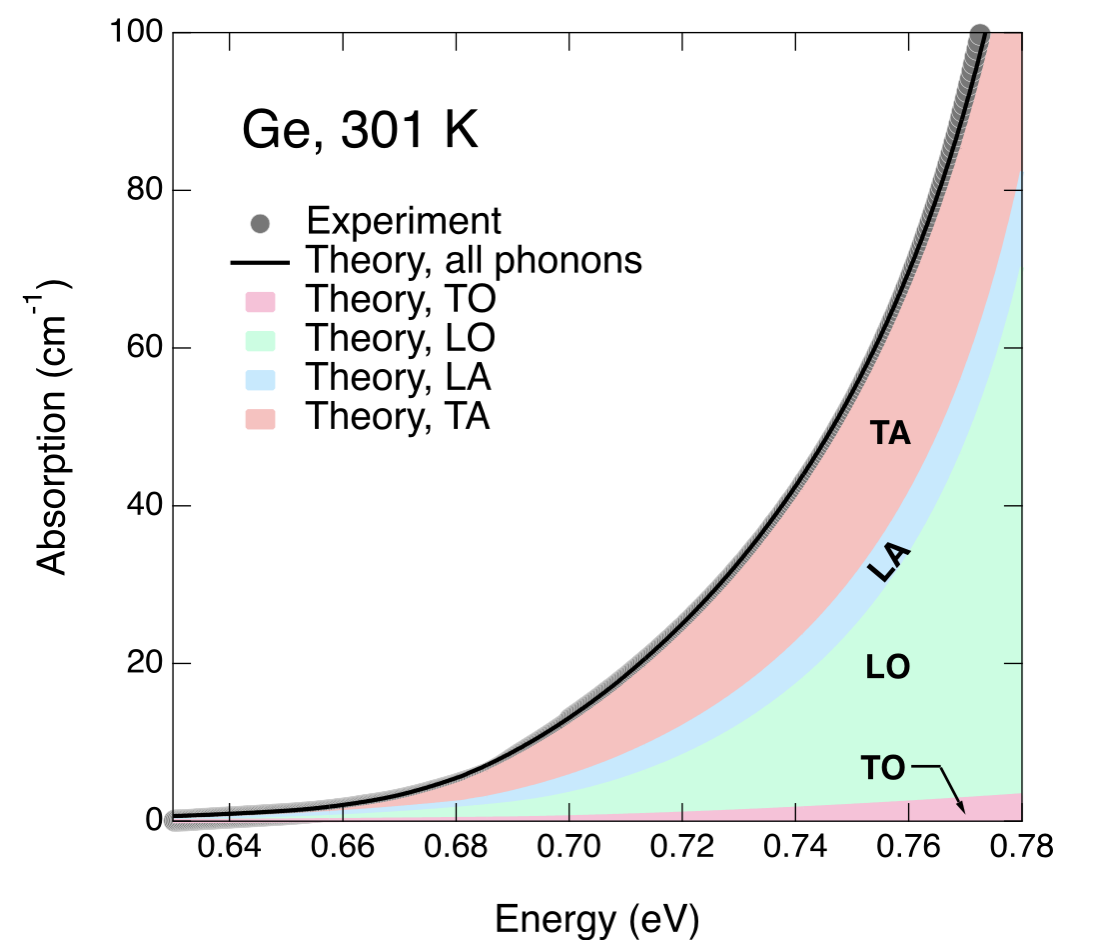
The divergence of the indirect absorption leads to the paradoxical conclusion that in the immediate vicinity of the direct gap, indirect absorption could become stronger than direct absorption. Eliminating this inconsistency requires a new theory of indirect absorption, which is one of the primary goals of this NSF DMREF project.
Ultra-low Temperature Synthesis of Ge-based Optical Materials and Devices on Si using GeH3Cl
1/1/2022 | J. Menéndez, J. Kouvetakis (Arizona State University)
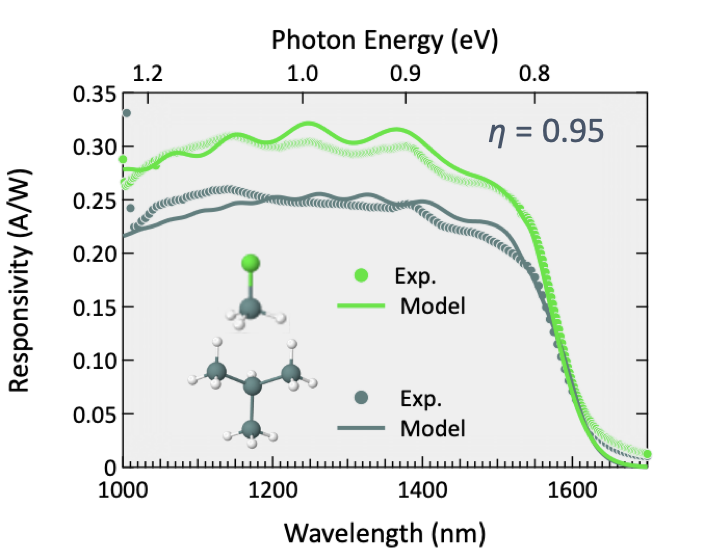
To demonstrate the quality of the Ge layers grown via the chlorogermane route, we fabricated pin diodes and measured their I-V characteristics and optical responsivity and found them to be comparable or better to those obtained with alternative low-temperature precursors. This bodes well for the use of chlorogermane in industrial efforts to integrate Ge functionalities with silicon CMOS.
Showing 171 to 180 of 245