Research Highlights
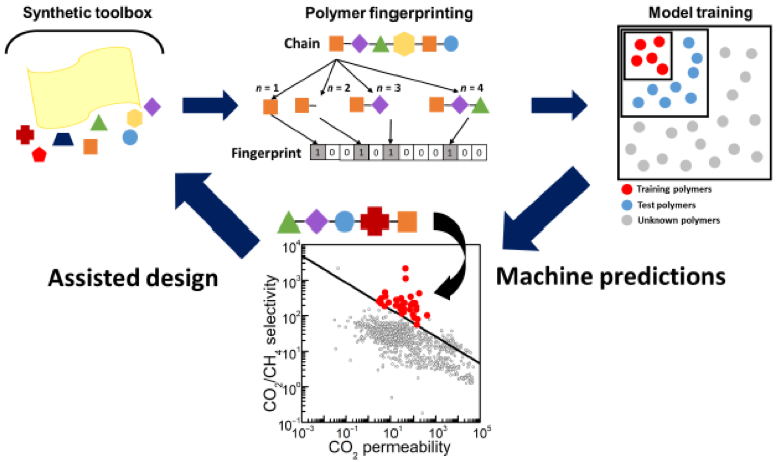
Designing Exceptional Gas-separation Membranes with Machine Learning
6/4/2020 | B. Benicewicz (U. SC) and S. Kumar (Columbia)
The field of polymer membrane design is primarily based on empirical observation, which limits discovery of new materials optimized for separating a given gas pair. Instead of relying on exhaustive experimental investigations, this team has trained a machine learning algorithm, through use of a topological, path-based hash of the polymer repeating unit.

SrNbO3 as Transparent Conductor in the Visible and UV
6/1/2020
It has been a long-standing challenge to find a material that combines the mutually exclusive properties of high electrical conductivity and high optical transmission in the visible, and even harder, in the ultraviolet spectrum. A new class of transparent conductors – correlated metals – was recently discovered and found suitable.
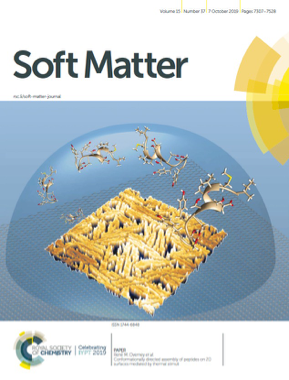
Conformationally Directed Assemblies of Peptides on 2D Surfaces
4/3/2020 | Rene Overney and Mehmet Sarikaya
In this complementary experimental and computational study, the directed assembly of genetically selected graphite binding peptides on 2D solid surfaces is demonstrated. Structural and kinetic analyses as well as molecular dynamics simulations yield the self-assembly process as thermally controllable upon tuning the solvated peptide conformational states.
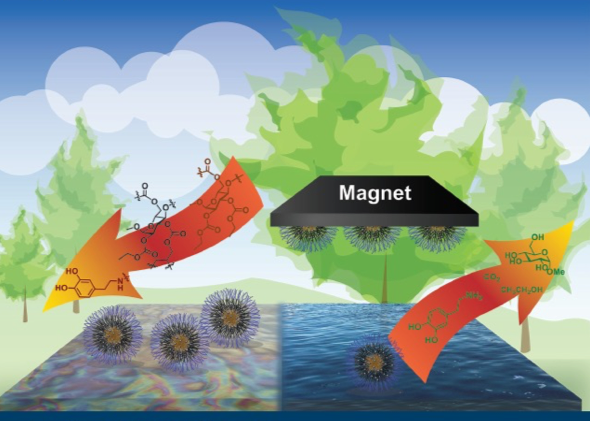
Recovery of Crude Oil from Aqueous Environments
2/18/2020
A nanoscopic sugar-based magnetic hybrid material was designed that is capable of tackling environmental pollution posed by marine oil spills while minimizing potential secondary problems that may occur from microplastic contamination.
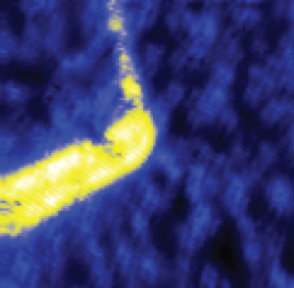
Conducting Domain Walls in Weyl Semimetal MoTe2
1/1/2020 | David Vanderbilt
Up to now, much of the dramatic growth in research on topological materials has focused on the topologically protected surface states. Instead, domain walls of topological materials such as Weyl semimetals provide a novel platform for the study of topological interfacial states. Such investigations have received little attention in the research community to date.

Flexible Crystalline b-Ga2O3 Solar-blind Photodetectors
1/1/2020 | Peihong Zhang
Wide bandgap (WBG) semiconductor-based solar-blind photodetectors (PDs) have attracted considerable attention as an emerging technology due to their unique spectral working region, which covers the deep ultra-violet (UV), and significant potential in many applications, such as secure data communication.
Theory-guided Targeted Delivery of Nanoparticles in Advective Environmental Porous Media
11/14/2019 | William P. Johnson and Karen L. Wooley
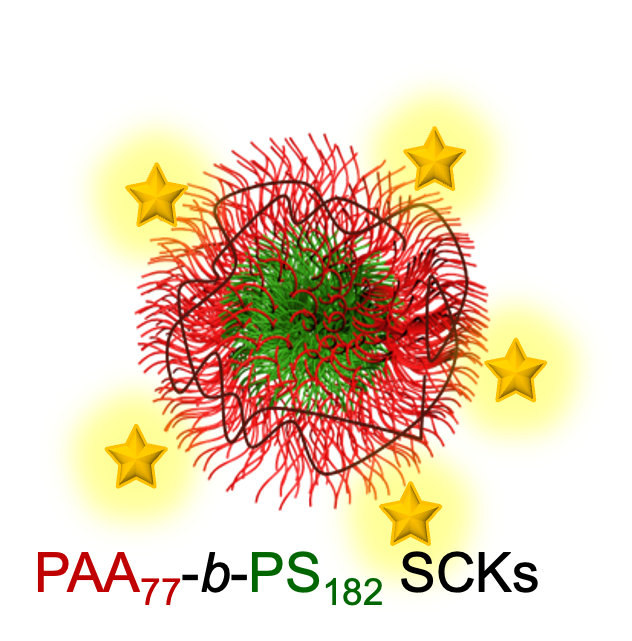
Targeted delivery of novel nano- and micro-particles (colloids) in porous media is a major aspect of remediation of subsurface contamination.
Resolving Stacking Disorder in Layered Peovskites
9/24/2019 | W. You (U. NC), V. Blum, D. Mitzi (Duke U.)
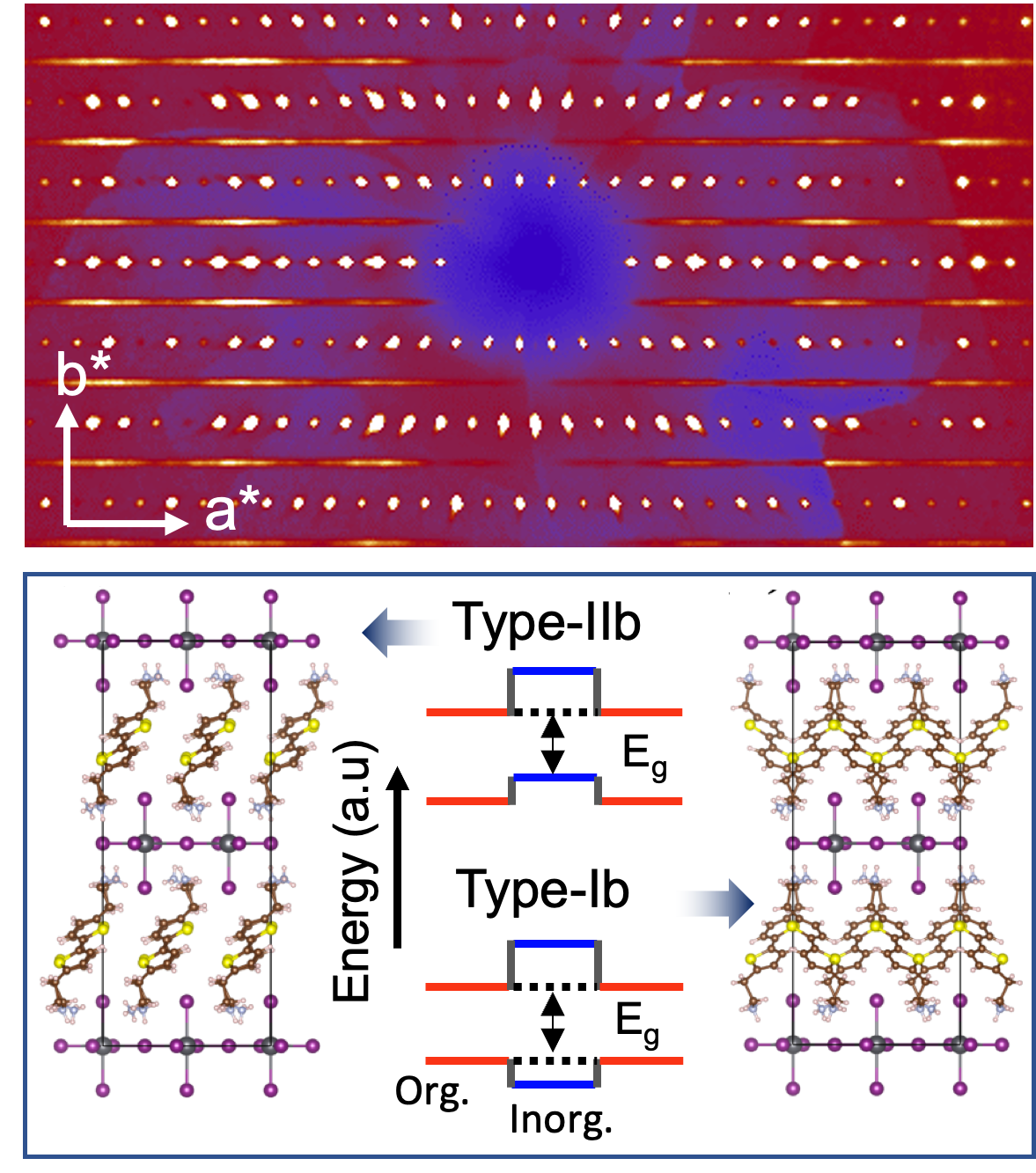
The exceptional properties of 2D hybrid organic-inorganic perovskites (HOIPs) are strongly correlated with atom-level structural details. Stacking disorder (SD) often arises in 2D HOIPs due to quasi-random stacking of inorganic and organic layers, i.e., with no long-range correlations of structural configurations. SD manifests as diffuse X-ray scattering and substantially complicates an accurate crystal structure description.
Informing Zeolite Synthesis Enabled by Natural Language Processing
5/22/2019
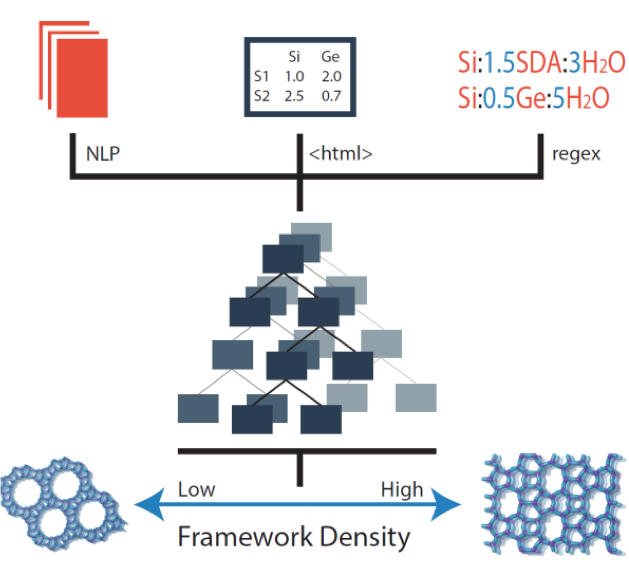
We have built an automated way to extract and combine body text and table information from published literature on the synthesis of zeolites, an industrially significant catalyst material. These tools are important as they move the field closer to the ability to predict and design synthesis routes for zeolites.
Stability of Excitons at Room Temperature in GaN Quantum Wells
5/1/2019 | D. Bayerl and E. Kioupakis
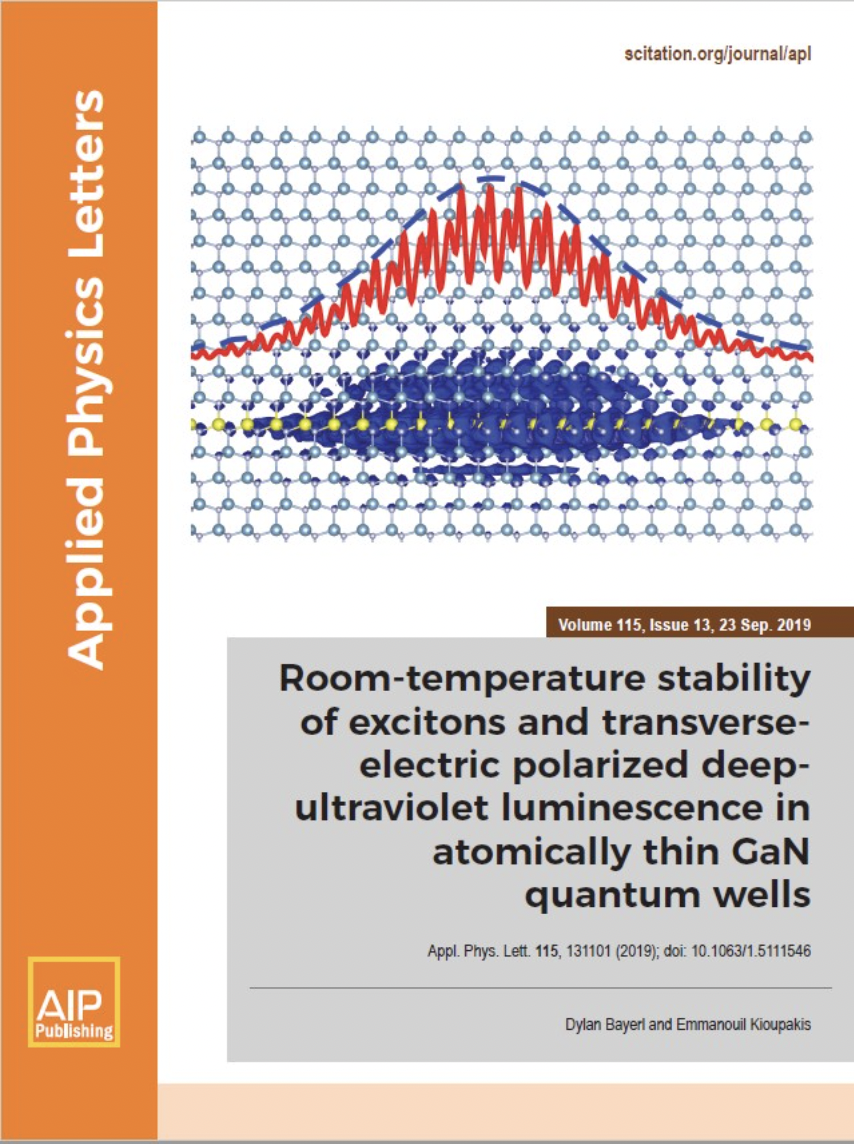
The effects of extreme confinement on the electronic, excitonic, and radiative properties of atomically thin GaN quantum wells were studied through use of first-principles calculations
Showing 201 to 210 of 245