Research Highlights
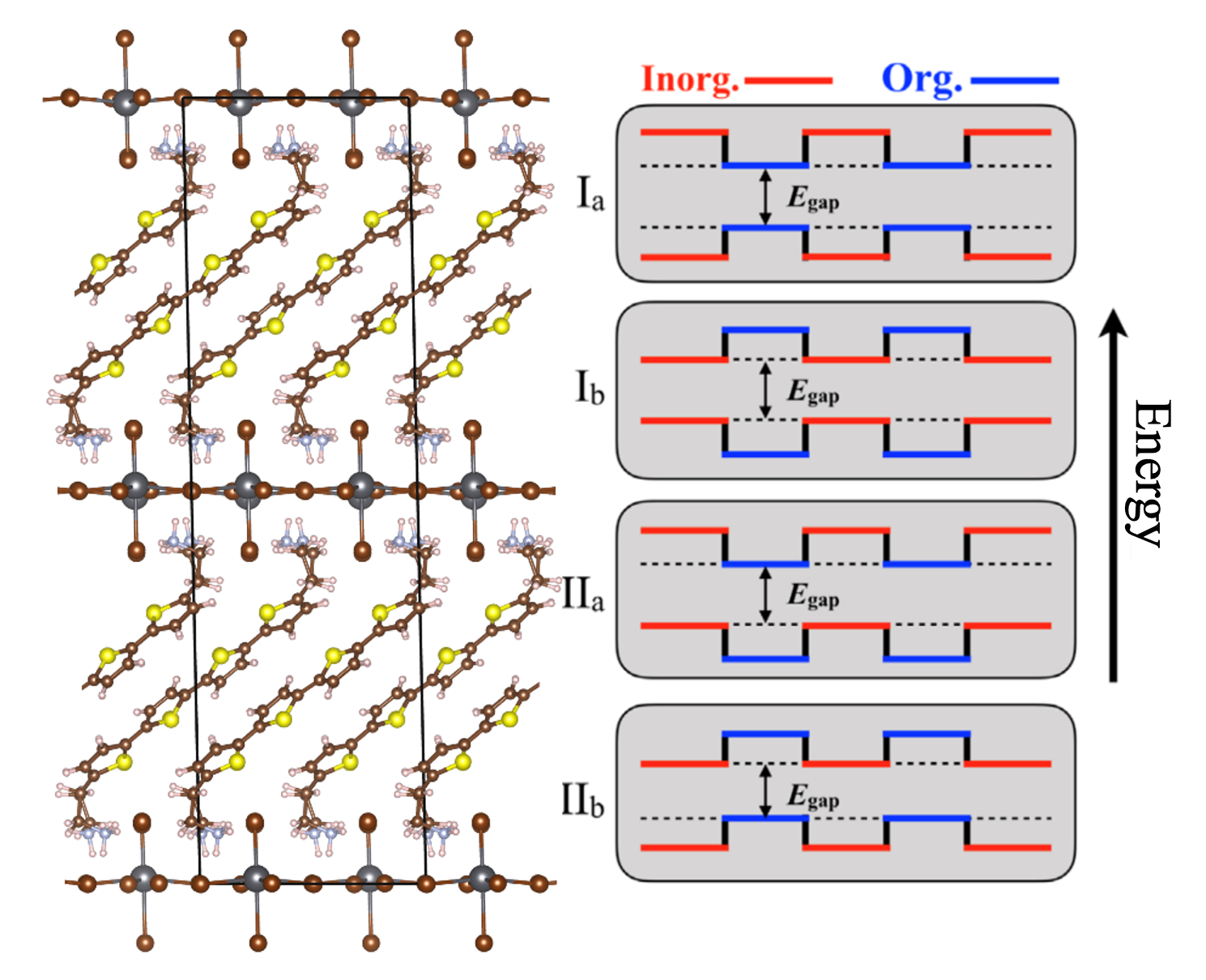
Tunable Semiconductors: Organic-inorganic Hybrids
10/4/2018 | W. You, Y. Kanai (U. NC); D. Mitzi, V. Blum (Duke U.)
We use high-level computational theory to demonstrate how a novel class of crystalline semiconductor materials, so-called layered hybrid organic-inorganic perovskites (HOIPs), can be designed at the atomic scale to provide targeted semiconductor properties. The tun-ability of the materials arises from the atomic-scale combination of an inorganic semi-conductor integrated with functionalized organic molecules that offer a wide range of properties.
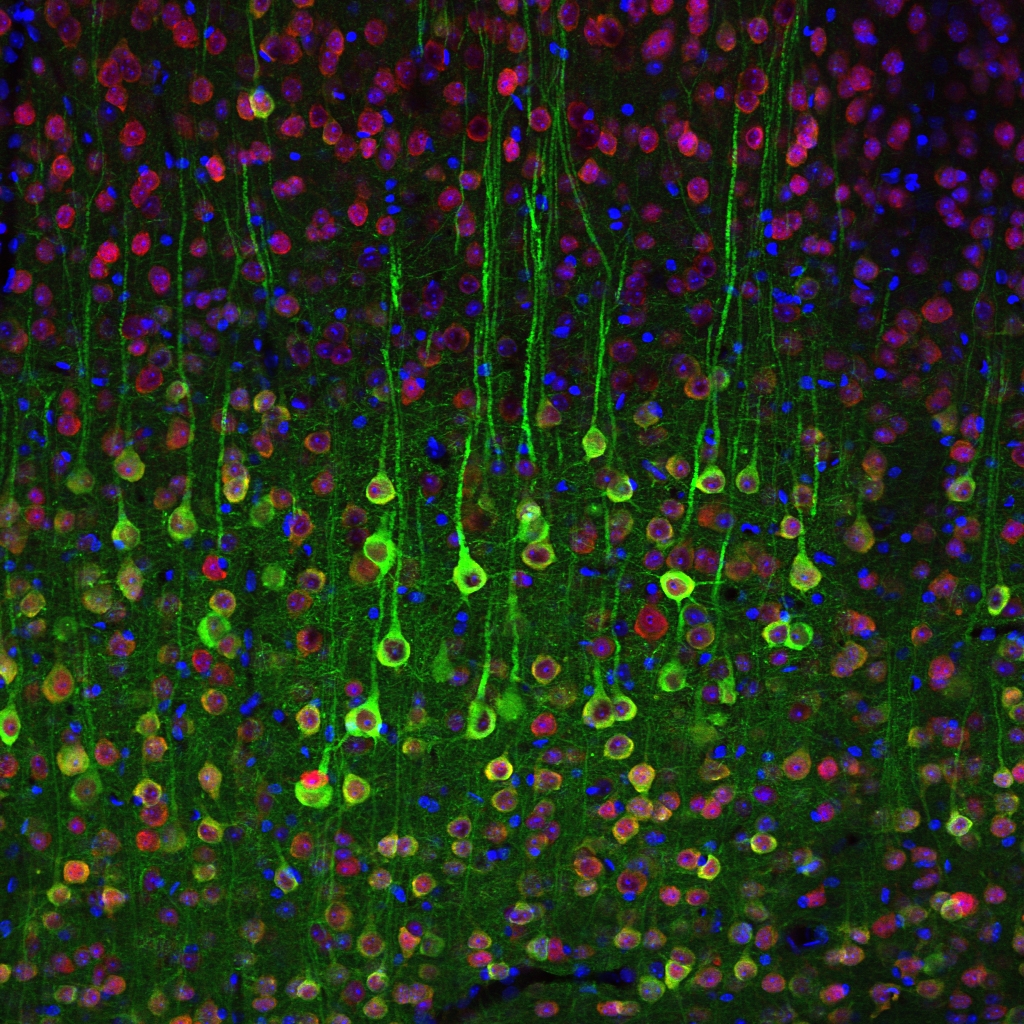
Materials from Mathematics
8/30/2018 | Richard D. James, University of Minnesota
Austenite/martensite interface in Cu69.5Al27Ni3.5. Zero elastic energy austenite/martensite interfaces possible under the co-factor conditions. Red is austenite and blue/green are two variants of martensite. These pictures exhibit large deformations, zero elastic energy, and perfect fitting of the phases under continuous variation of the volume fraction f.
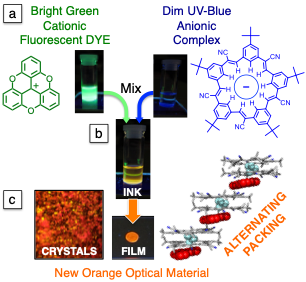
Controlling Emission in Optical Materials
8/21/2018 | Amar H. Flood (PI), Steven L. Tait, Krishnan Raghavachari, Peter J. Ortoleva
If we can understand how the packing gives rise to the optical properties, then we can control the packing to generate materials of any color and brightness.
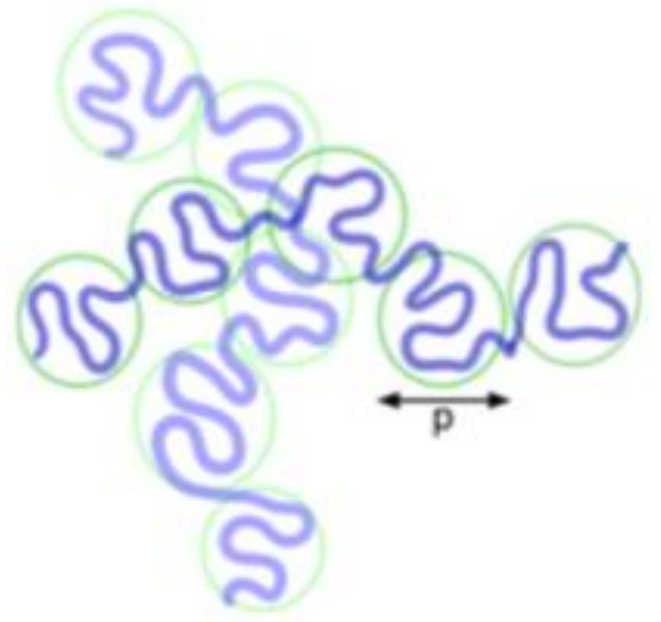
Predicting the Rubbery Response of Polymer Liquids
7/31/2018
Our work describes how different kinds of polymer entangle. The key insight is simple to state intuitively: polymer chains entangle as often as they can, limited only by how often they can closely approach each other. We turn this deceptively simple statement into a unified scaling theory for different kinds of polymer fluids.
Discovery, Development and Deployment of High Temperature Coating – Substrate Systems
5/18/2018 | Tresa M. Pollock
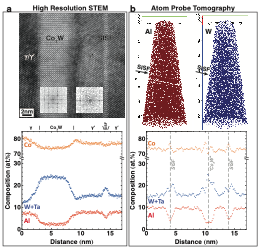
This NSF DMREF program engages a multidisciplinary team from Materials, Computer Science and Mechanical Engineering to develop a fundamental framework for design of a new class of multilayered systems that could impact new, energy efficient power generation and propulsion systems.
Data Mining for Parameters Affecting Polymorph Selection
4/1/2018 | Yueh-Lin (Lynn) Loo (Princeton U.)
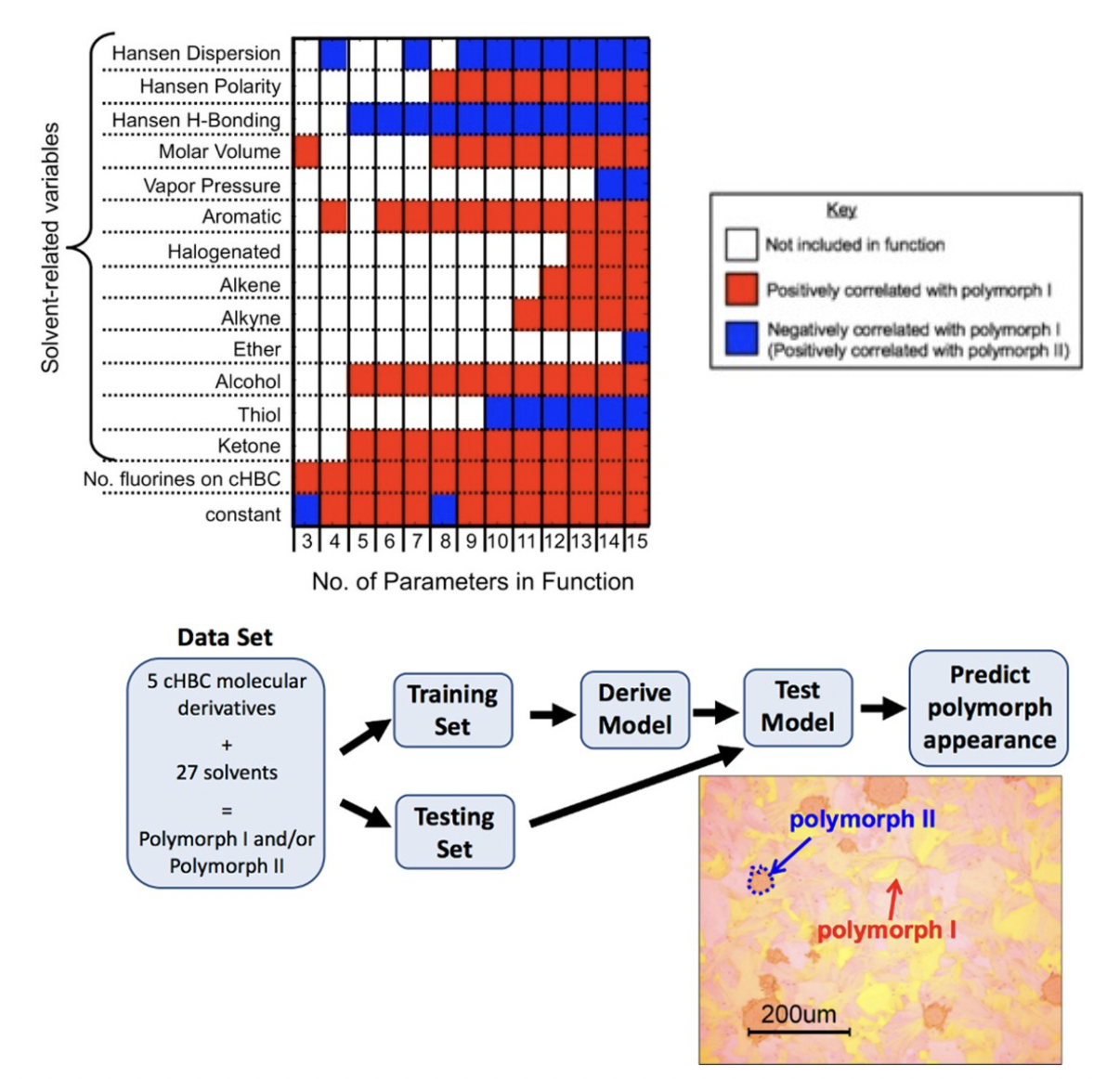
The macroscopic properties of molecular materials can be drastically influenced by their solid-state packing arrangements, of which there can be many (e.g., polymorphism). Strategies to controllably and predictively access select polymorphs are desired, but predicting the conditions necessary to access a given polymorph is challenging with the current state of the art.
Degradable Block Copolymers
3/20/2018 | Karen Wooley (Texas A&M University)
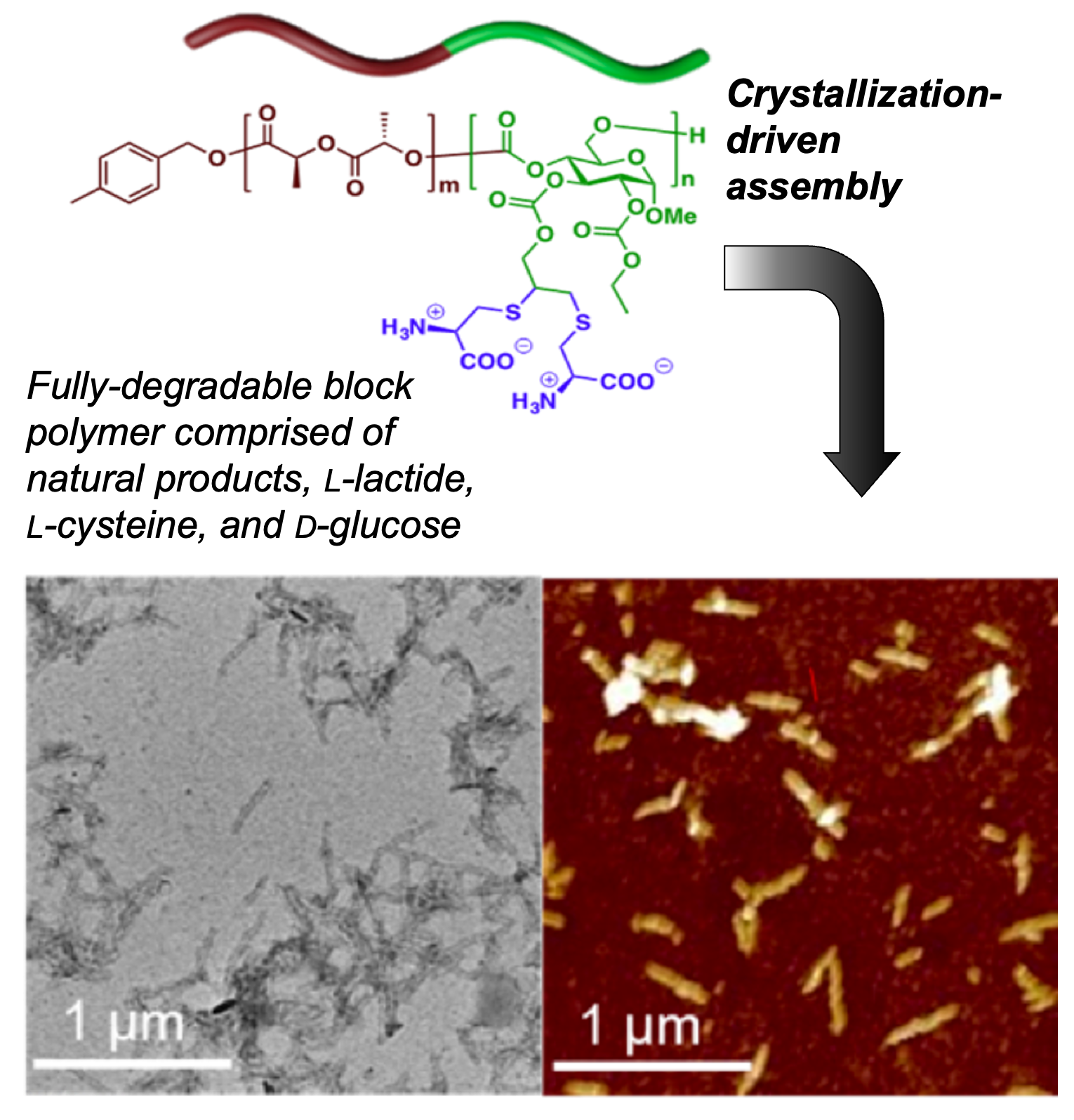
Fully degradable amphiphilic block polymers derived from three natural products, l-lactide, l-cysteine and d-glucose were synthesized and assembled in solution into spherical and cylindrical nanostructures. The solution assembly process was driven by crystallization of the poly(l-lactide) (PLLA) block and involved heating the polymers in water at 65 °C for 30 hours, followed by cooling the solutions to room temperature.

Defect & Dopant Predictions for Thermoelectric Materials
3/20/2018 | https://dmref.org/files/13bc53a2-6be6-4e57-855e-ff7d538df0c1
Challenge: Defects and scarcity of dopants often are the Achilles heel to realizing the theoretical potential of new semiconductors (eg transparent conductors, thermoelectrics). Further, native defects and dopants are computationally expensive to accurately calculate. Two approaches to overcome this challenge are in progress:
Storing Information with Magnetic Encoding
3/20/2018 | I. Cohen, P. McEuen (Cornell U.) and M. Brenner (Harvard U.)
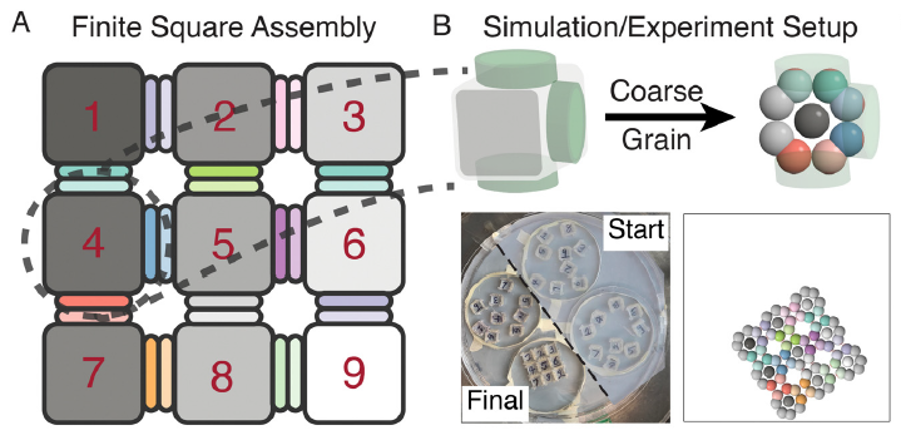
Biological materials gain complexity from the programmable nature of their parts. To synthetically manufacture materials with comparable complexity, building blocks need to be created with low crosstalk when they only bind to their desired partners. Canonically, these building blocks are made using DNA strands or proteins to achieve specificity. Here Harvard and Cornell's researchers propose a new materials platform, Magnetic Handshake Materials, with programmable interactions using patterns of magnetic dipoles. This is a complete synthetic platform, enabled by magnetic printing technology, which is easier to both control and model in the laboratory.
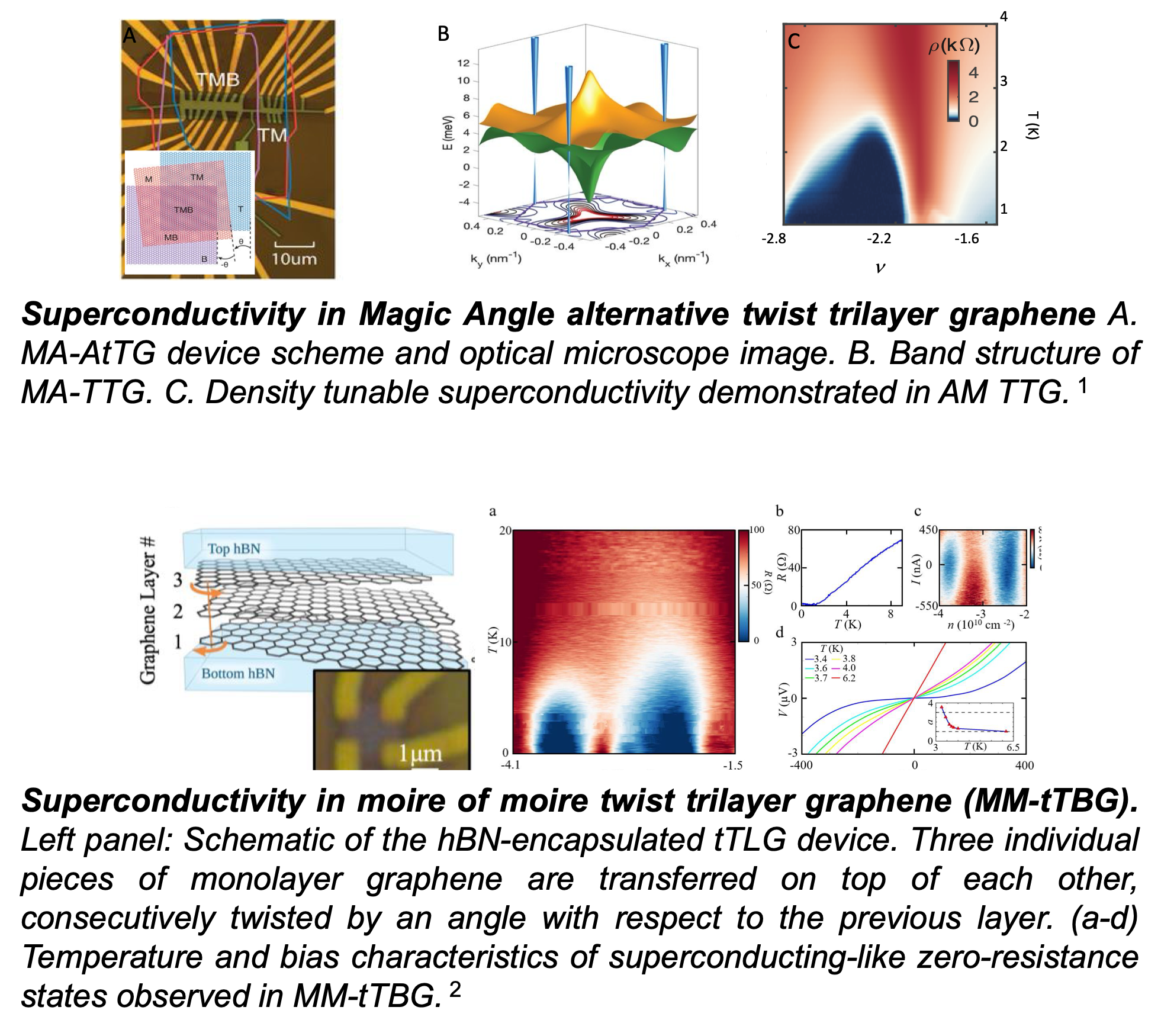
Superconductivity in Twisted Trilayer Graphene
3/20/2018 | P. Kim, E. Kaxiras (Harvard) M. Luskin, K. Wang (U. Minnesota)
Layers of two-dimensional materials stacked with a small twist angle give rise to beating periodic patterns on a scale much larger than the original lattice, referred to as a ‘moiresuperlattice’. Superconductivity and correlated insulator states in magic angle alternatively twisted trilayer graphene (MA-tTG)1 (Fig., top) and ‘moire of moire’ twisted trilayer graphene (MM-tTG)2 (Fig., bottom) have now been experimentally demonstrated.
Showing 221 to 230 of 245